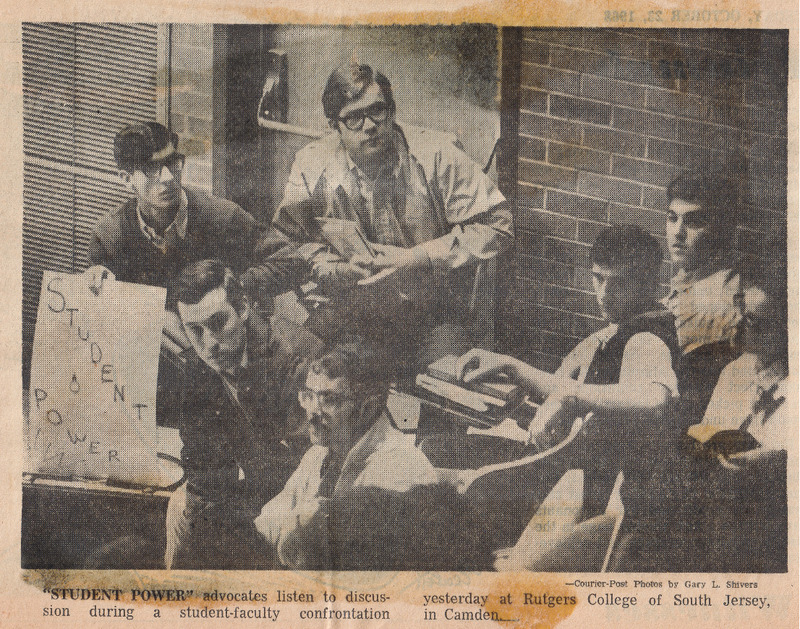
Nearly 200 Rutgers students protest at a faculty meeting, advocating for greater student involvement in policy decisions. Some discussions have occurred, but the students want less talk and more action. The article is accompanied by a photograph of student activists with a sign that says "Student Power."
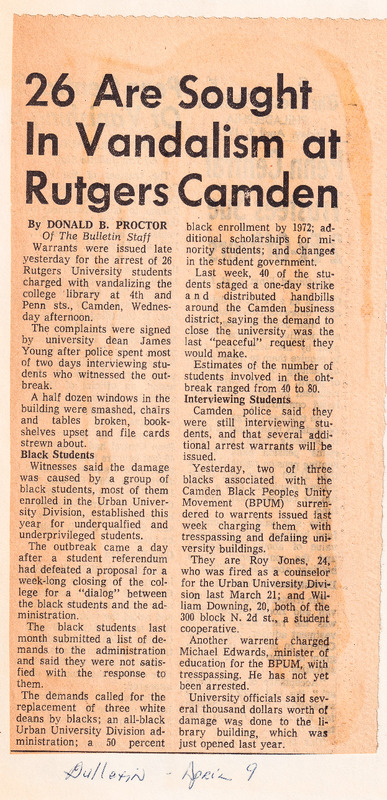
This article discusses the vandalism charges against the specific individuals who were involved in the library protest. They include specific names of the indivudials involved.
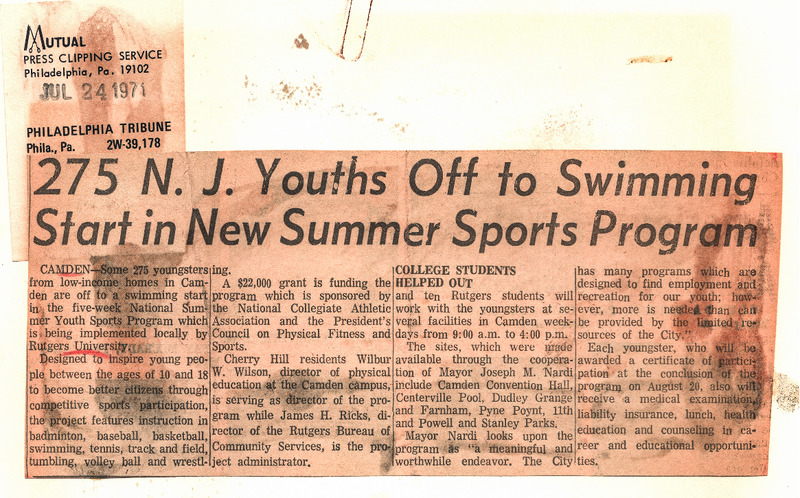
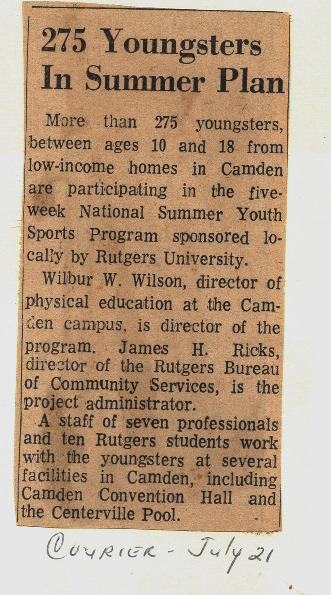
National Collegiate Athletic Association and Presidents Council on Physical Fitness and Sports provides $22,000 to facilitate a youth sports program in the Camden Community. The University hopes that by providing an outlet, it can help improve the local community.
National Collegiate Athletic Association and Presidents Council on Physical Fitness and Sports provides $22,000 to facilitate a youth sports program in the Camden Community. The University hopes that by providing an outlet, it can help improve the local community.
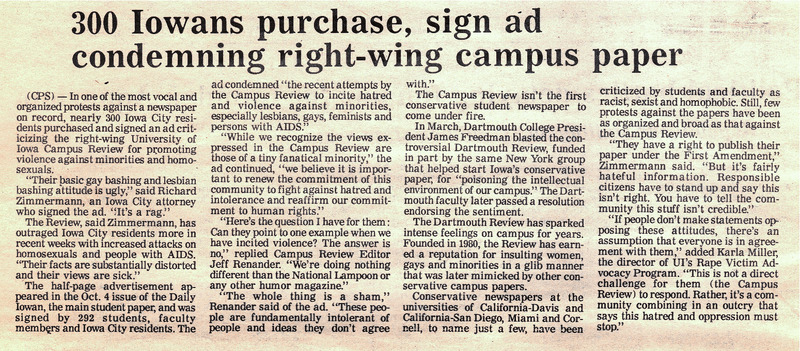
Article about a large protest on the University of Iowa against a right-wing publication for being homophobic and bigoted. The article discusses free speech, homophobia, racism, and sexism. College Press Service (CPS) and syndicated to the Gleaner.
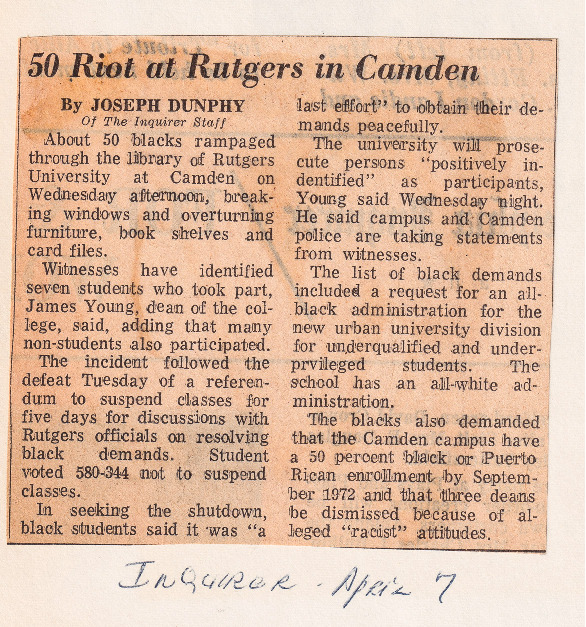
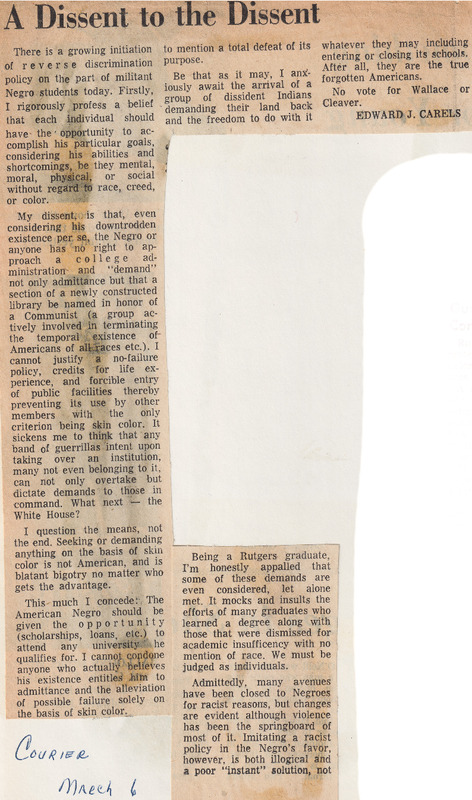
Author takes a hardline stance against the actions of Black students who protested the selection of an all-white administran for the Urban University Division by damaging parts of the library.
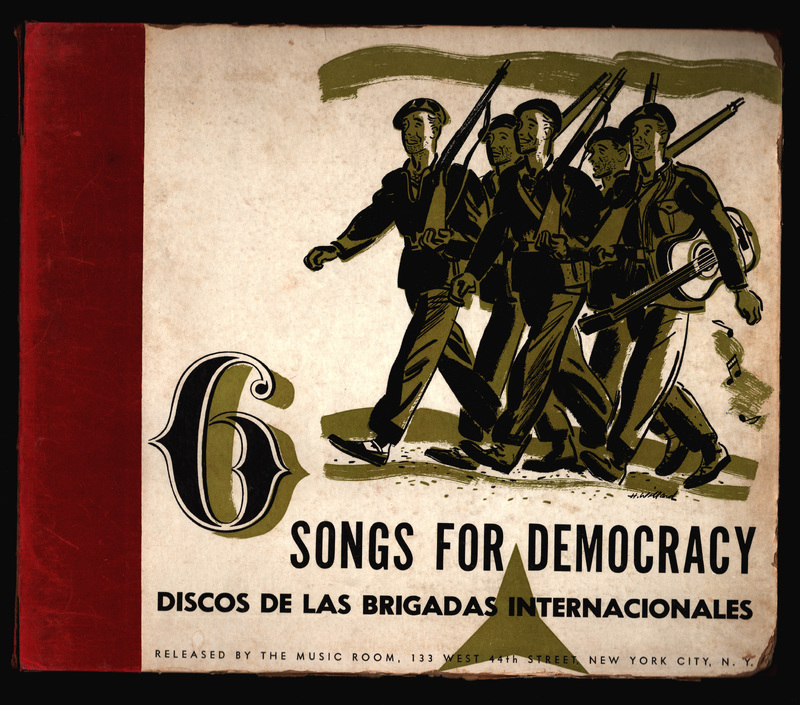
A complete three-disc 78rpm album set titled "6 Songs for Democracy: Discos de Las Brigadas Internacionales," featuring Ernst Busch and the Chorus and Orchestra of the 11th International Brigade. The songs are performed in Spanish and German. Originally recorded in Barcelona in 1938 during the Spanish Civil War, these discs were manufactured by Keynote Recordings, Inc. and released by The Music Room (133 West 44th Street, New York City, N.Y.).
The tri-color (white, red, and yellow) album sleeve depicts five Spanish Republican soldiers, one carrying a guitar. This specific copy is significant for a handwritten inscription on the interior sleeve by Paul Robeson, which reads:
"These songs of the Spanish struggle
deeply reflect the democratic spirit.
That spirit like Joe Hill 'never died.'
This album is a 'must.'
Sincerely,
Paul Robeson."
Each disc features a red and gold label with the logo of the International Brigade of the Spanish Republic. Labels include the text: "Originals made in Barcelona Spain, 1938. US copyright reserved."
The label for track 1B ("Lied Der Einheitsfront") includes a Spanish-language sticker regarding the recording conditions: "La impresión defectuosa de este disco es debida a last interrupciones de energia eléctrica durante un bombardeo" (The defective printing of this record is due to the interruptions of electrical energy during a bombardment).
This edition was originally issued with a descriptive booklet; however, that component is not included in the copy of the record held by Special Collections.
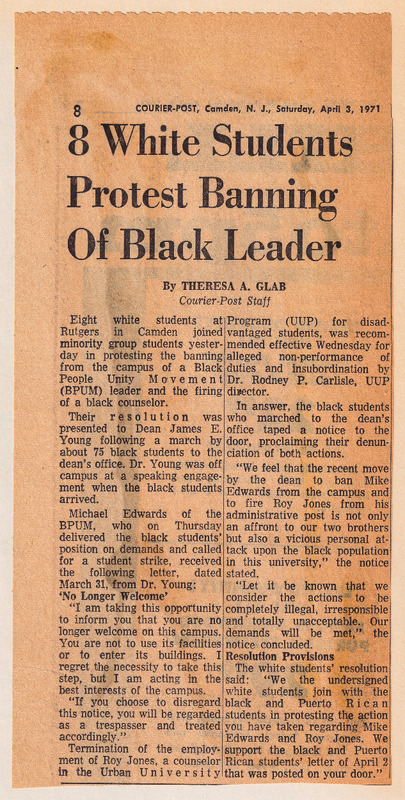
Describes the banning of a Black Student Unity Movement (BSUM) leader. In response a multiracial coalition of students , including 8 White students protest.
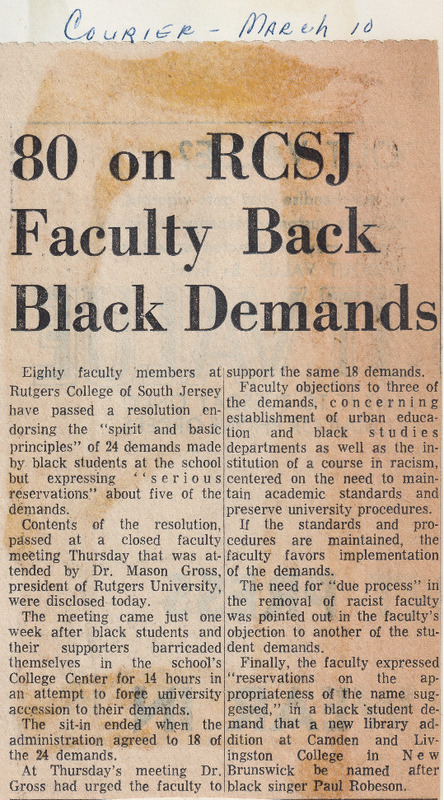
Eighty faculty members have backed the student demands, although they have "reservations" about the appropriateness of renaming the library. The article also discusses the sit-in ending after faculty agreed to 18 of the 24 stated demands.
The author strongly opposes admittance of students "without qualifications," specifically discussing Black students whose academic achievements may not have qualified them for Rutgers admission without the established programs. He sarcastically discusses the possibility of Native Americans reclaiming the land on which Rutgers sits and asking for admittance to the school.
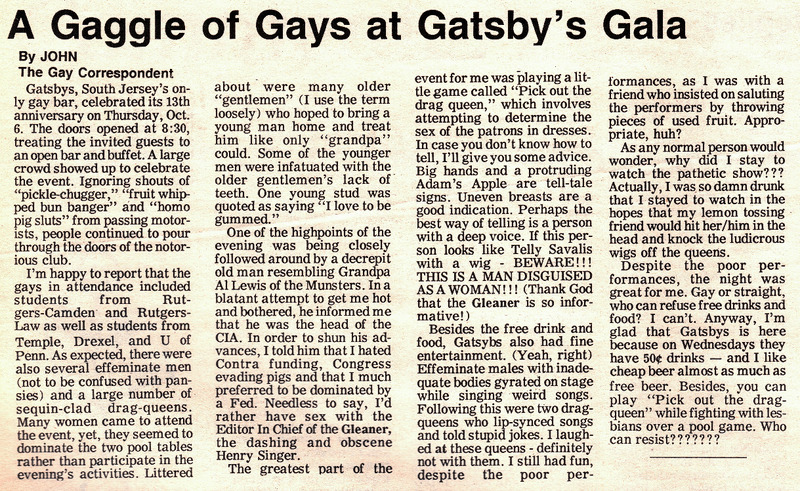
The article descibes South Jersey's only gay bar, Gatsbys, celebration of its 13th anniversary. There were gay people from Rutgers-Camden and other local universities in attendance enjoying the drinks and entertainment.
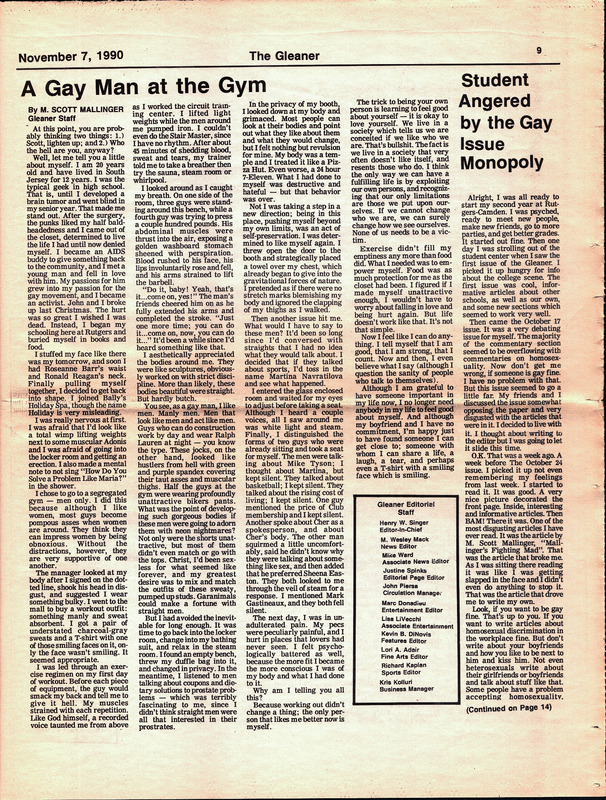
This article is about Mallinger's experience as a gay man going to the gym. He explains that he has struggled with his weight and experience heavy anxiety when he began working out regularly and seeing other fit men. He argues that readers shouldn't care so much about their bodies, but that self-empowerment and self-love are most important.
Paper about athletics and Title IX at Rutgers-Camden, written by Brian Rowan for the undergraduate course Perspectives on History, taught by Dr. Allen Woll in the fall of 1997.
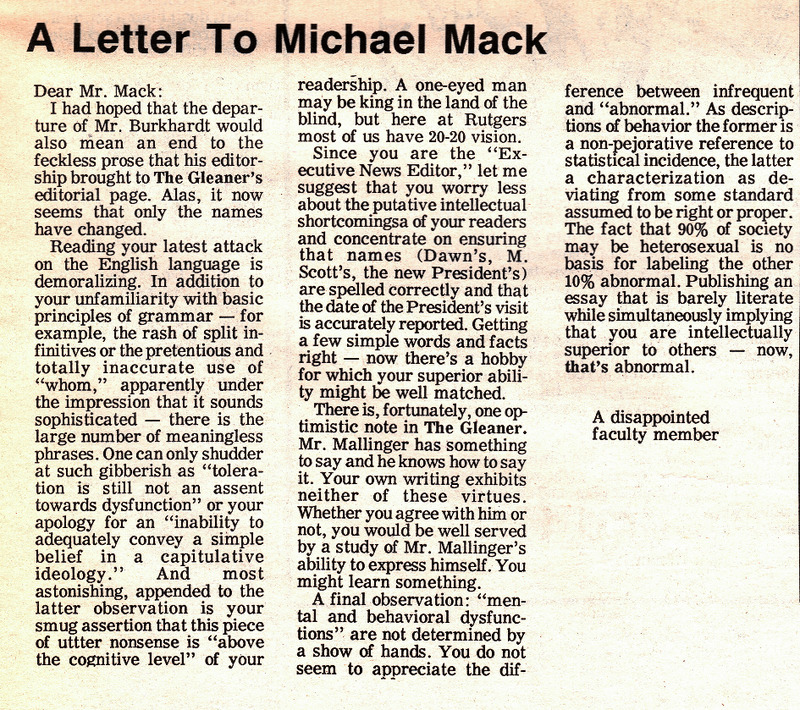
This "Letter to the Editor" is from an anonymous "disappointed faculty member" who expresses great disappointment in the Executive News Editor Michael Mack's writing, dismissing Mack's prose as "gibberish" and mocking his claim that his work is above the readers' cognitive level. The faculty member rebukes Mack’s characterization of homosexuality as a "dysfunction," and praises gay columnist M. Scott Mallinger’s superior ability to express himself.
Matthew DiBiase criticizes the Israeli government's treatment of Palestinians and calls for the establishment of a Palestinian state, urging the United States to push for a resolution to the "deadly insurrection" in the occupied territories.
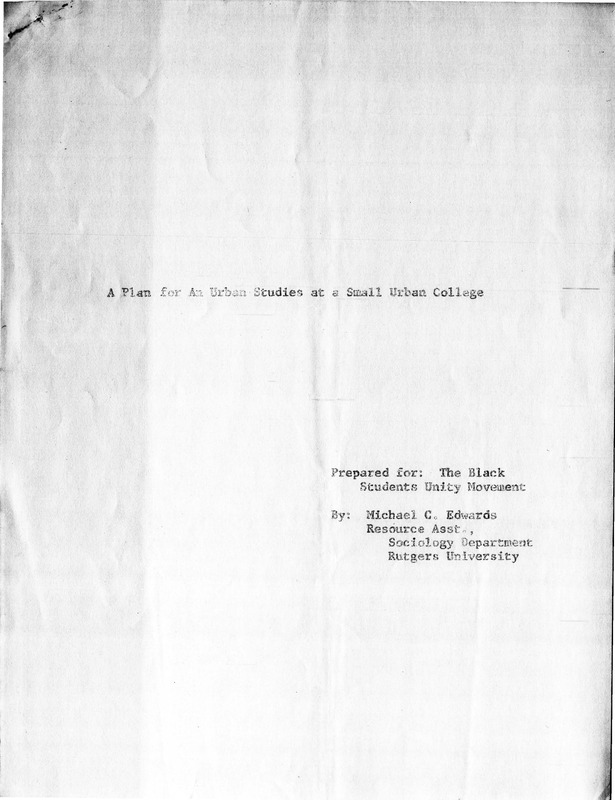
A proposal for creating an Urban Studies program at the College of South Jersey (Rutgers-Camden), prepared for the Black Student Unity Movement by Malik Chaka (Michael C. Edwards), Resource Assistant at the Sociology Department. Chaka was a Rutgers–Camden student and a member of the Black Student Unity Movement (BSUM). This document outlines an interdisciplinary curriculum focused on the scholarly study of urban affairs, politics, and sociology. This proposal served as the blueprint for what would eventually become the formal Urban Studies program at Rutgers–Camden.
Urban Studies is not to be confused with the Urban University Department (UUD), which was a support initiative for student access that also grew out of black student activism at Rutgers in 1969.
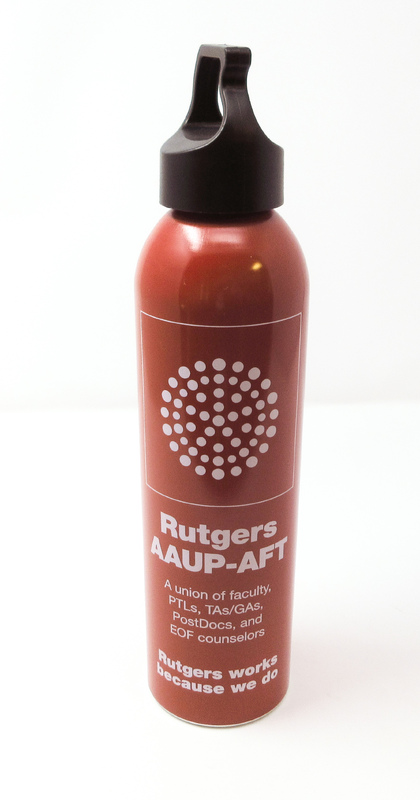
Red water bottle with black screw-top carabiner lid with the AAUP-AFT logo and the words "Rutgers AAUP-AFT A union of faculty:
PTLs, TAs/GAS, PostDocs, and EOF counselors futgers work? because we do" printed on the side.
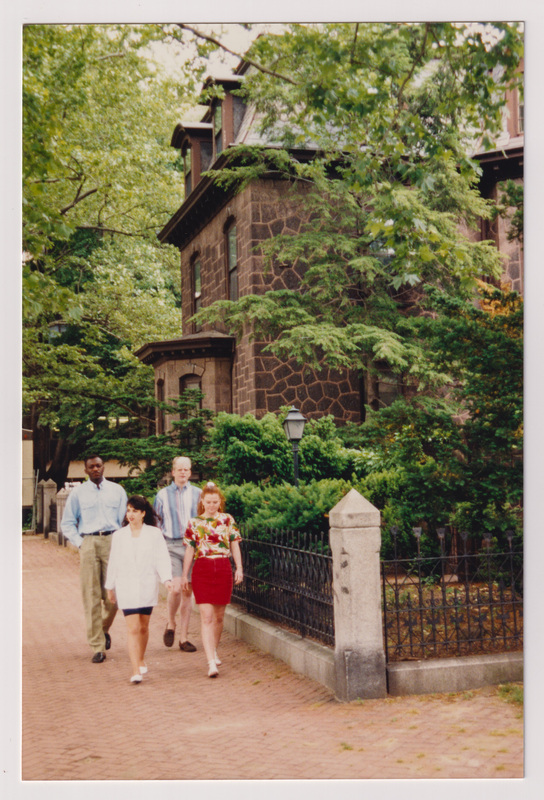
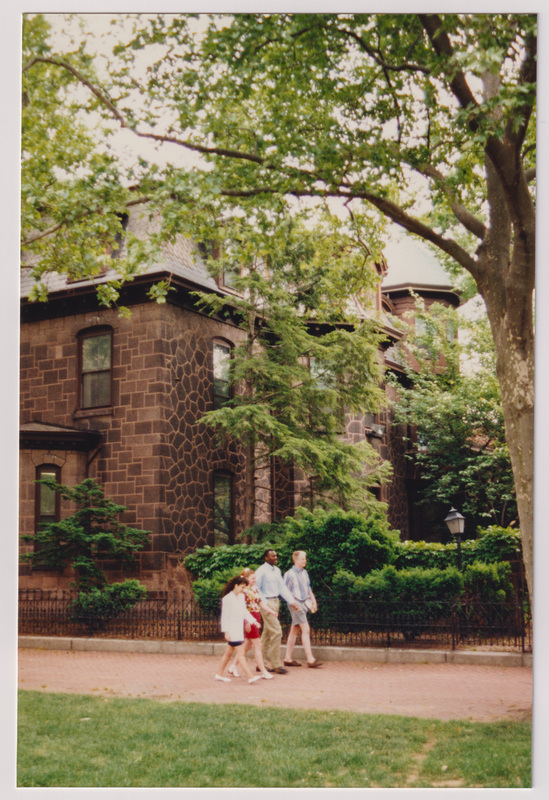
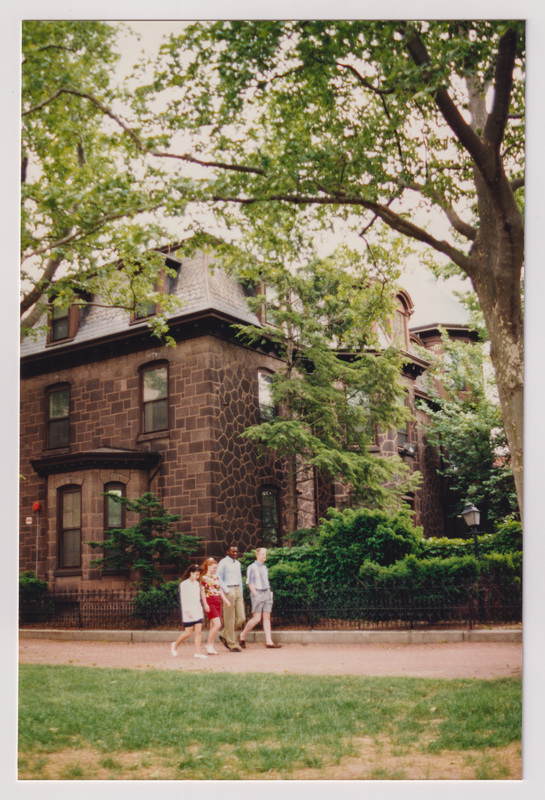
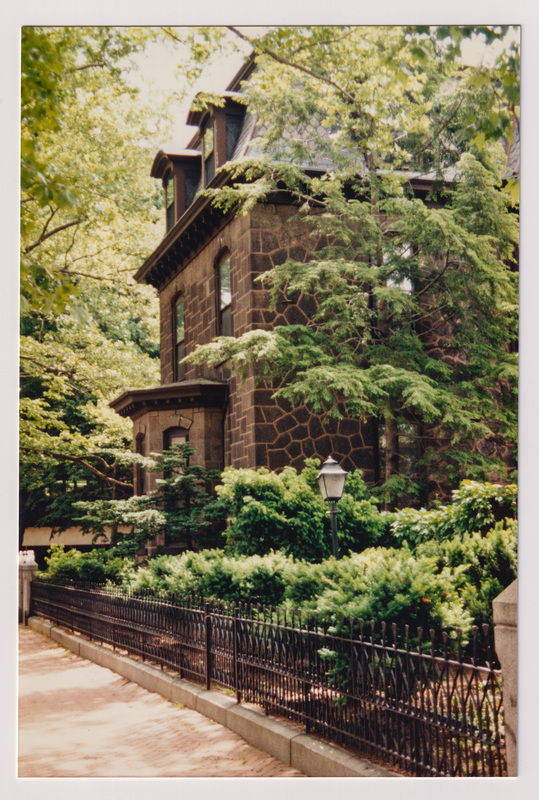
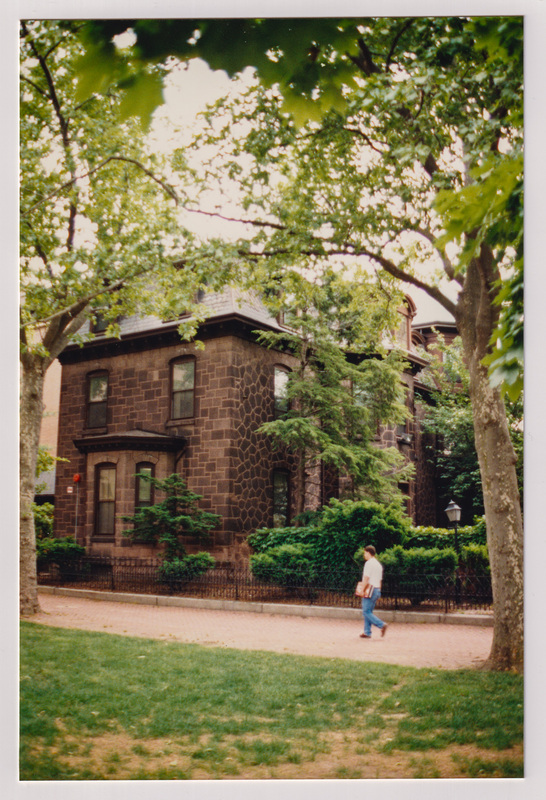
One of several photographs from the June 1993 photo shoot for the cover of the 1994 Alumni Directory. Four people walking, two women in the front, two men directly behing them.
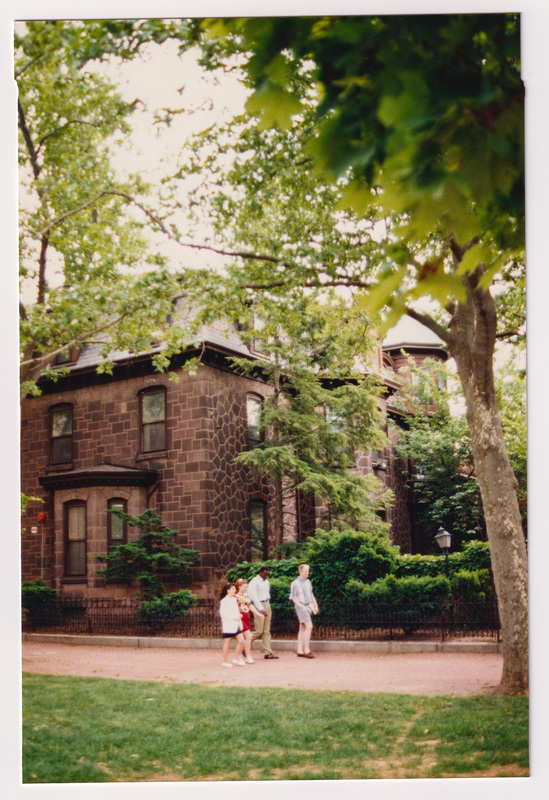
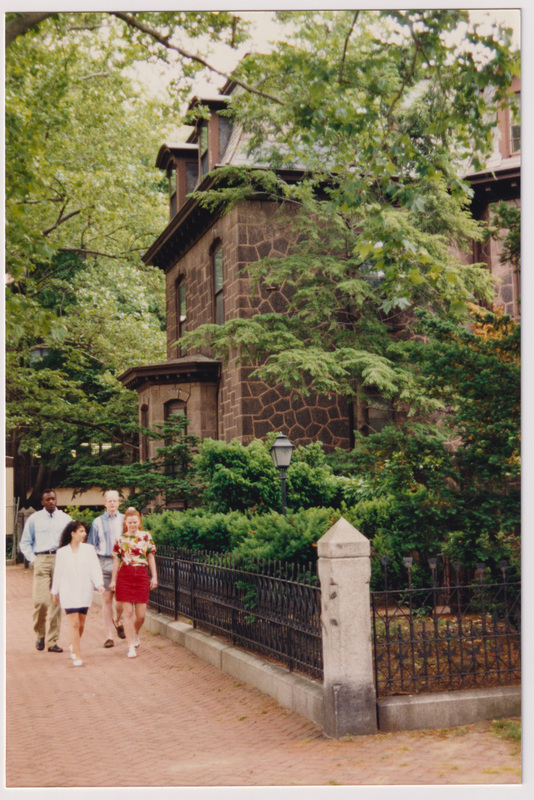
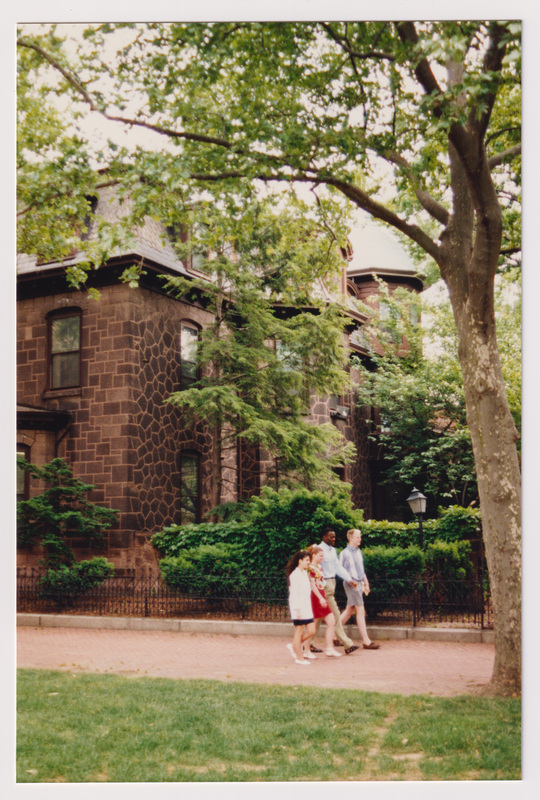
One of several photographs from the June 1993 photo shoot for the cover of the 1994 Alumni Directory. The same four people walking near the Admissions Building. Taken from their right side, across the grass.
One of several photographs from the June 1993 photo shoot for the cover of the 1994 Alumni Directory. Group of 4 people walking, taken from their right side, across the grass.
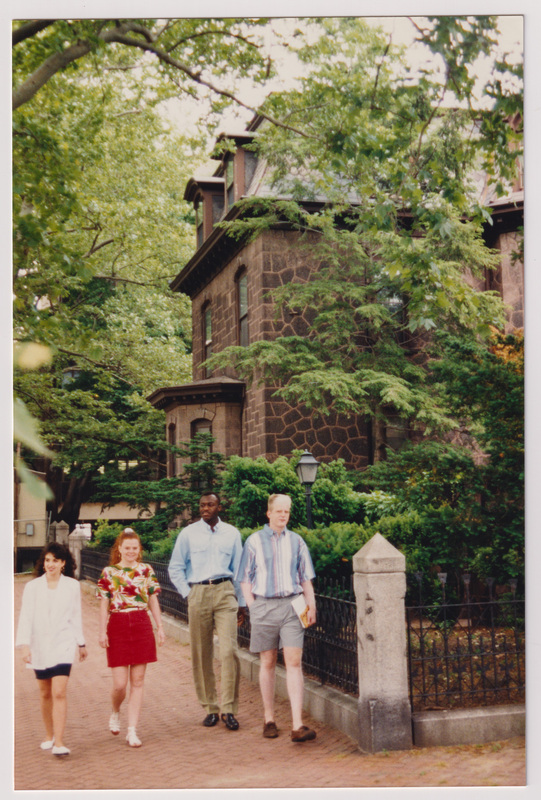
One of several photographs from the June 1993 photo shoot for the cover of the 1994 Alumni Directory. Four people walking, two women in the front, two men directly behind them.
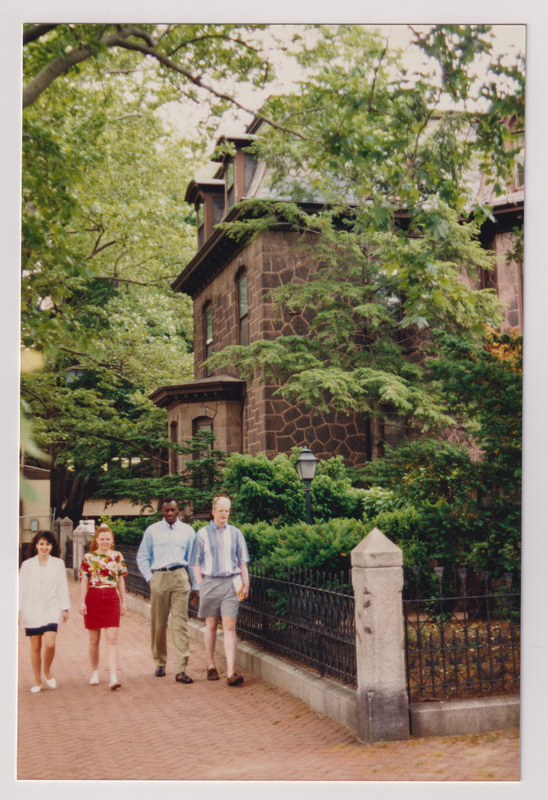
One of several photographs from the June 1993 photo shoot for the cover of the 1994 Alumni Directory. Taken from the side at a wide angle, the 4 people have walked past the Admissions Building.
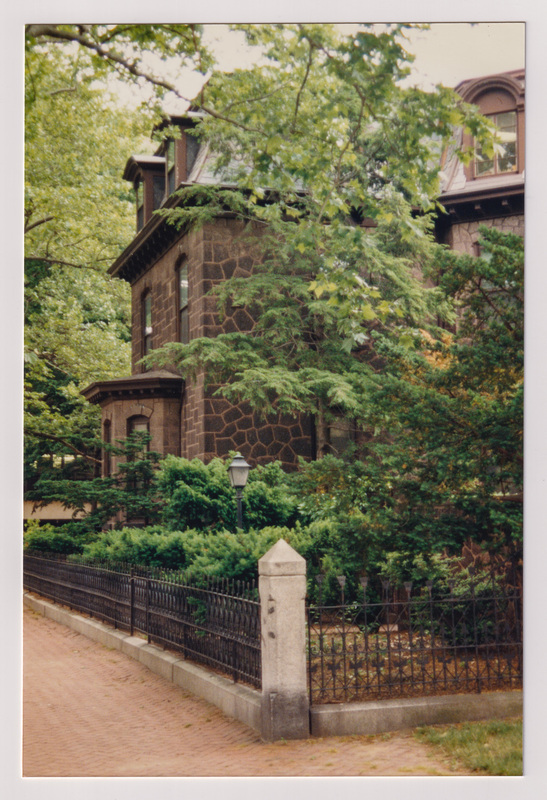
One of several photographs from the June 1993 photo shoot for the cover of the 1994 Alumni Directory. Taken from the side, the 4 people have walked past the Admissions Building.
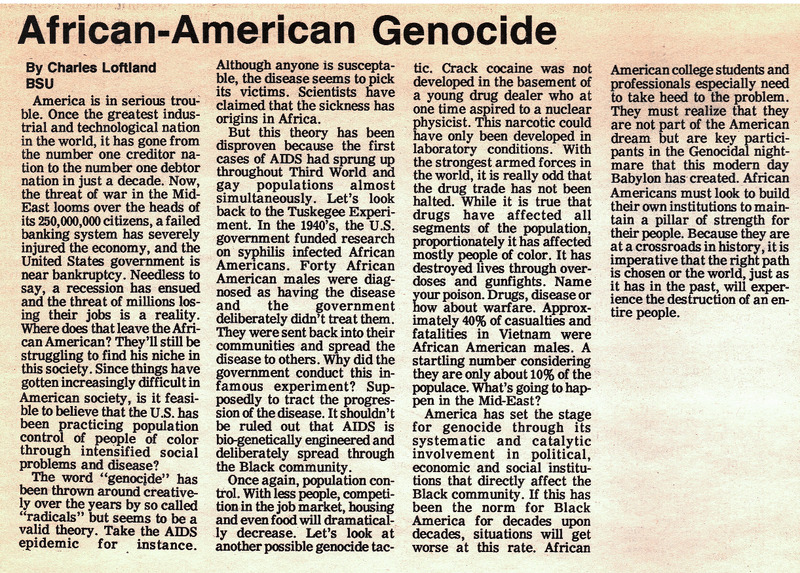
This article critiques the United States for the treatment of African Americans and believes it amounts to genocide. Charles Loftland describes when the government allowed Tuskegee men to spread syphilis in their communities for research purposes and suggests that AIDS may have been similarly engineered. He also discusses the rise in crack cocaine in African American communities. The byline identifies Loftland as a member of BSU (Black Student Union).
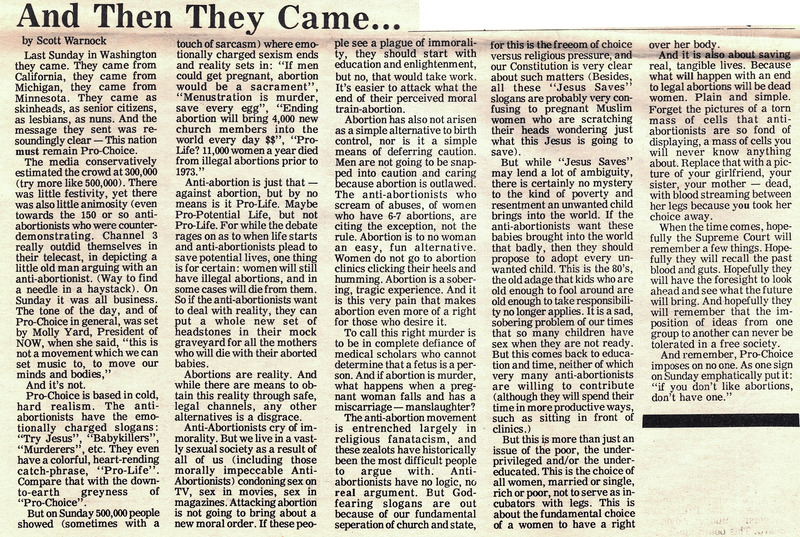
Warnock discusses abortion and argues that the pro-life movement is entrenched in religion and is not realistic. He argues for access to abortion to save women's lives and recognizes that it is a difficult decision for women.
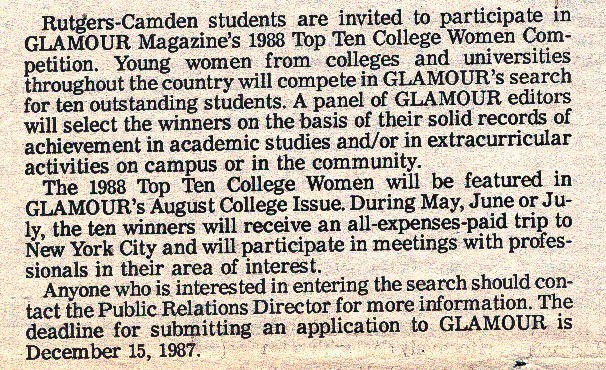
This article announces that Rutgers-Camden students are invited to enter GLAMOUR Magazine's 1988 Top Ten College Women Competition, which recognizes outstanding students for their academic and extracurricular achievements. Ten winners will be featured in the magazine's August issue and receive an all-expenses-paid trip to New York City to meet with professionals in their fields of interest.
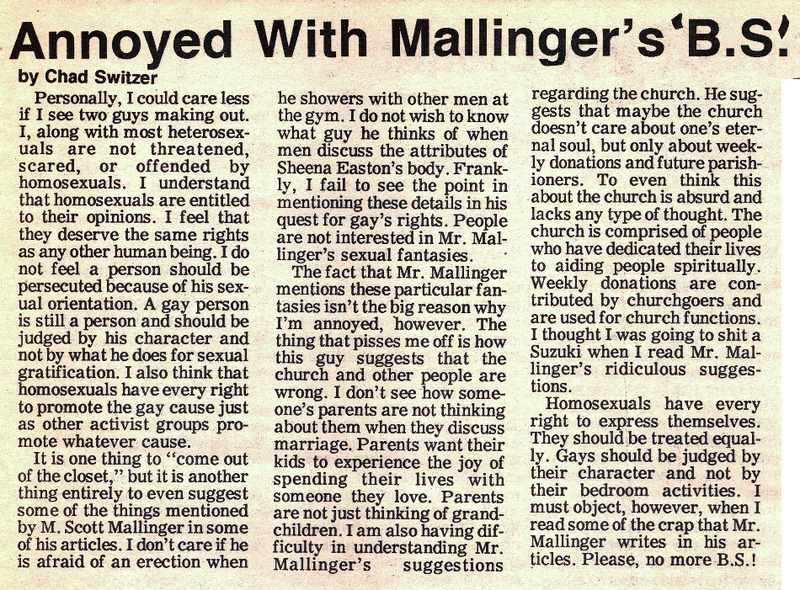
This article is a response to Mallinger's previous articles. Switzer states that he is not homophobic and that he believes gay people deserve equal rights. However, he says Mallinger's articles are pointless and his arguments about the Church are false.
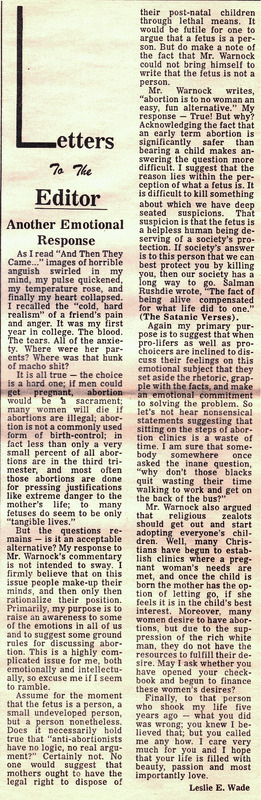
This letter from Leslie E. Wade discusses the issue of abortion and is in response to a previous article published in The Gleaner, "And Then They Came..." Wade reflects on the emotional and intellectual complexity of the issue.
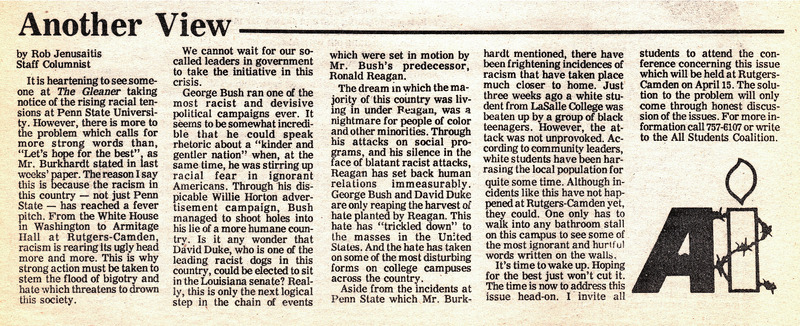
Article about racial tensions in the United States and how the government has been complacent or assisted in increasing racism. He calls on other students to take action as more racist attacks occur on college campuses.
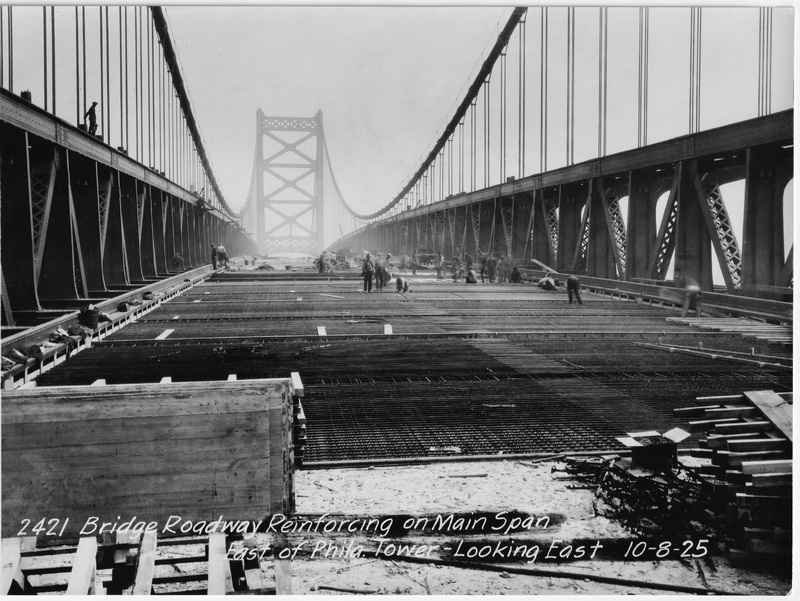
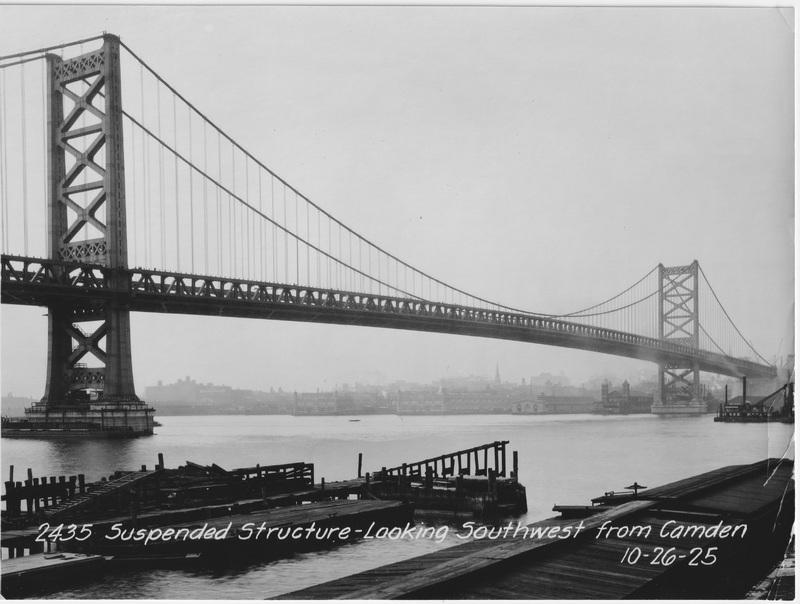
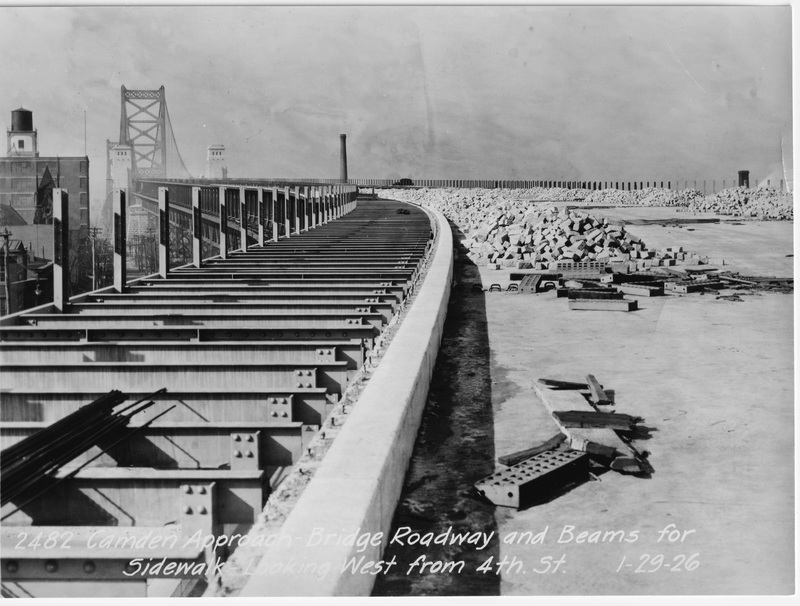
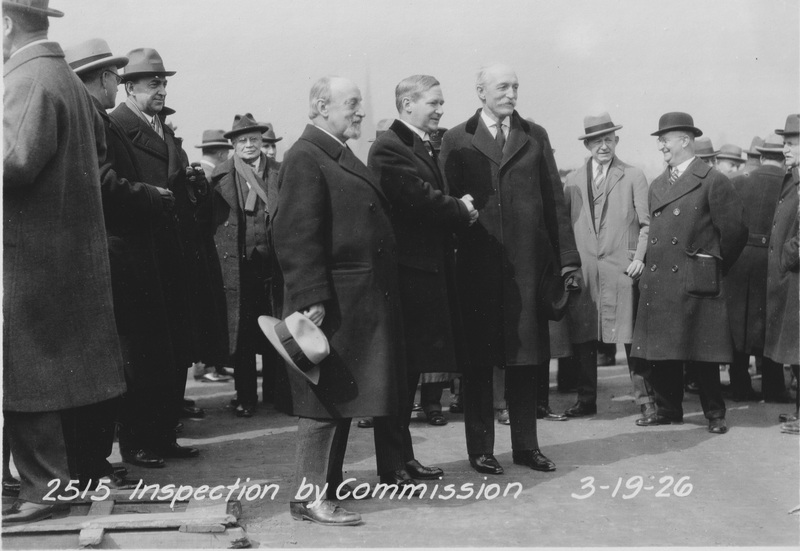
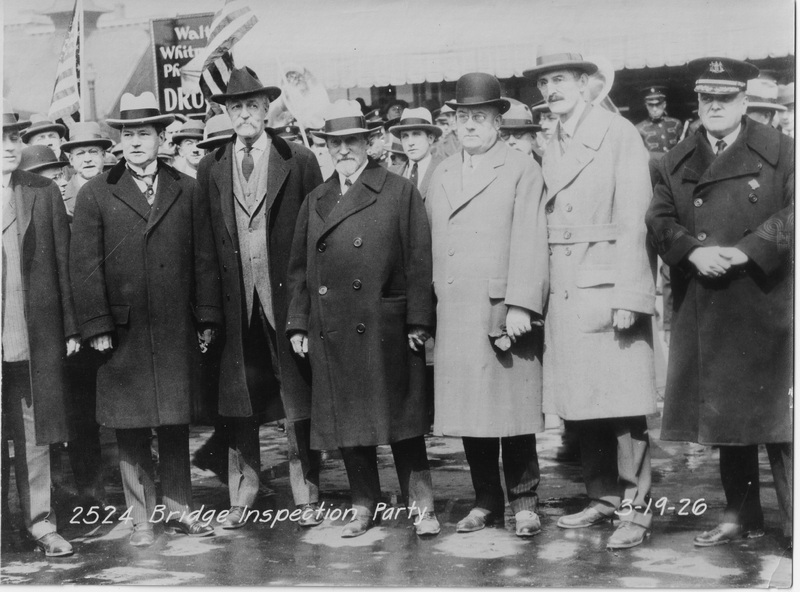
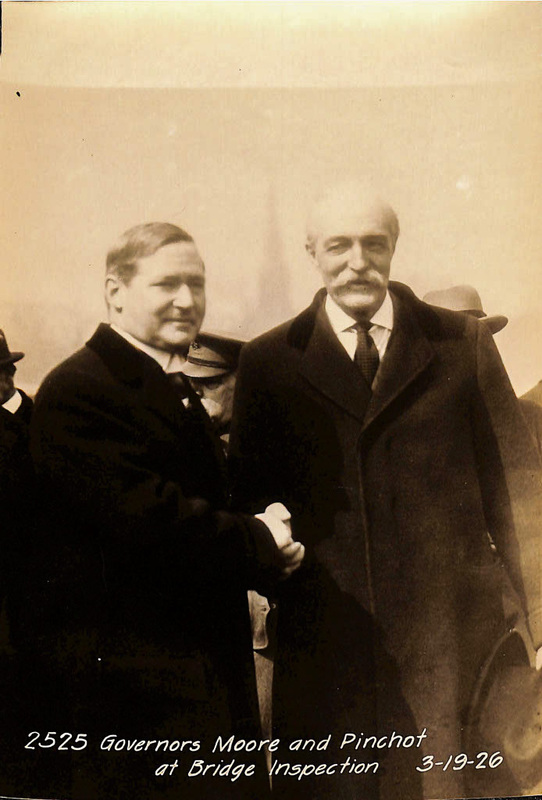
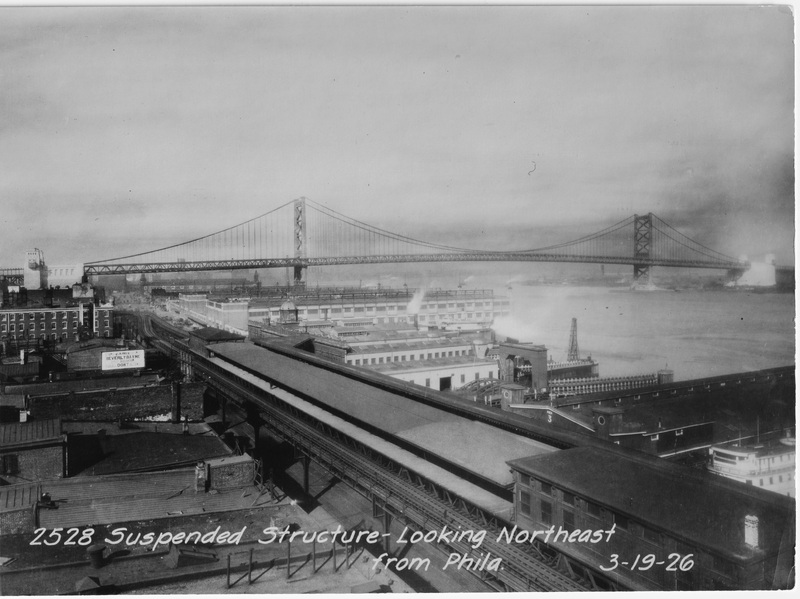
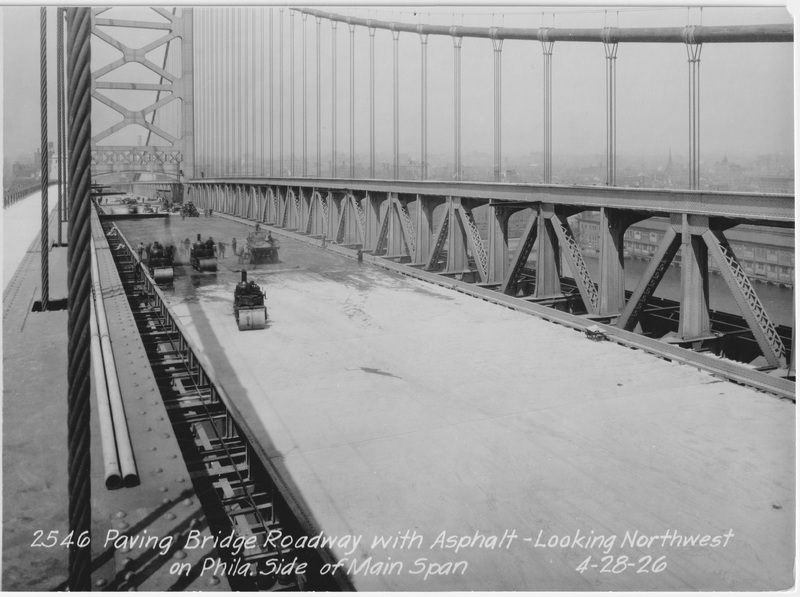
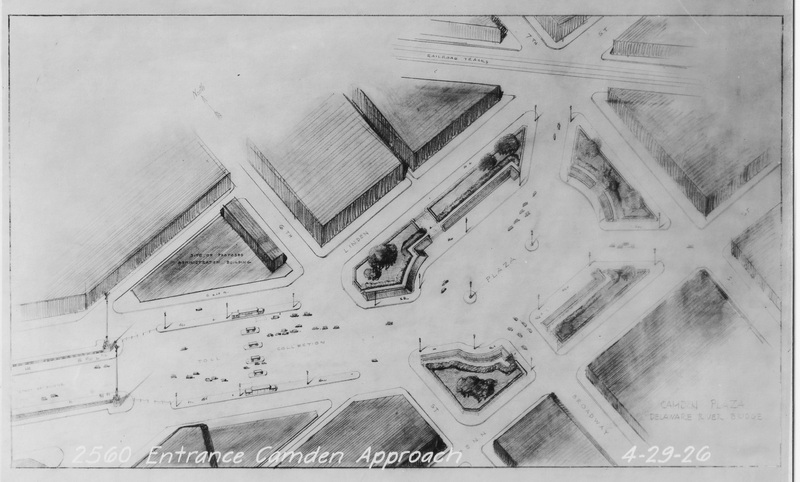
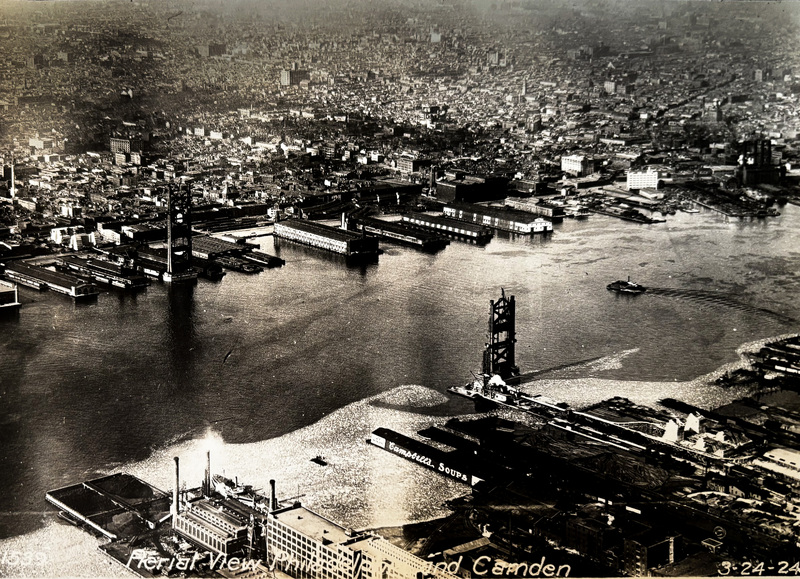
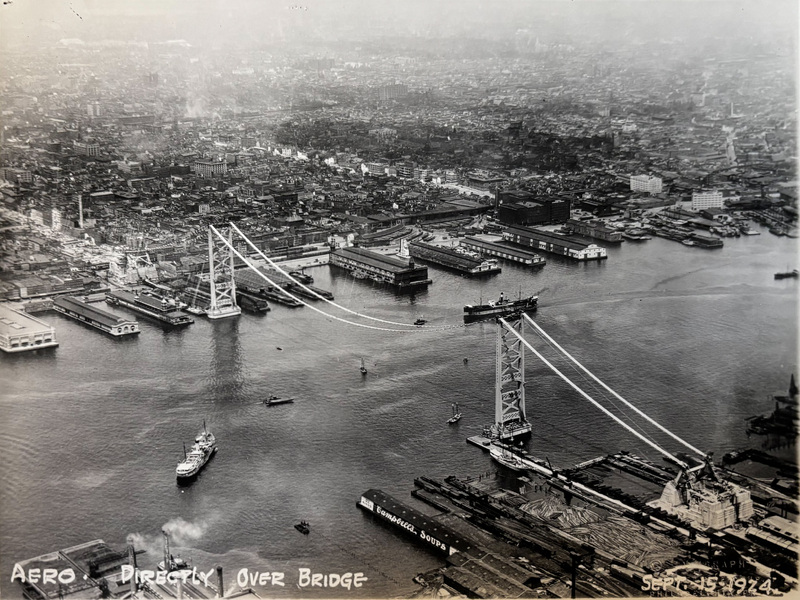
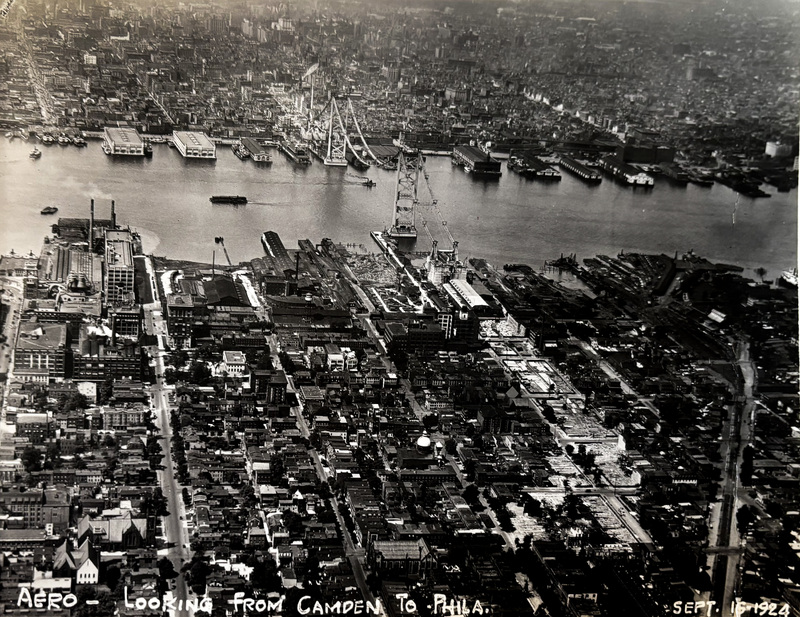
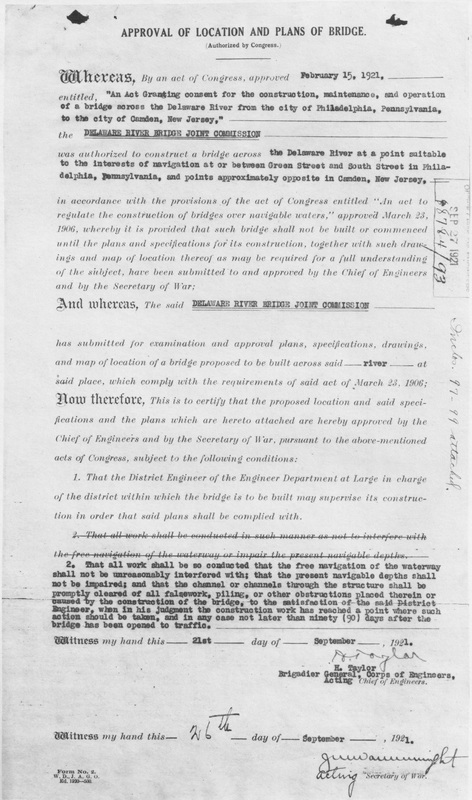
Copy of the approval for the construction plans and location specifications for the bridge across the Delaware River (Benjamin Franklin Bridge), signed by Harry Taylor, Acting Chief of Engineers, on September 21, 1921, and subsequently by Jonathan Mayhew Wainwright, Acting Secretary of War, on September 26, 1921.
The Editor-in-Chief narrates a moment when a woman was sexually assaulted and nearly raped her. He criticizes the security working at the mall where the assault occurred and their lack of concern.
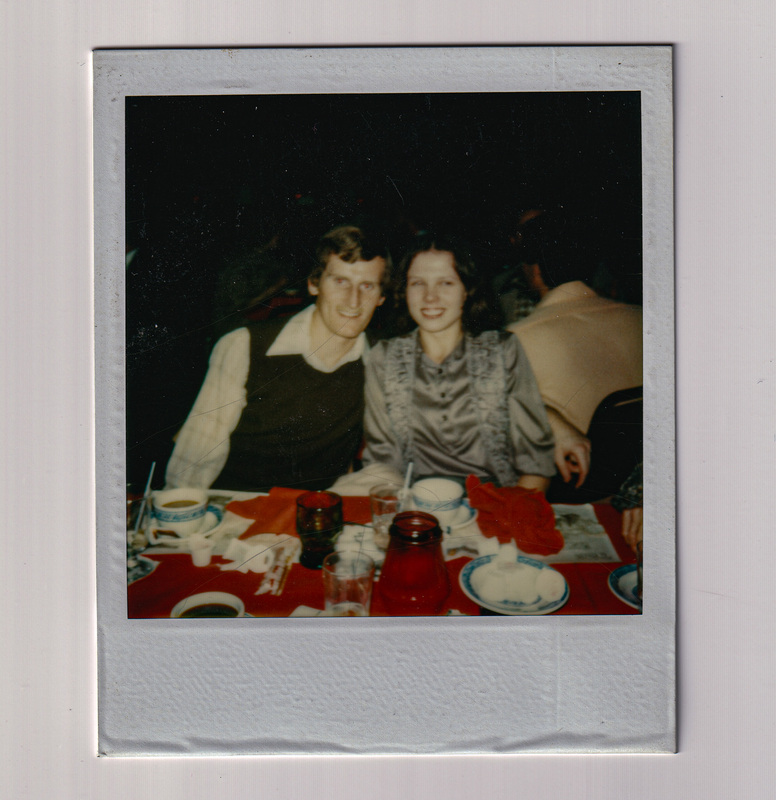
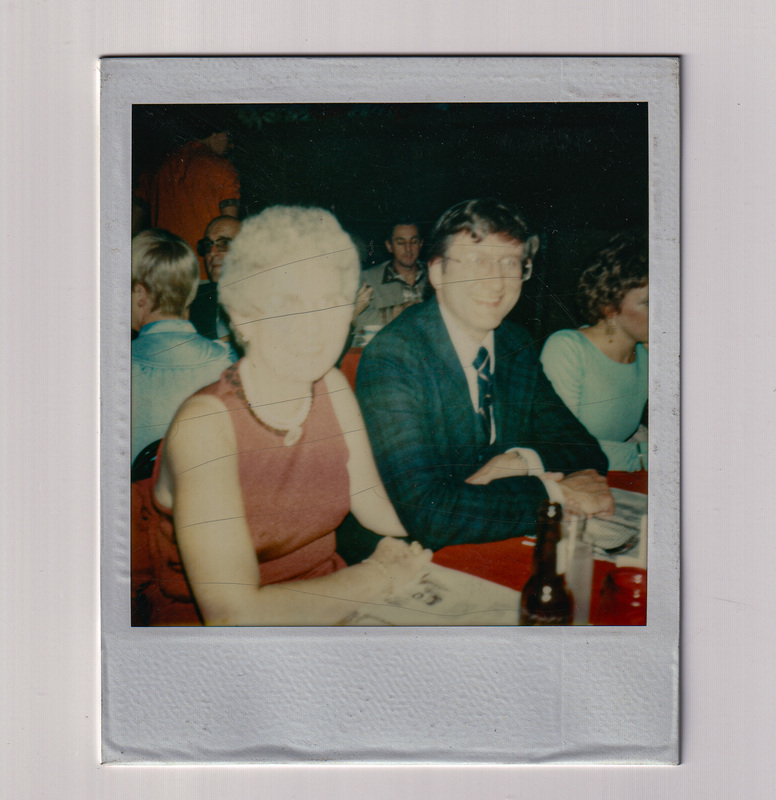
A pair of people are seated next to each other at a holiday party, looking at the camera. A woman on the left is wearing a pink/red dress and is washed out so that her face is indecernable. A man on the right is wearing a plaid suit and glasses. He's smiling. This photograph has some cracking.
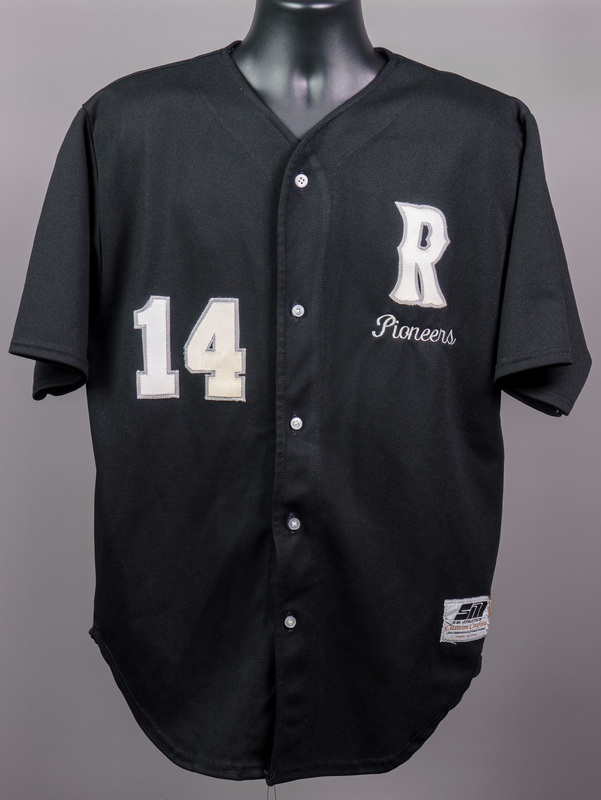
A black baseball jersey with the number 14 in white font and gray outline on the right breastplate, and the Rutgers "R" in white font and gray outline on the left breastplate with "Pioneers" in cursive underneath. On the bottom left corner is a S.M Athletics patch. Attached to the jersey is a image of the 1995 team and a blurb about the player that wore this jersey, Kristopher Giangreco.
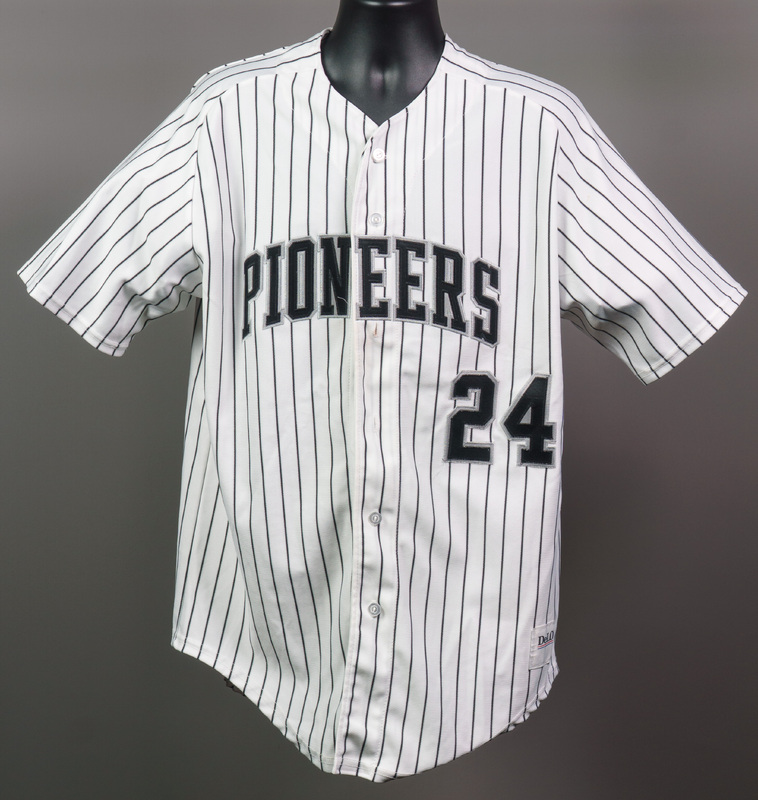
A white baseball jersey with black pinstripes. The number 24 in black font with a gray outline on the left rib cage and "Pioneers" across the chest. At the bottom left corner of the jersey is a DeLong patch. On the back is the large number 24. Attached to the jersey is a image of the 1996 team and a blurb the athlete, Thomas Marchisello, that wore this jersey.
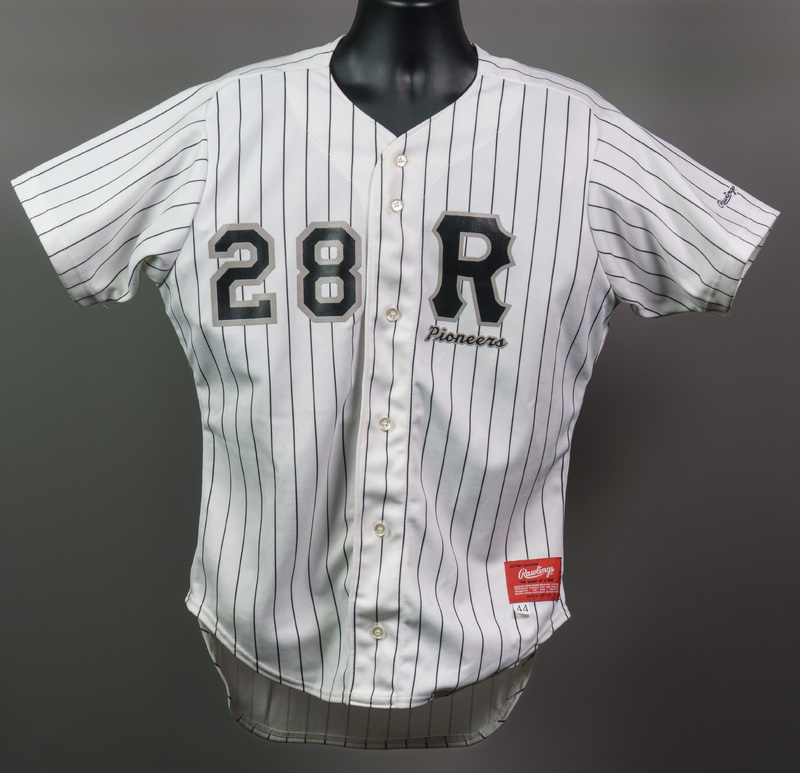
A white baseball jersey with black pinstripes, the number 28 in black font with gray outline on the right breastplate and the Rutgers "R" and "Pioneers" on the left breastplate. At the bottom left corner of the jersey is a Rawlings patch with the tagline: "the mark of a pro." On the left sleeve is a small Rawlings patch. On the back is the large number 28. Worn by Shawn Parks
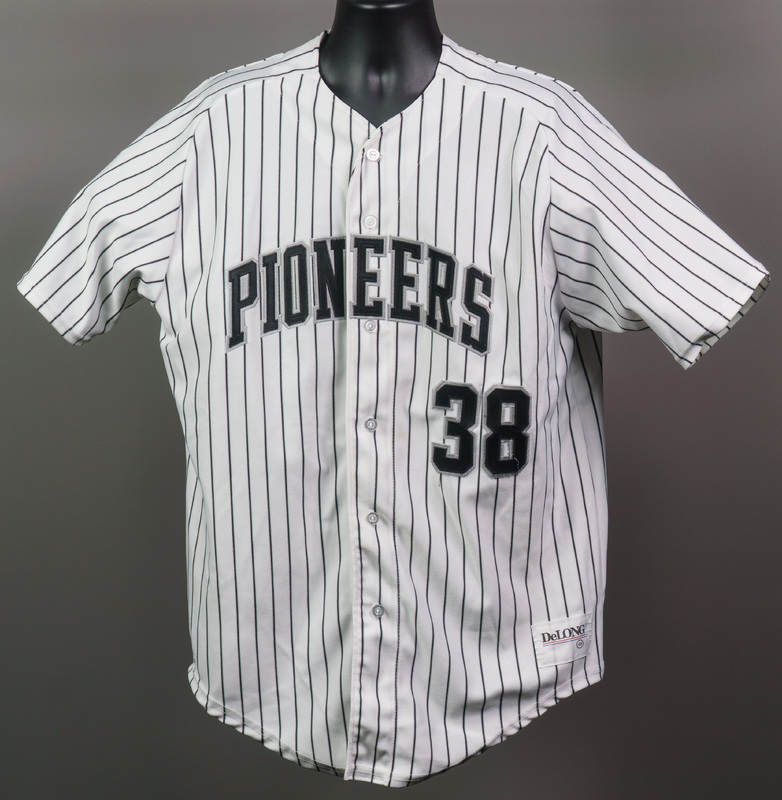
A white baseball jersey with black pinstripes. The number 38 in black font with a gray outline on the left rib cage and "Pioneers" across the chest. At the bottom left corner of the jersey is a DeLong patch. On the back is the large number 38.
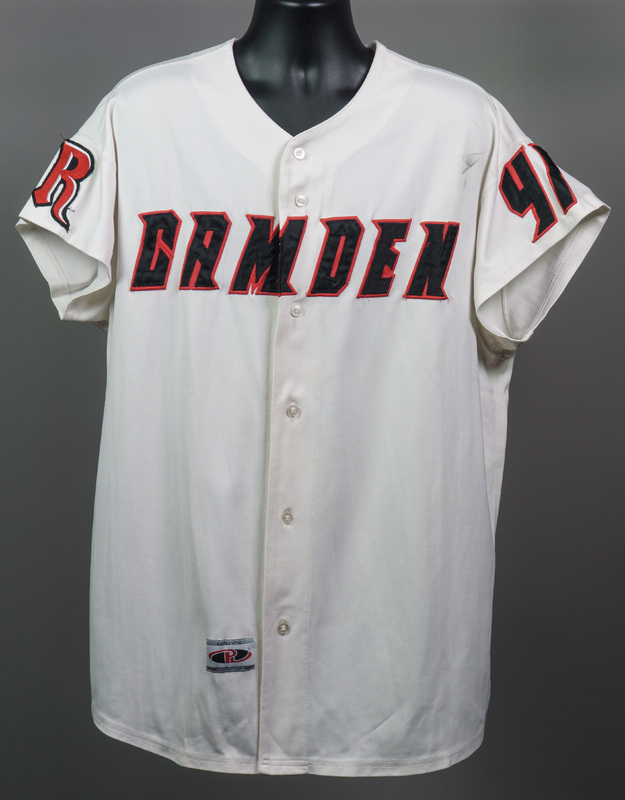
A white baseball Jersey with CAMDEN emblem on front, number 41 on left shoulder, Rutgers R on right shoulder, and Raptor team logo with large number 41 on back
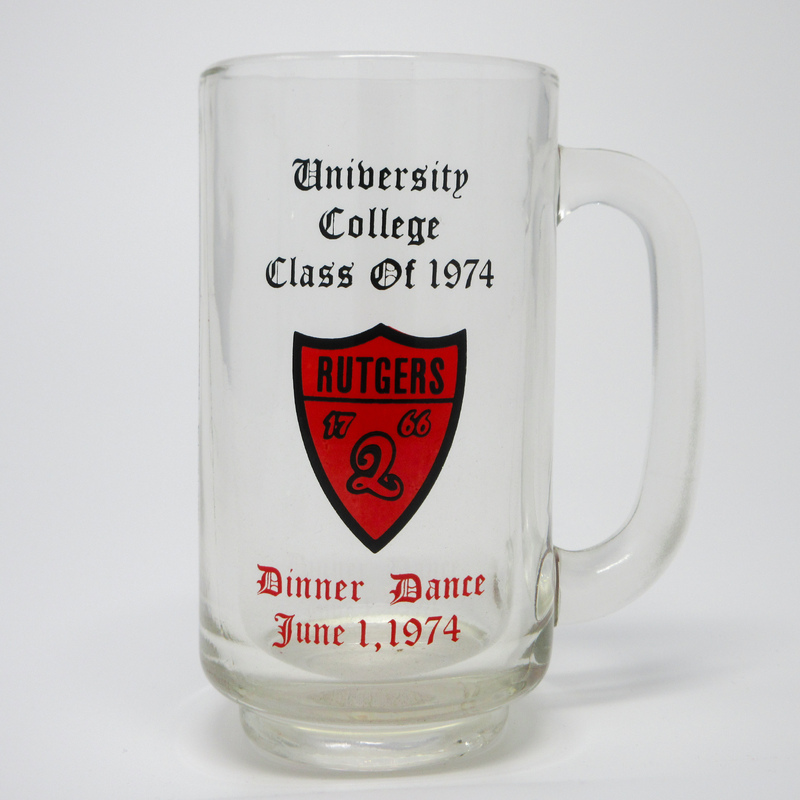
Glass beer stein with black engraving on top of "University College Class of 1974". Underneath it is Rutgers shield emblem with engravings "Rutgers 17 2 66". Underneath in black engraving is "Dinner Dance June 1, 1974".
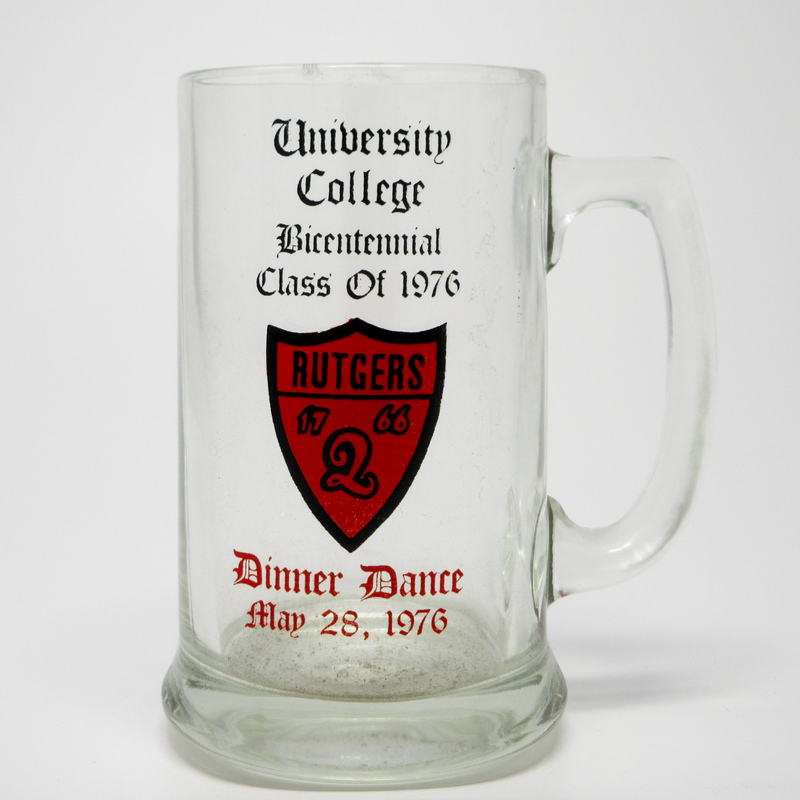
Glass beer stein with black engraving on top of "University College Class of 1974". Underneath it is Rutgers shield emblem with engravings "Rutgers 17 2 66". Underneath in black engraving is "Dinner Dance May 28, 1976".
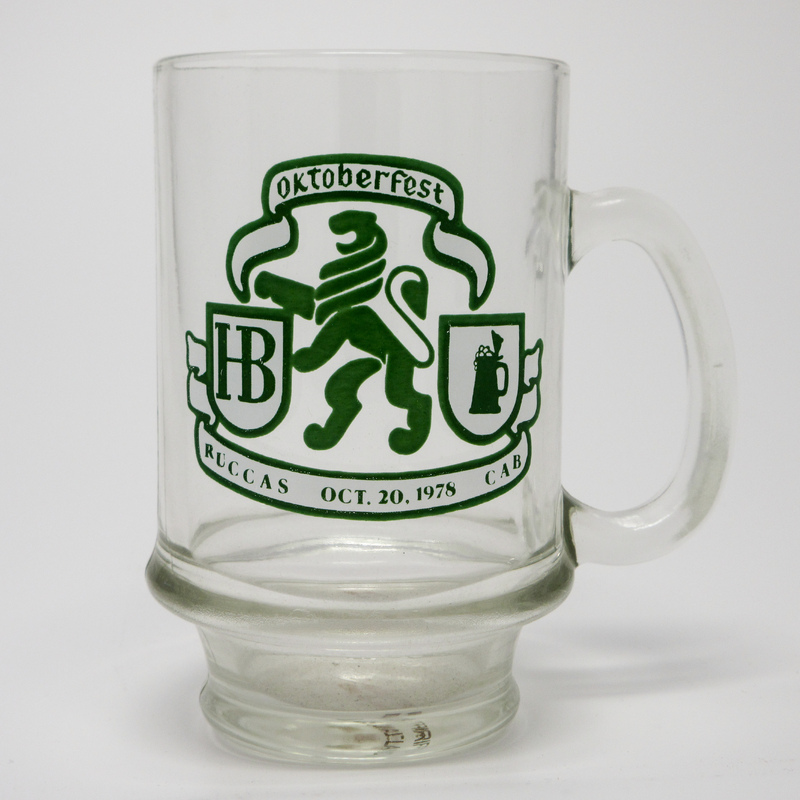
Glass beer stein with green and white crest of a lion with a shield engraved with "HB" and nother shield with a beer stein. At bottom of crest of several inscrptions "RUCCAS", "OCT20.1978" and "CAB". Item is embossed with producer label on bottom "Griffith Pottery Iteland, PA. 19075"
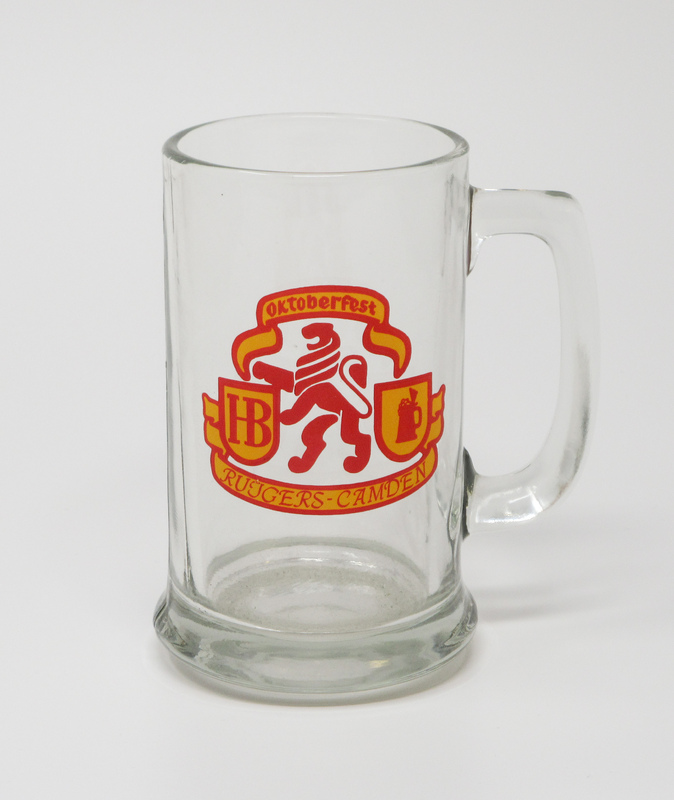
Glass beer stein with red and yellow of a lion with a shield engraved with "HB" and nother shield with a beer stein. At bottom of crest of several inscrptions "Rutgers-Camden"
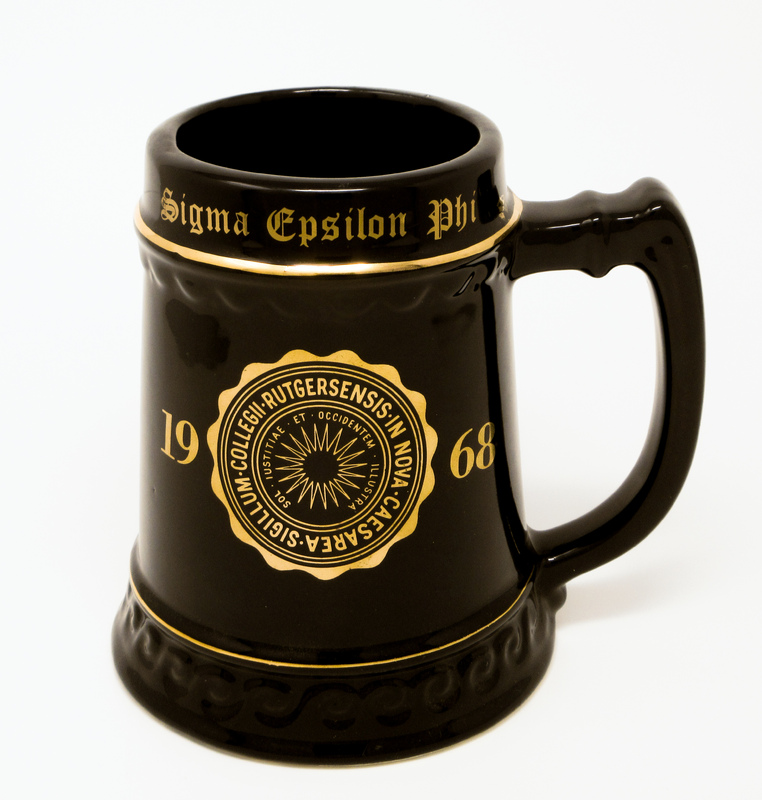
Black Ceremaic Beer Stein with a crest of the Rutgers fraternity on the front of the stein with latin phrases "CAESAREA SIGILLUM COLLEGII RUTGERSENSIS IN NOVA" with 19 and 68 as well. Item also has the name "RICH M" on back
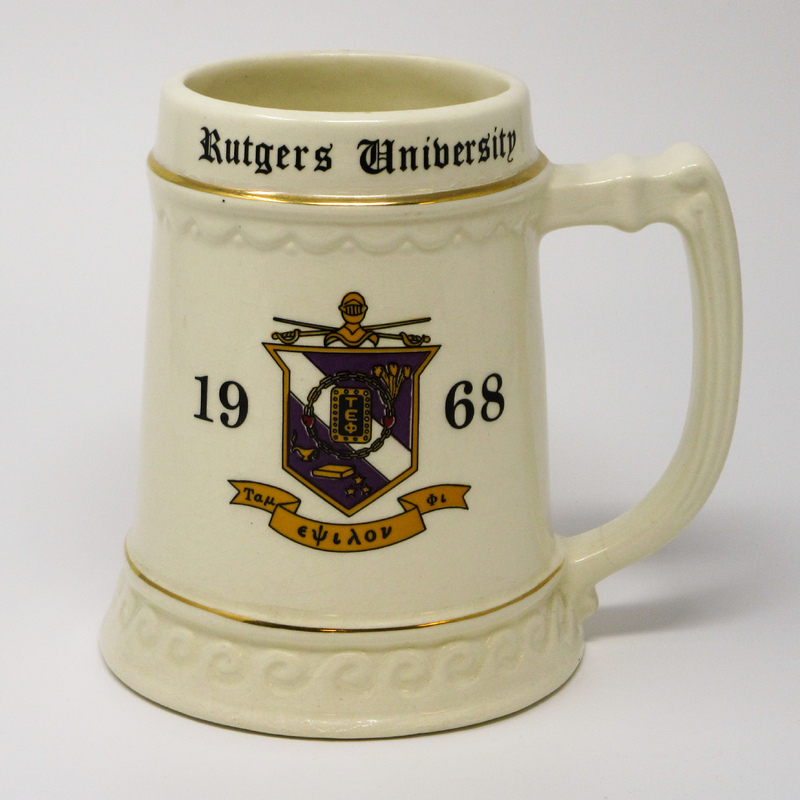
White Ceramic Beer Stein with embossed labeling on the bottom and a crest of Tau Epsilon Phi fraternity on the front of the stein. Item also has the name "Rocky" on the reverse.
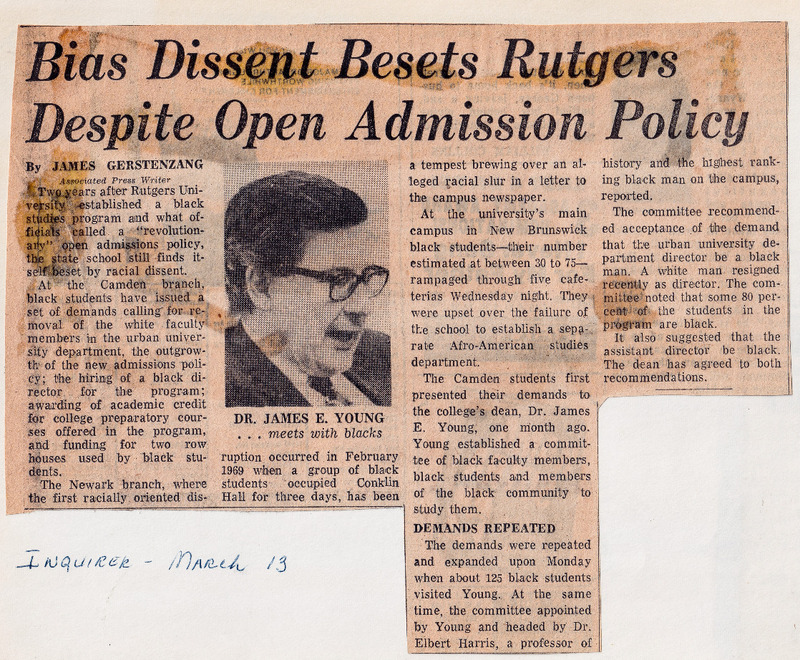
Black Students at Rutgers are still fighting for representation at Rutgers in a multitude of areas, despite Rutgers introducing a "revolutionary" open admissions policy.
Flyer for GI Day events at the University of Pennsylvania on Saturday, March 1, 1969. The events were organized under the auspices of the Ultimate Weapon, which was a newsletter published in Philadelphia by the Fort Dix Free Speech Movement (an organization of GIs from Fort Dix, New Jersey).
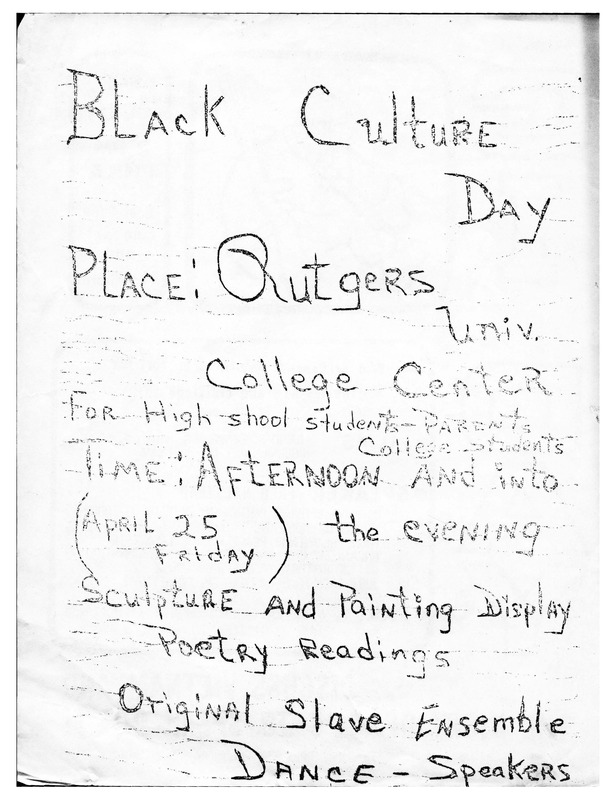
The reverse side of the flyer was used by Rutgers–Camden students for a mimeographed message promoting Black Culture Day at the College Center on Friday, April 25, 1969. Note that the flyer does not explicitly state the year of the events, but supplemental research revealed that this archival item is from 1969.