Author takes a hardline stance against the actions of Black students who protested the selection of an all-white administran for the Urban University Division by damaging parts of the library.
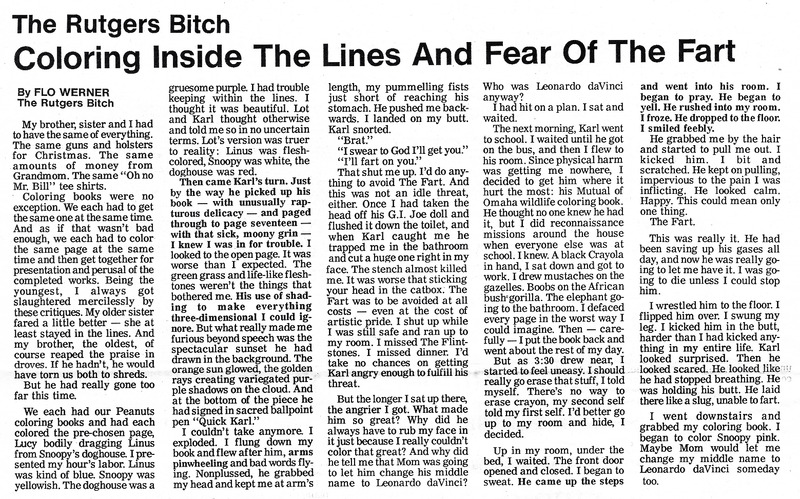
Flo Werner recounts a humorous and nostalgic story about a childhood rivalry with her brother, Karl, centered around a "Peanuts" coloring book and a particularly memorable sibling prank.
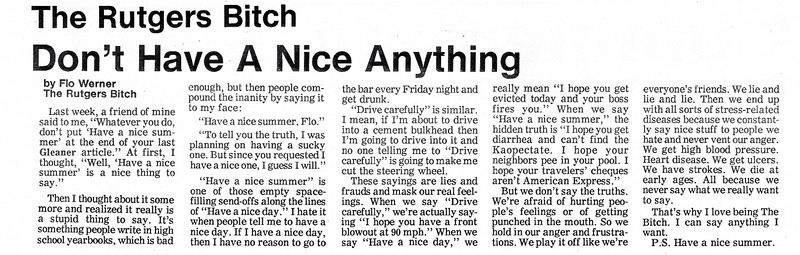
In this final column for the semester, Flo Werner vents her frustration with the common phrase "Have a nice summer," arguing that such pleasantries are often empty, fraudulent, and used to mask our true, less-than-polite feelings toward others.
Flo Werner writes about the self-loathing triggered by seeing a fitness model on television, leading her to attempt a grueling workout with her "athletic" boyfriend that ends in immediate regret and a return to her original habits.
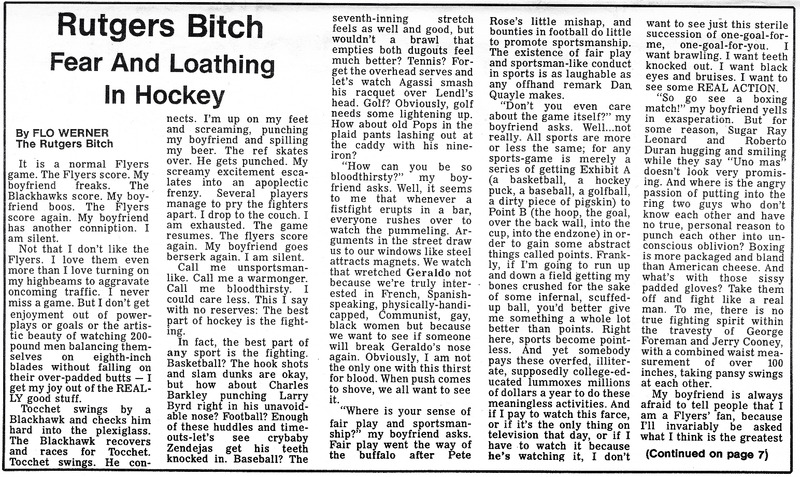
Flo Werner argues that the "best part of any sport is the fighting," admitting that she finds more enjoyment in a violent bench-clearing brawl than in the technical skill of the game. She dismisses the concept of sportsmanship as "laughable" and expresses a "bloodthirsty" desire for "REAL ACTION," contrasting her preference for raw aggression with the sterile, "civilized" nature of other professional sports.
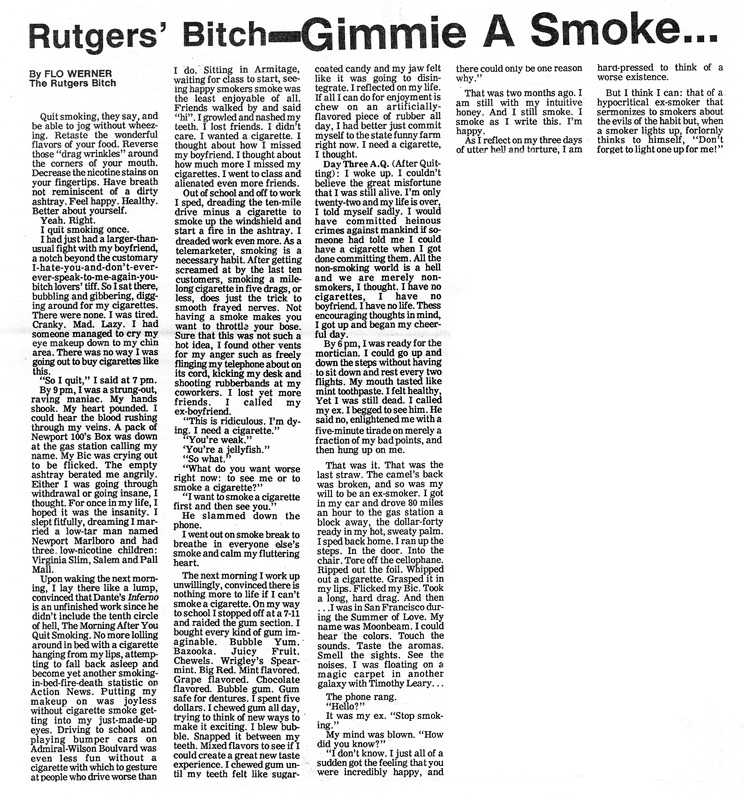
In the commentary piece "Rutgers’ Bitch—Gimmie A Smoke...", author Flo Werner provides a raw, humorous account of her failed attempt to quit smoking, detailing the physical and emotional withdrawal she experienced. She ultimately concludes that the habit is too deeply ingrained to overcome, expressing frustration with "hypocritical" ex-smokers who sermonize against the vice.
Flo offers a scathing and humorous critique of the Ku Klux Klan, attacking both their hateful ideology and their "tacky" white conehead fashion choices.
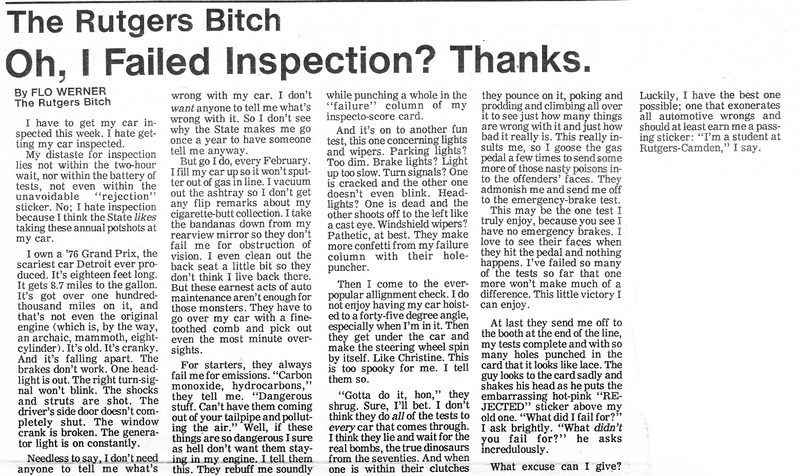
Flo Werner humorously vents her frustration over her aging 1976 Grand Prix failing its mandatory state vehicle inspection. She mocks the "scary" mechanical state of her car and sarcastically suggests that simply being a Rutgers-Camden student should be a valid excuse for driving a vehicle with a "REJECTED" sticker.
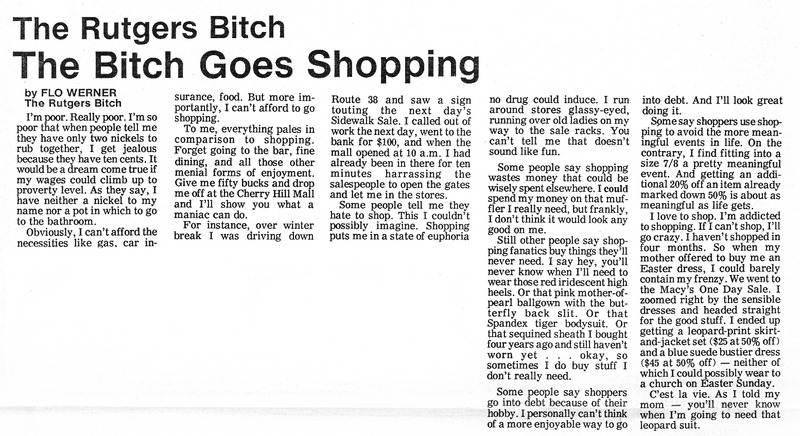
Flo describes her intense love for shopping, calling herself an "addict" who finds a state of euphoria in malls that "no drug could induce." Despite her self-described poverty, she humorously details her "maniac" behavior during sales and her inability to resist buying items she doesn't need, like a spandex tiger bodysuit or iridescent high heels.
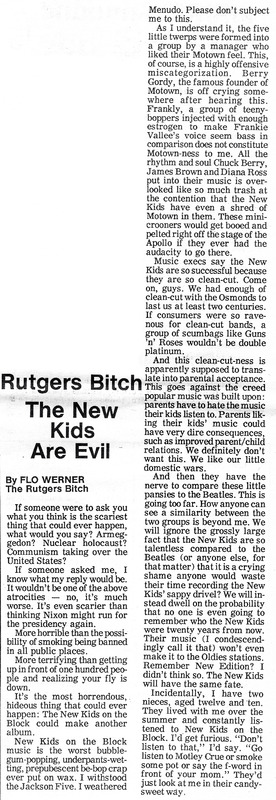
Flo Werner scathingly critiques the boy band New Kids on the Block, dismissing their music as manufactured, corporate "drivel" that lacks the soul of legendary acts like the Beatles. She argues that the group's popularity is a fleeting marketing fluke and predicts that they will be completely forgotten by the public within twenty years.
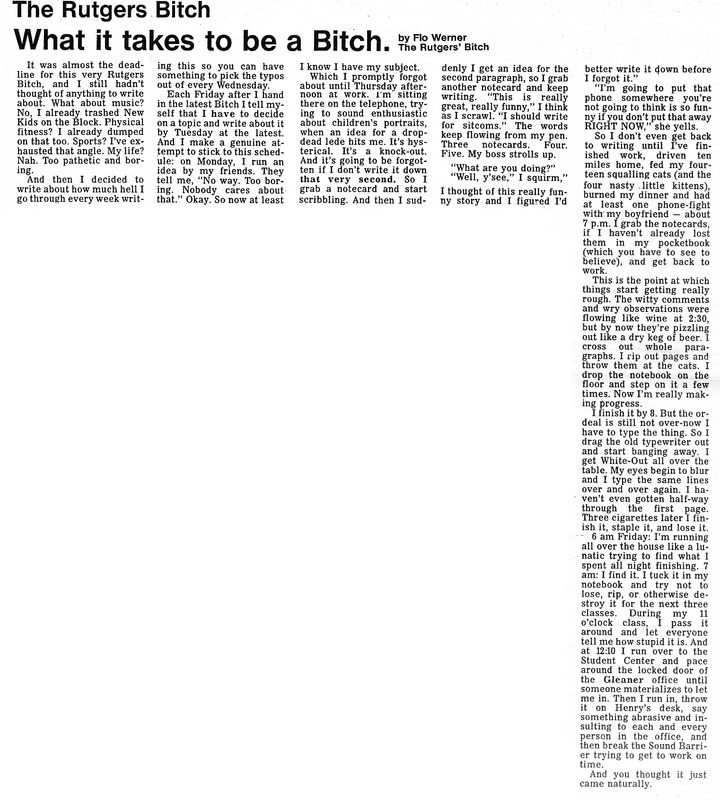
Flo breaks the fourth wall to describe the chaotic and stressful process of writing her weekly column, from the "hell" of missing deadlines to the physical toll of late-night typing and editing.
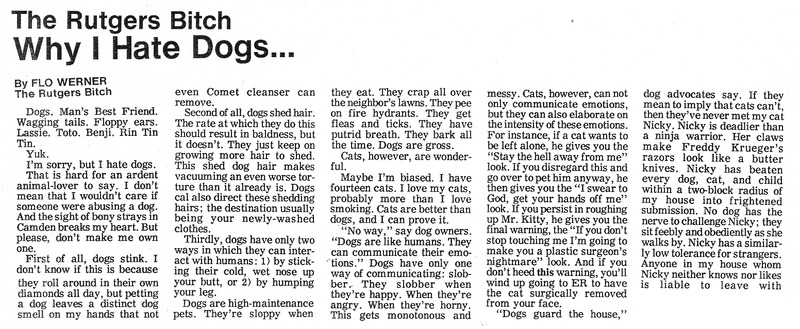
In this column, Flo Werner explains her strong dislike for dogs, citing reasons such as their smell, shedding, and "sloppy" behavior. She contrasts them with cats, whom she praises for being more expressive and independent
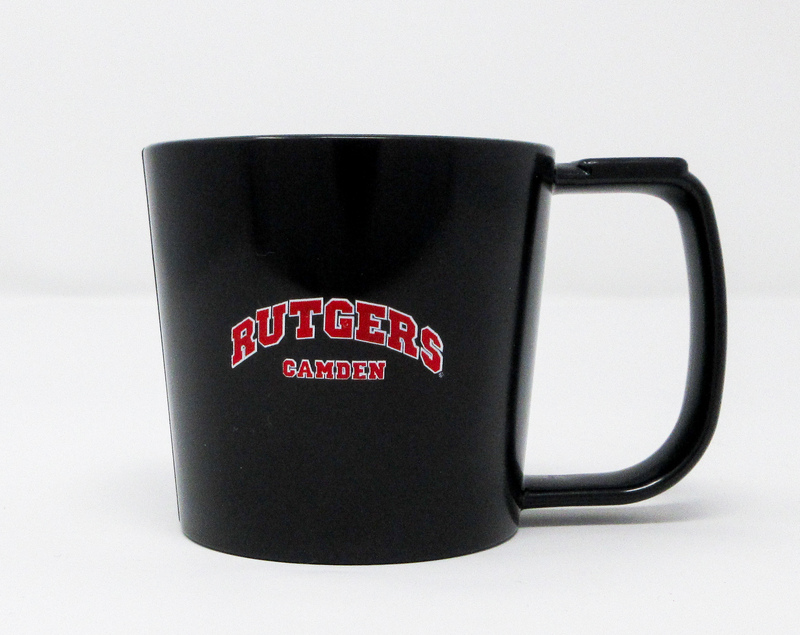
Small black plastic cup with engraving "Rutgers Camden" on front and no bottom. Has a small paper strip within it that calls it a "Pik-Cup" and states the cup is used to reduce your carbon footpring.
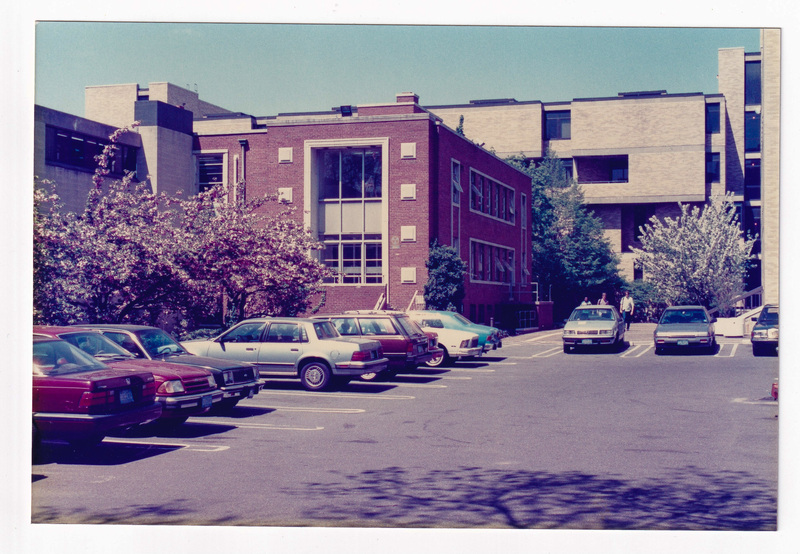
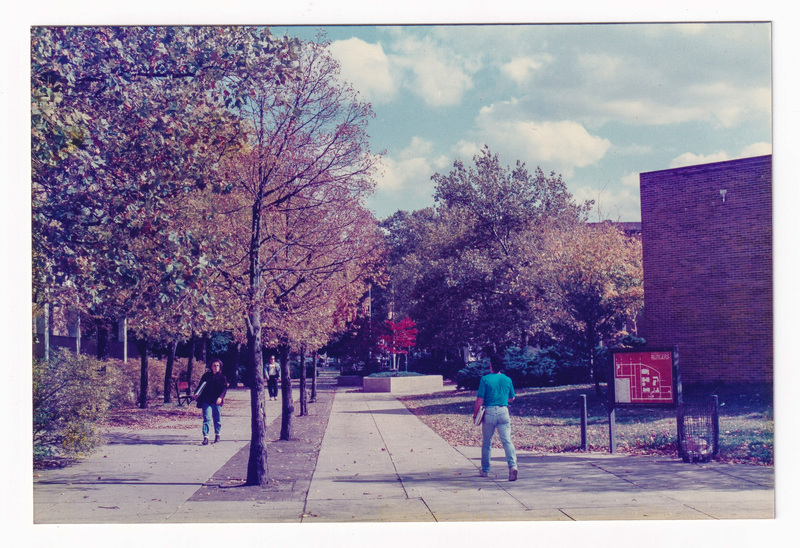
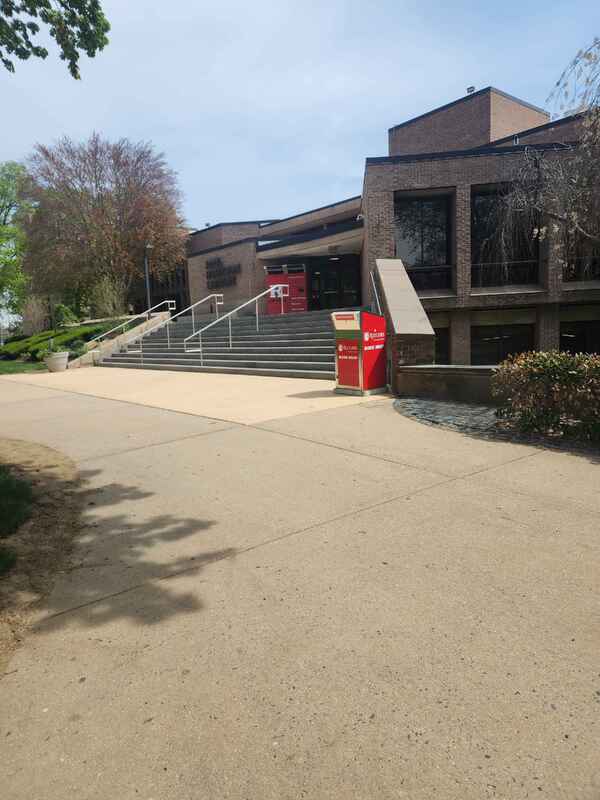
A small parking lot filled with cars. Featuring a red brick building with either a light brick expansion or neighboring a light brick building. Three people are walking towards the parking lot from the building.
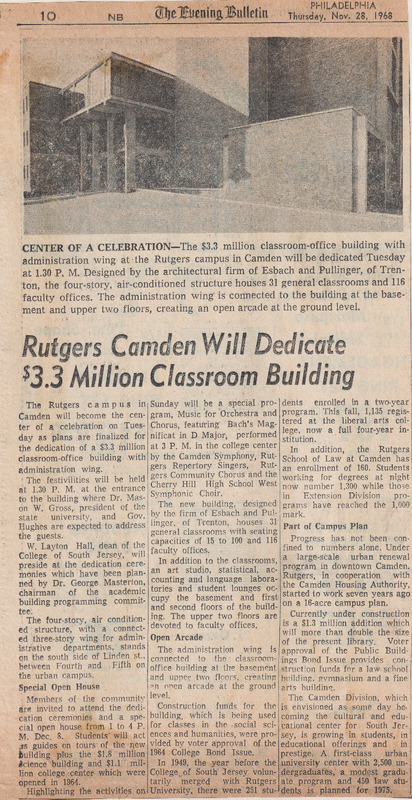
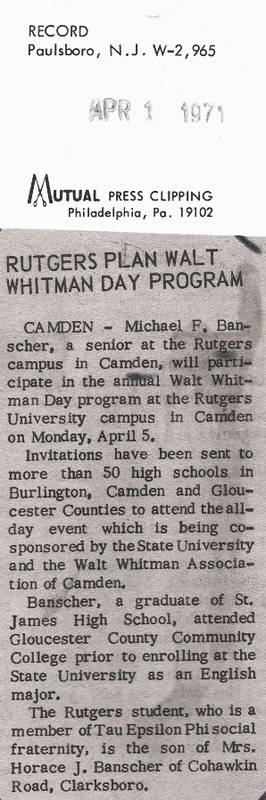
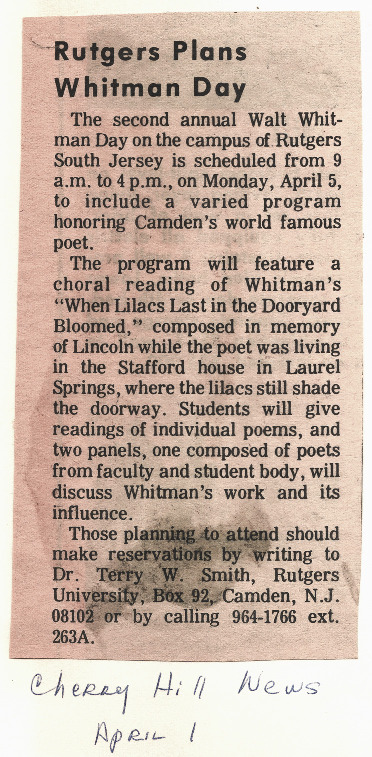
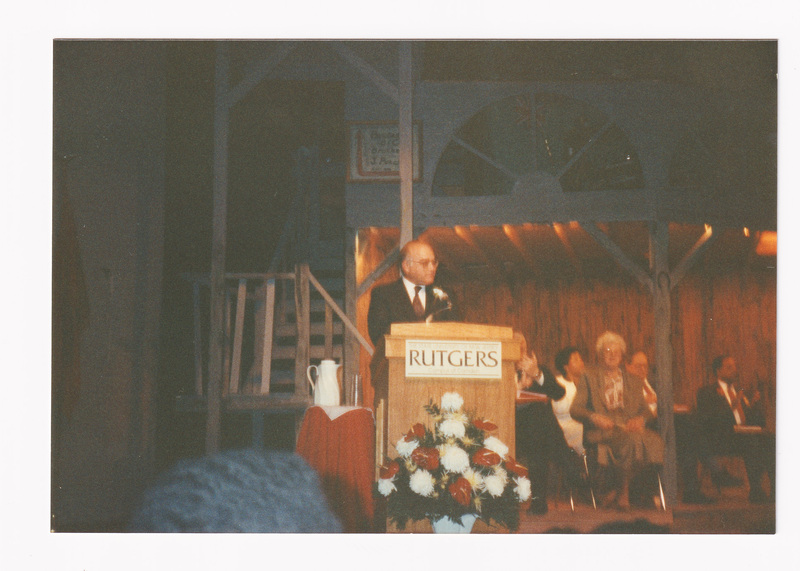
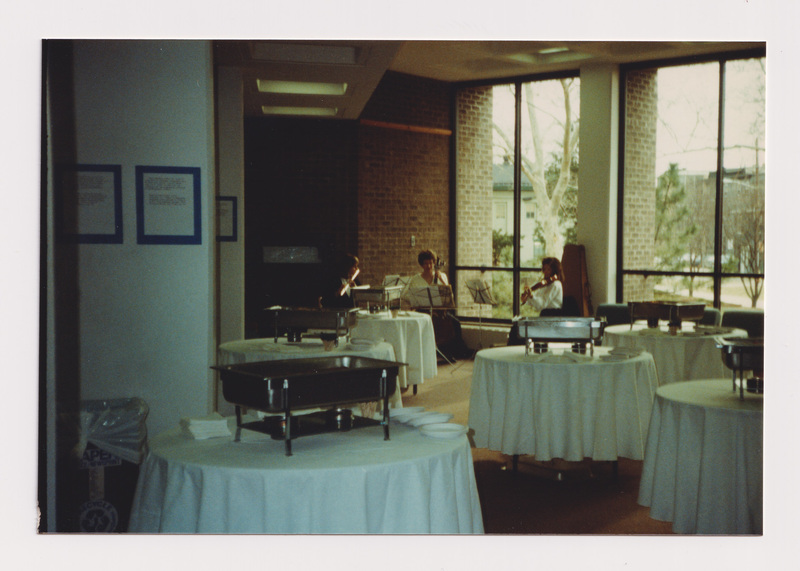
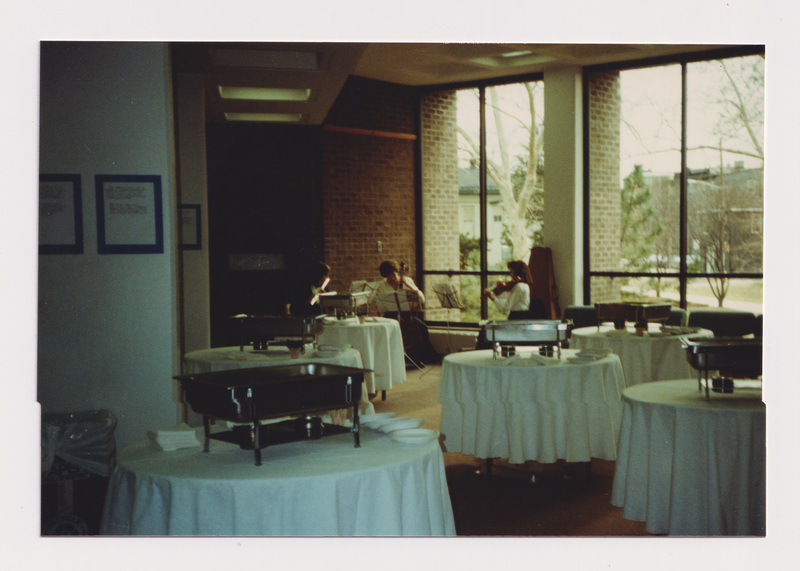
The new building, not named in this article, is set for dedication on the coming Tuesday, with a ceremony including open house tours of the building by students and a performance by the symphony in the campus center. The article mentions that this is part of a greater expansion planned for the campus in the future.
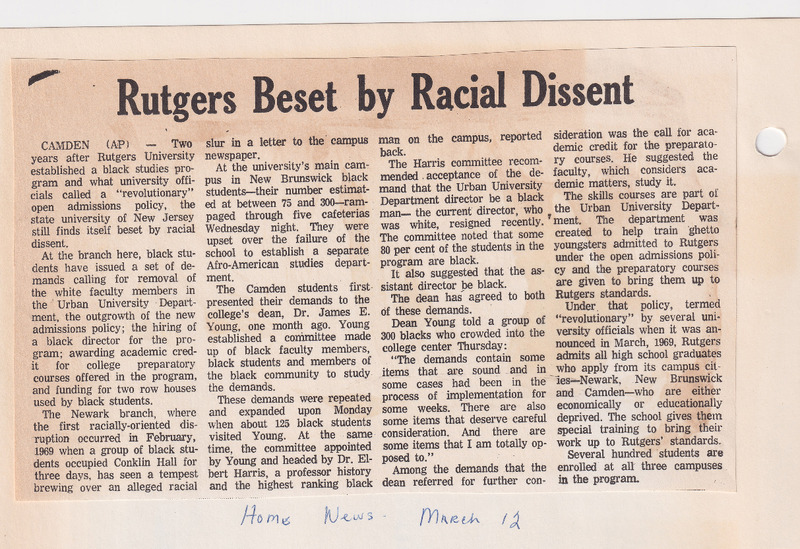
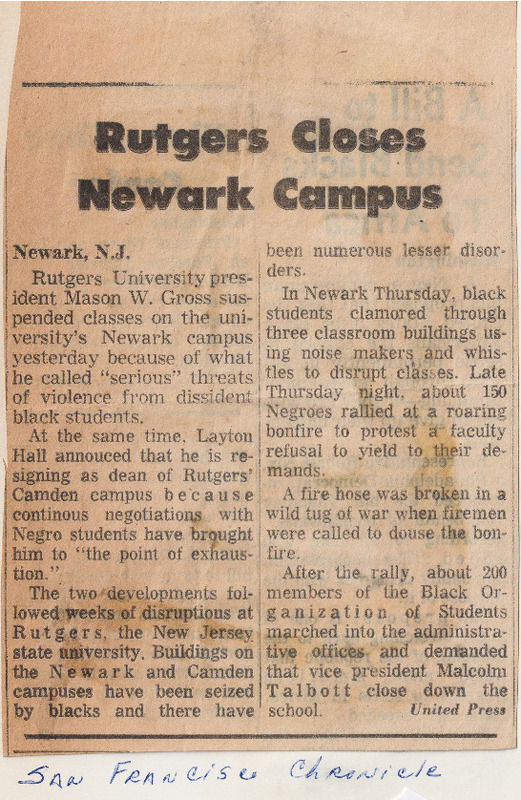
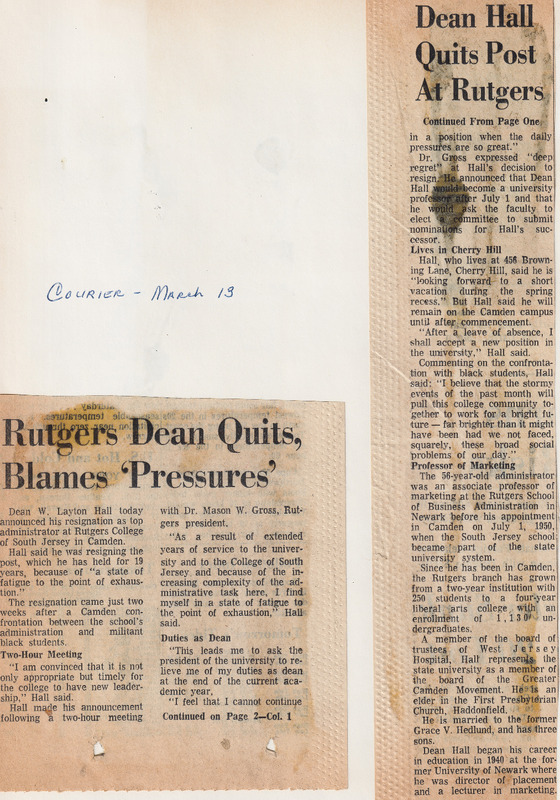
Both the Newark and Camden campuses have been closed because of Black students protesting against the administration. This is said to be the cause of Layton Hall, the former dean, retiring.
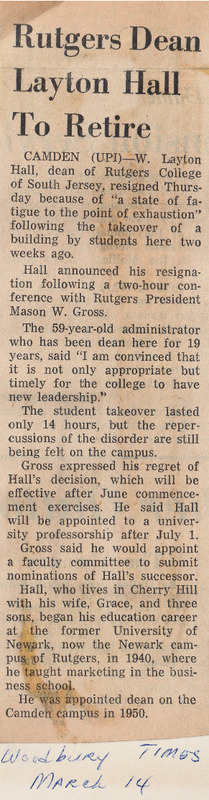
Layton Hall, former dean, retires after student protests have fatigued him "to the point of exhaustion." The university president expressed his regret, coming after a 14-hour campus takeover which has apparently left a big impact on the campus atmosphere.
Dean W. Layton Hall is resigning from his post, stating that he cannot carry out his duties as dean any longer because of exhaustion. The article goes on to discuss his past and his positions before being Dean.
Dr. Gross defended his position of opening Rutgers to any disadvantaged students with a high school diploma in front of a meeting of angry parents, stating that it would only add 500 new students to a total student body of 20,000. He also discussed the sit-in and why the police were not called.
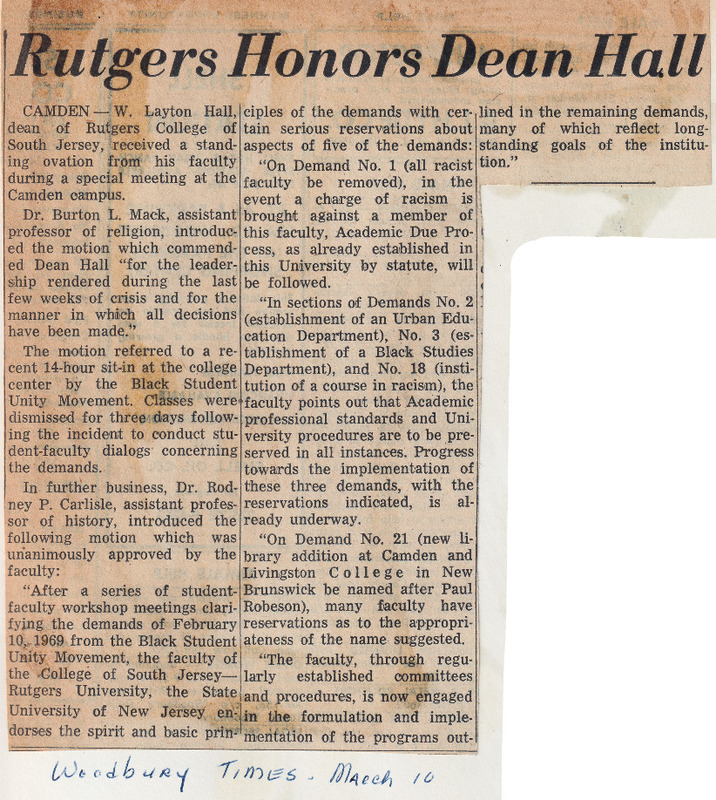
In the aftermath of the sit-in, Dean Hall was honored during a faculty meeting, during which the demands of the Black students were discussed. Three were partly approved and already underway, one was claimed to already be under academic due process, and one (the renaming of the library to Paul Robeson Library) was partially rejected due to "reservations" from the faculty.
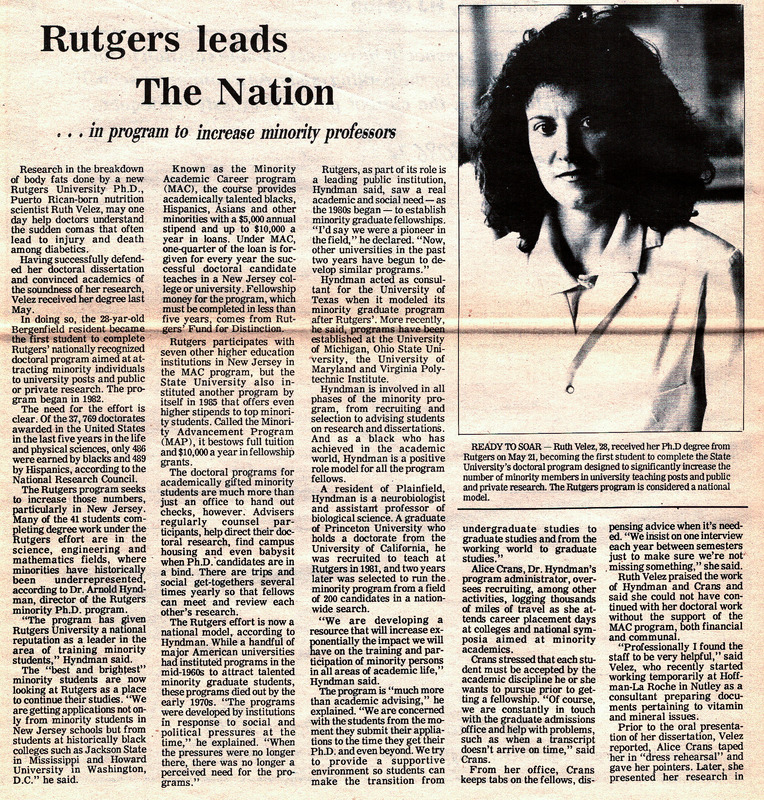
Article about the Minority Academic Career program (MAC) at Rutgers and Rutgers University's nationally recognized push to increase diversity among doctoral candidates.
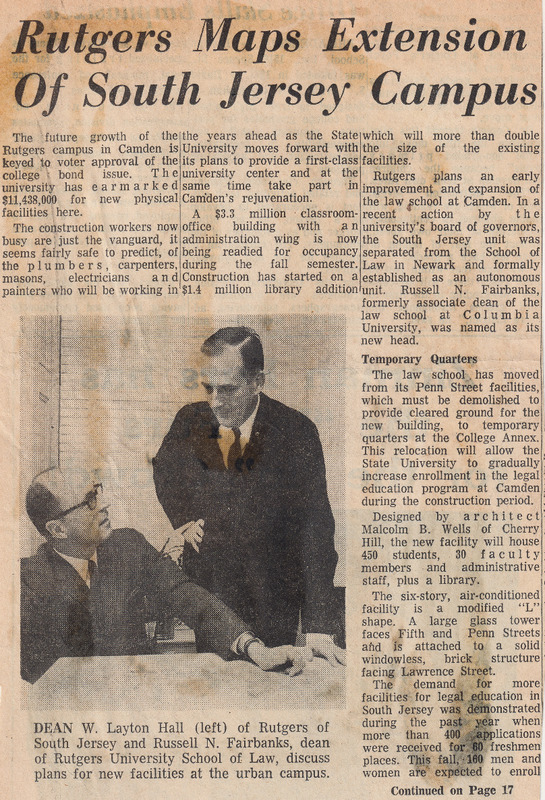
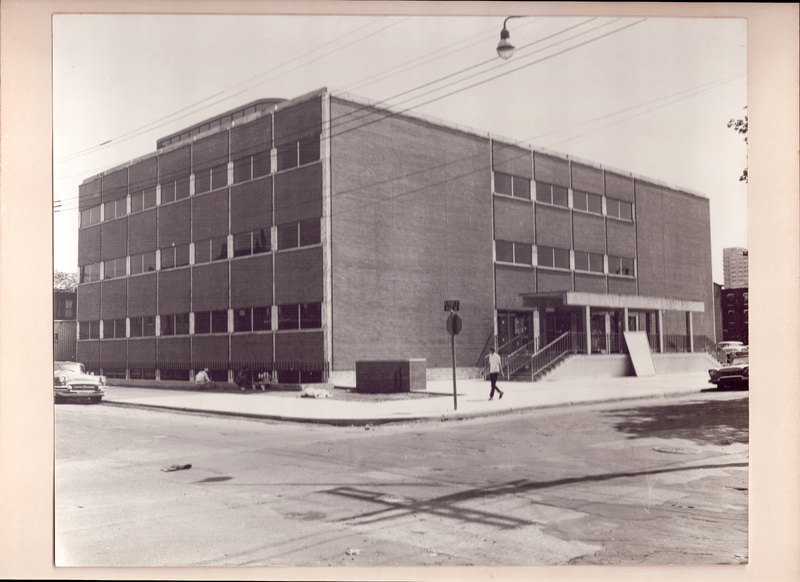
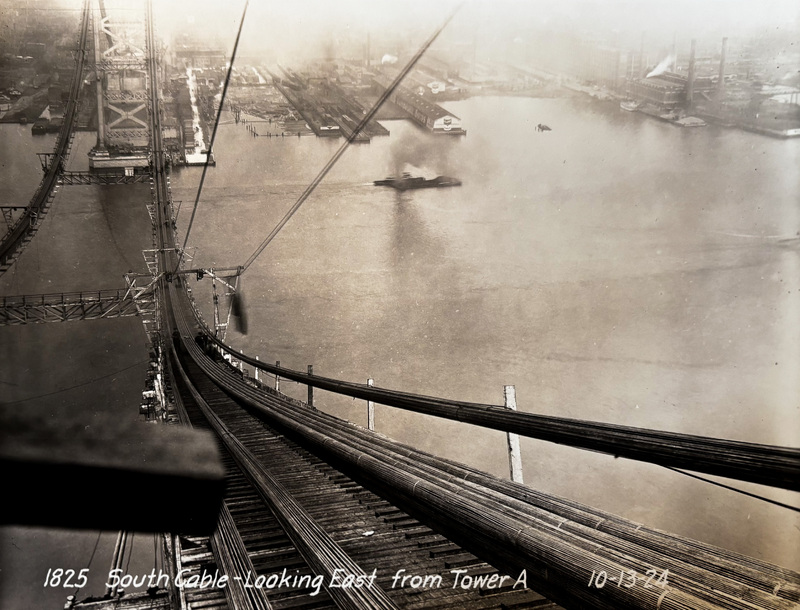
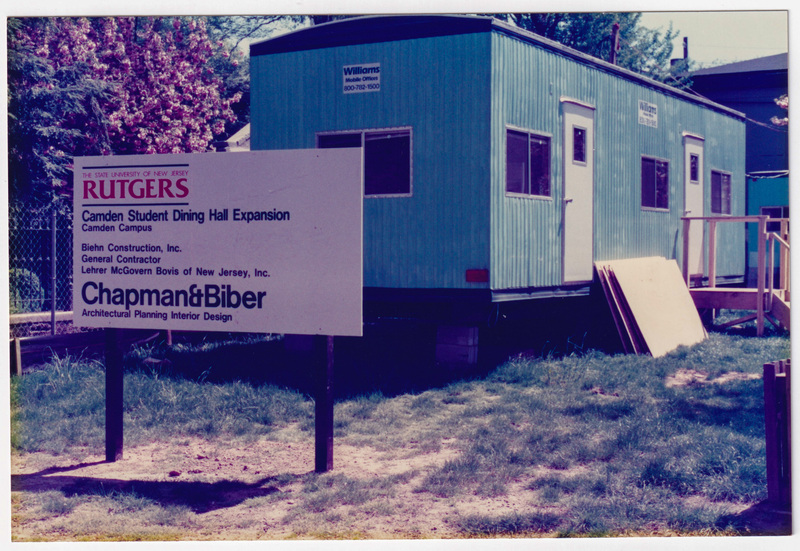
The school's extension, which will be used for the law school and a library, has started construction. It mentions future plans for the urban renewal project.
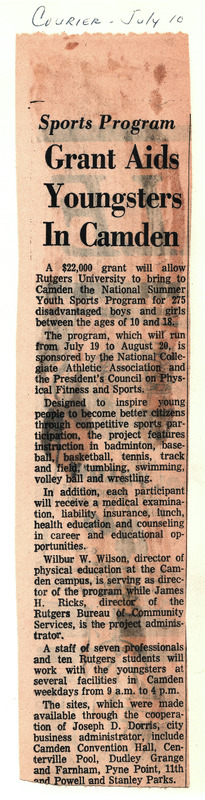
National Collegiate Athletic Association and Presidents Council on Physical Fitness and Sports provides $22,000 to facilitate a youth sports program in the Camden Community. The University hopes that by providing an outlet, it can help improve the local community.
Rutgers students, who voted in a national poll called "Choice '68," voted for Eugene McCarthy for president, as well as having 54.7% votes for reduction of military activity in Vietnam, 33.95% for complete cessation of bombing, and 33.33% for a reduction of bombing.
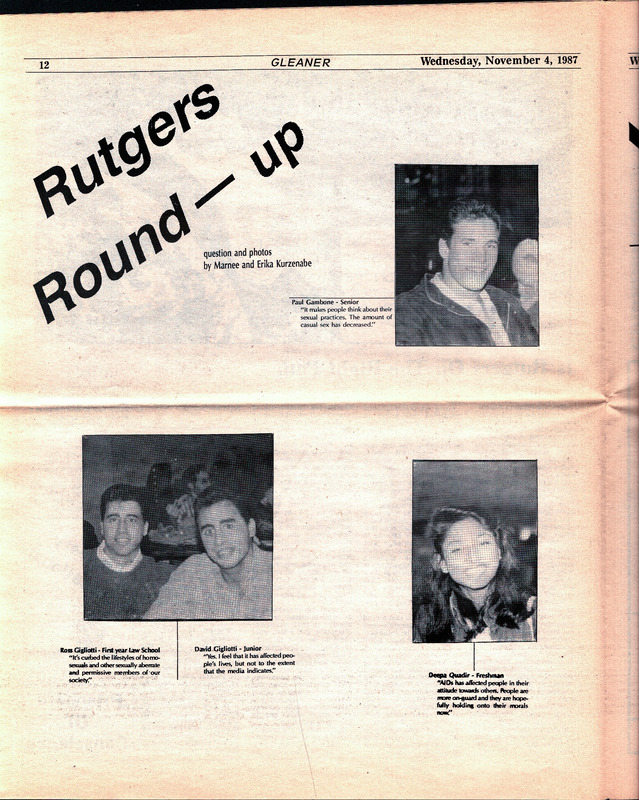
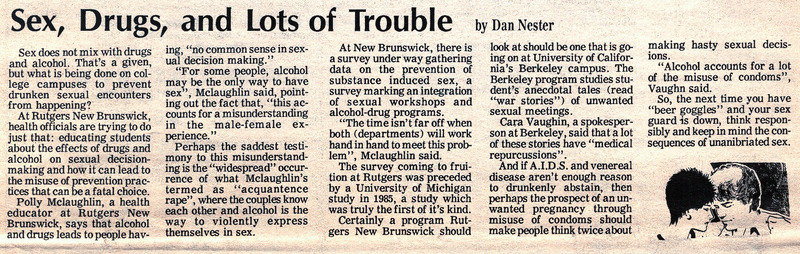
The Gleaner asked different students around campus, "do you think that the AIDS issue has affected people's lives at all?" and recorded their responses alongside their pictures.
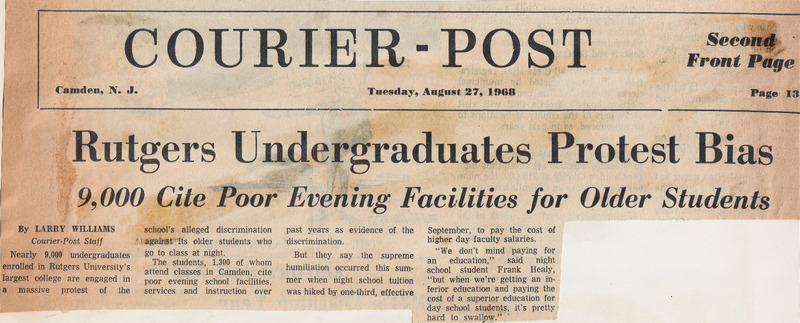
Members of the evening school have started protesting because of a tuition raise that would not be used for its stated purpose (a wage hike for staff that would not be implemented until 1971). Students say that they will stay peaceful for now, but will continue protesting if not listened to, and are looking to form a student council.
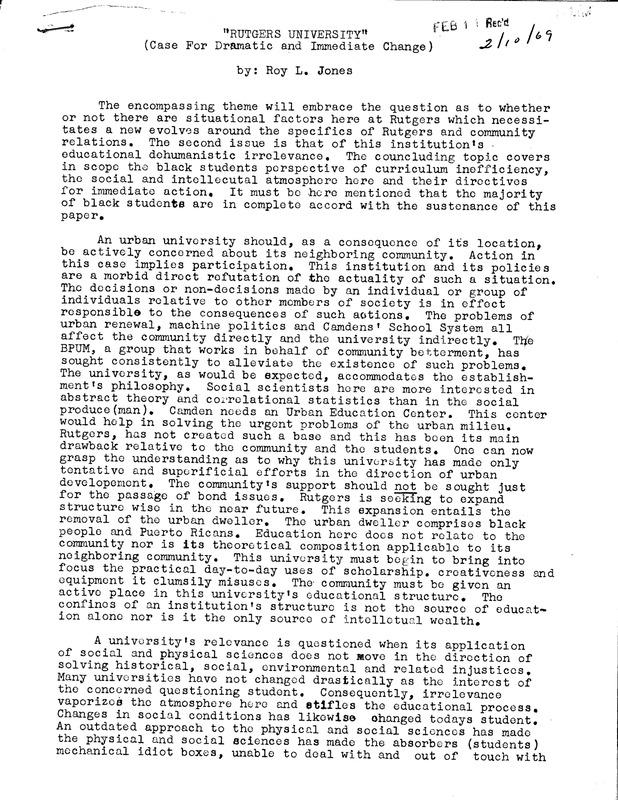
In this essay, Roy L. Jones discusses the relationship between the Rutgers University and the surrounding community in Camden, which is predominantly Black and Puerto Rican. Jones makes the case that, as an urban university, Rutgers should reconsider its impact, structure, and responsibility to the Camden community, as well as to the Black and Puerto Rican student populations.
Following Jones's essay, the document concludes with an evocative piece of writing by Myrna Williams, titled "Black Feeling," which addresses the alienation Williams feels as a Black student on campus.
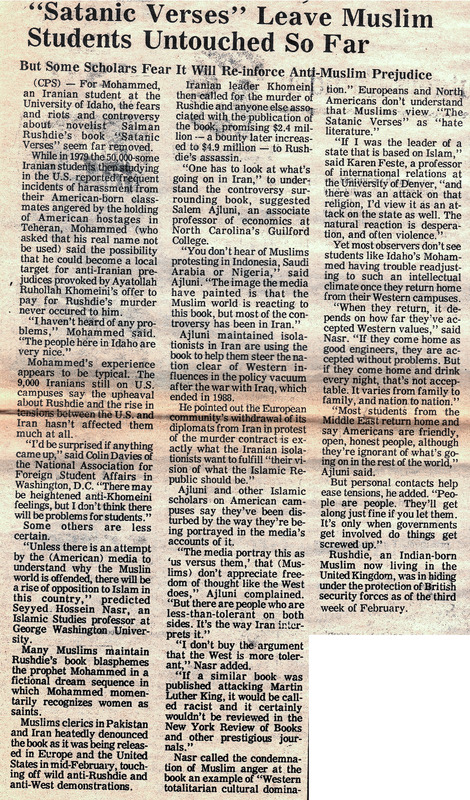
Article about the riots and controversy regarding Salman Rushdie's book "Satanic Verses" and Iranian and Pakistani anti-West demonstrations. Includes perspectives from Muslim and Iranian students and scholars about the situation. Created by College Press Service (CPS) and syndicated to the Gleaner.
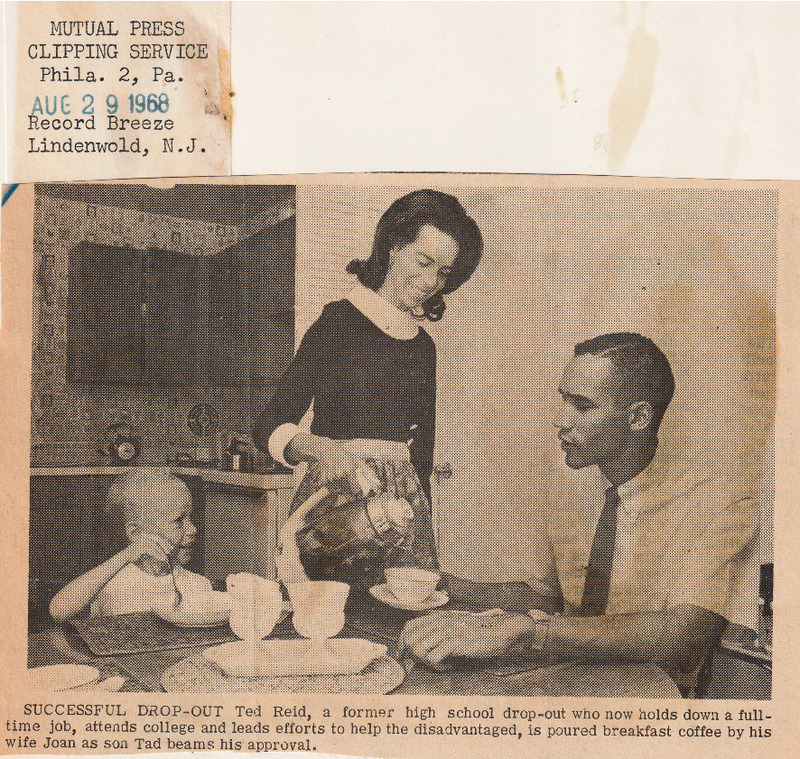
Ted Reid, an African American Rutgers-Camden staff member, is interviewed about his role in supporting local disadvantaged high school students. He discusses his experiences as a former high school drop-out, his solidarity with Puerto Rican students, and his role in the new program for high school students who are being admitted to the school despite low academic performance.
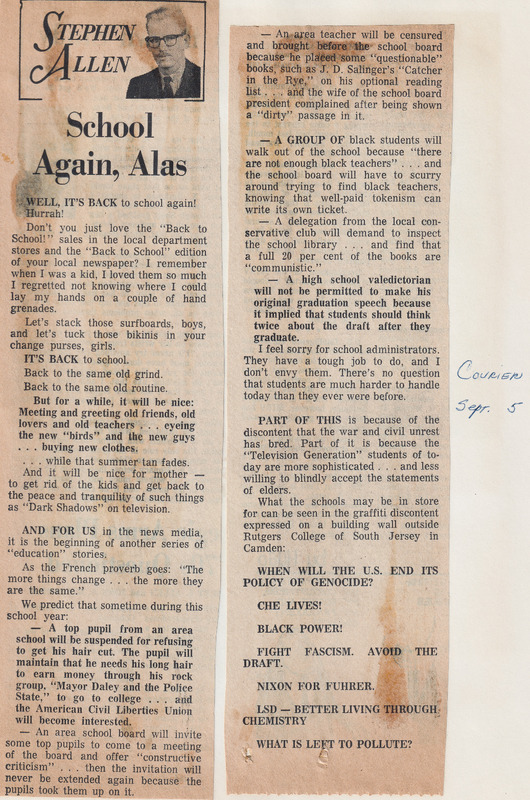
Stephen Allen writes a sarcastic column piece about back-to-school season, discussing "predictions" of the school year which includes library censorship for communism, Black students protesting for a lack of Black teachers, and school boards rejecting student criticism.
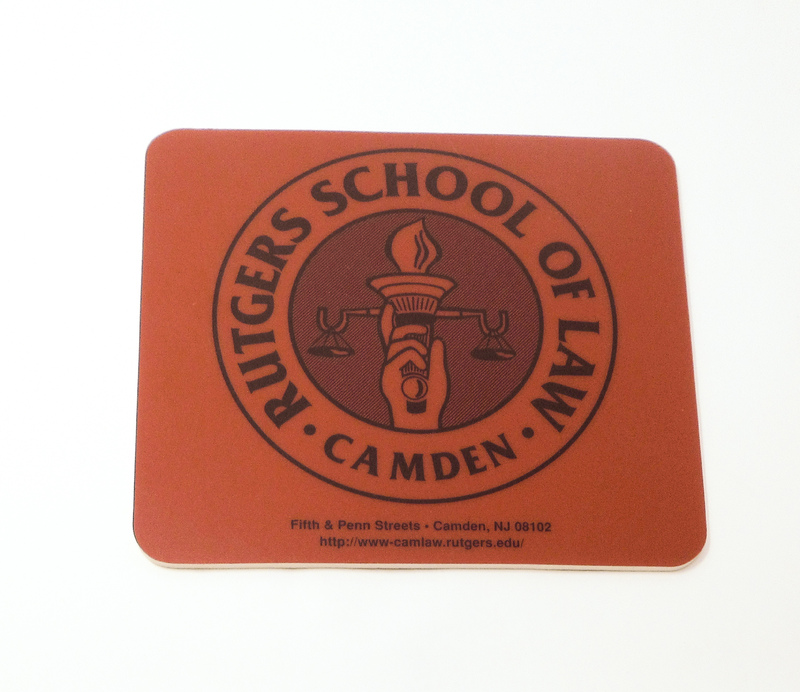
Red mouse pad with the the Rutgers School of Law Camden logo in the center. Printing on the botton read "Fifth & Penn Streets • Camden, NJ 08102
http://www-camlaw.rutgers.edu/"
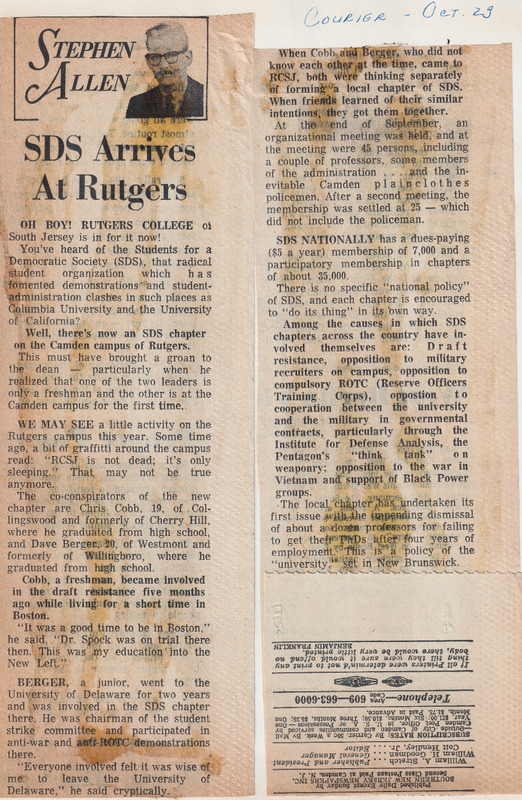
Students for a Democratic Society, a left-wing anti-war organization, has founded a chapter at Rutgers with 25 beginning members, including some professors. The founding members, both new to Rutgers, have high hopes for it.
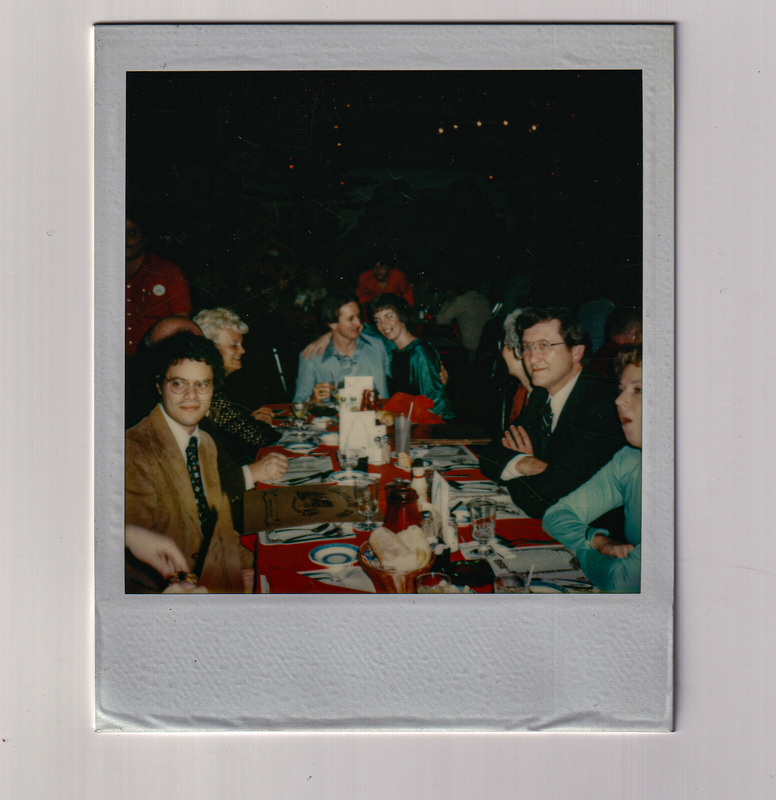
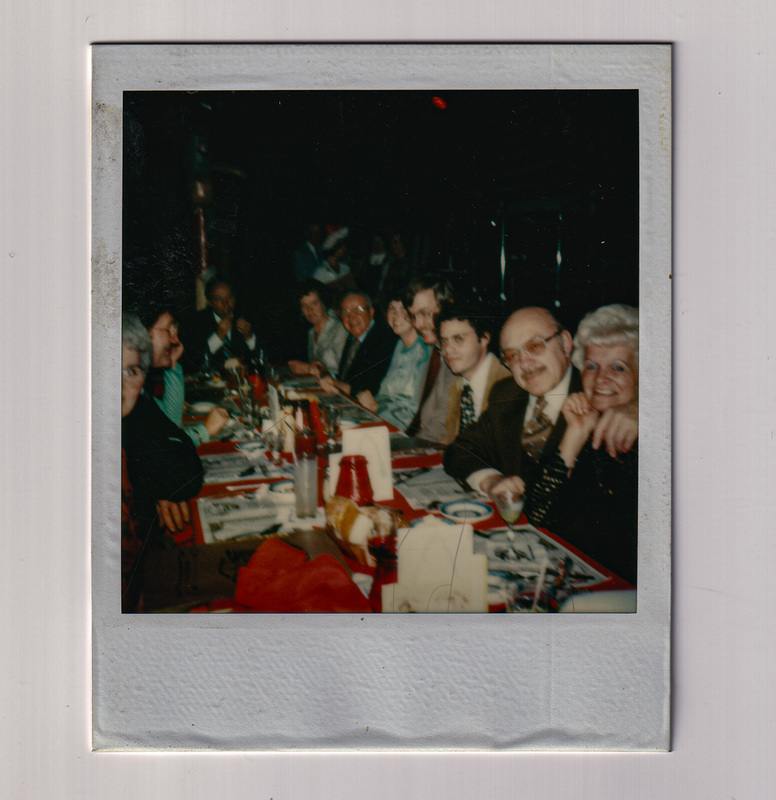
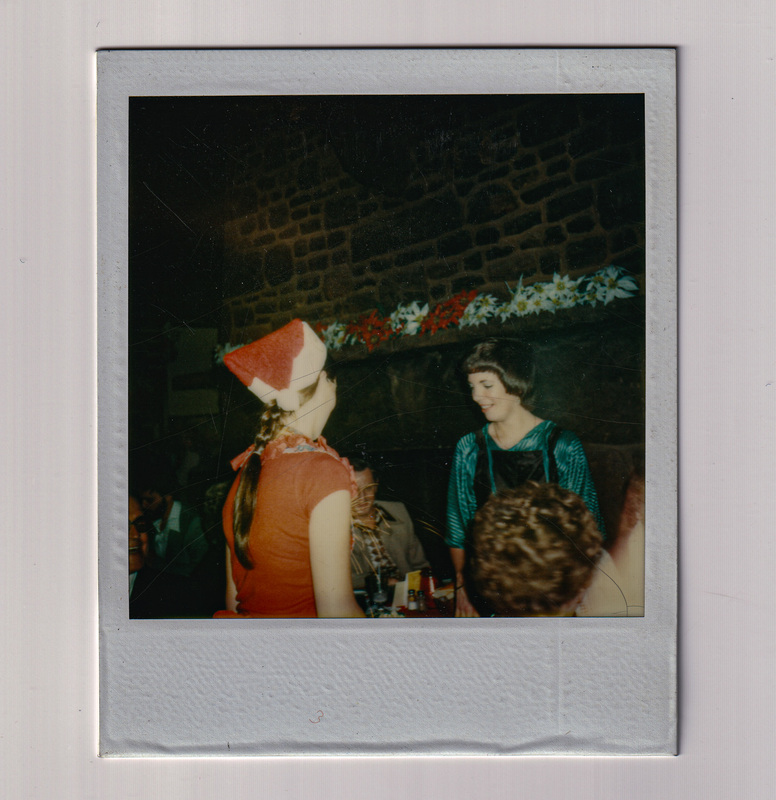
Polaroid photo taken from one end of a long table. people are sitting on both sides of the table with place setting snad drinks. a pair of people are embracing at the opposite end of of the table
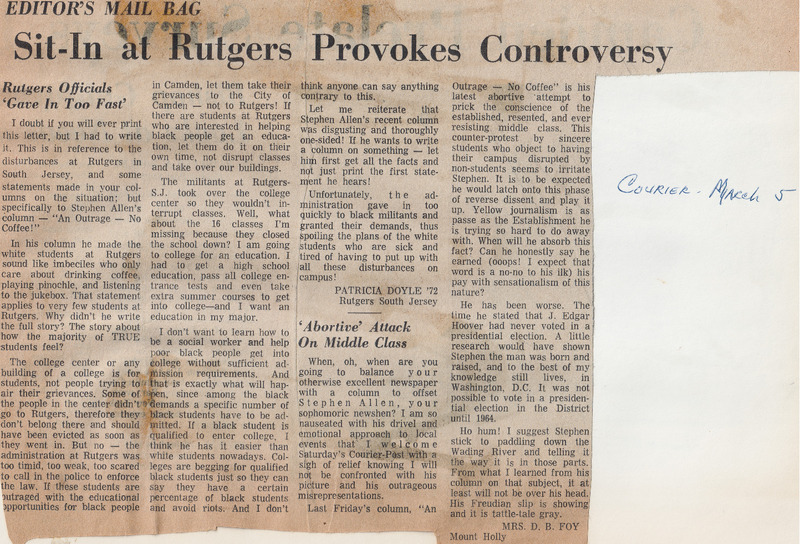
Two letters to the Courier-Post write in opposition to a previous Stephen Allen column about the sit-in. They argue that Rutgers was too weak against the Black student protests, stating that they were there to get an education in their chosen field, not to "help poor black people get into college without sufficient admission requirements."
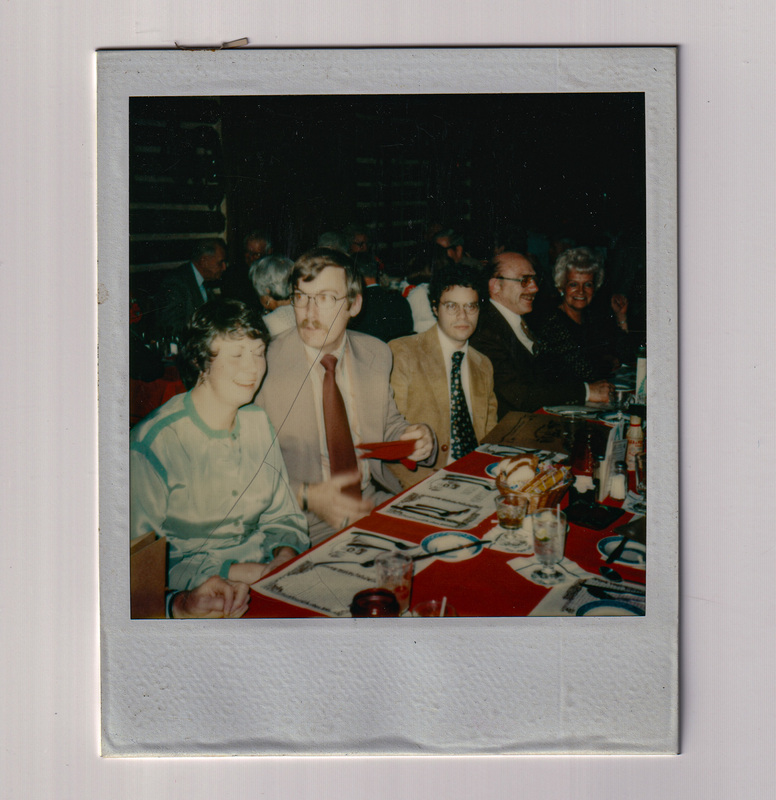
Taken from one end of a long table, this photo captures five people sitting to the left of the photographer. Nobody is looking at the photographer. There is a scratch across the bottom left to the middle of the photo
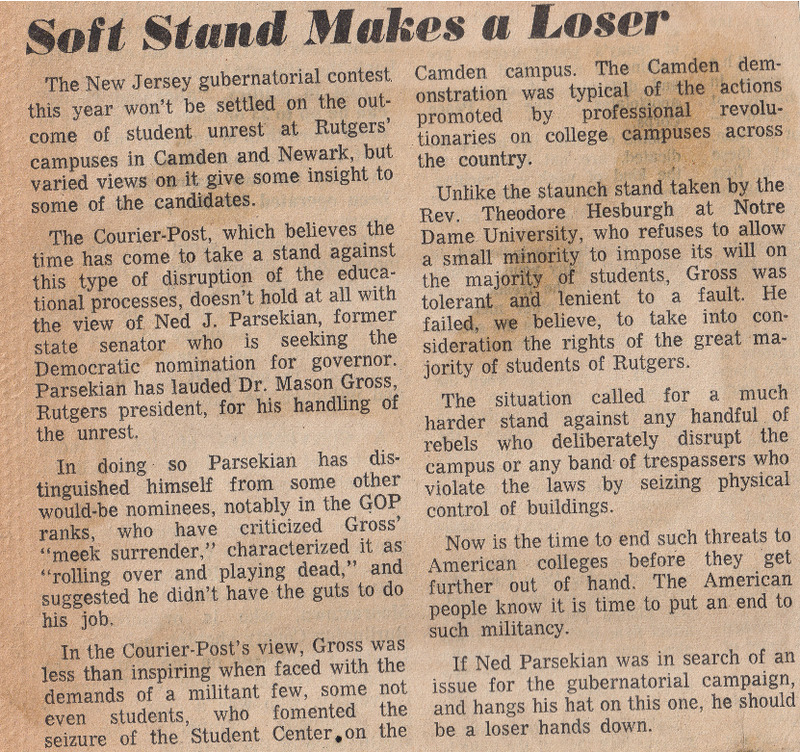
The Courier-Post reports on the candidates for governor, who commented on the recent unrest at Rutgers Camden. The Post states that Gross was too "soft" on the students, and failed to take into account the "rights of the great majority of students at Rutgers."
A white t-shirt with the 2006 Division III Softball Championship logo and the teams competing, including Rutgers-Camden. The image has a yellow softball in the background, the offical 2006 logo and a bed of grass underneath. The image also states the date and location of the tournament, Raleigh, North Carolina, May 19-23
The author supports the Black student sit-ins and states that supporting their cause, and being berated and spit on by her fellow students, made her far more supportive of militant action against racist institutions. She says that she and some of her fellow white students support them and hopes that others will soon join them.
A complete four-disc 78rpm album set titled "Songs of Free Men," performed by baritone Paul Robeson with Lawrence Brown at the piano. Robeson sings in English, Russian, German, and Spanish. Released in 1943 by Columbia Masterworks (Set M-534), the tri-color (white, red, and black) sleeve features cover art by Alex Steinweiss: a hand with a broken shackle plunging a knife into a wormlike creature bearing a swastika emblem.
The interior of the sleeve contains a white page with black text providing context for the collection as a call against the destruction of fascism and for the liberation of peoples. This section features a portrait of Paul Robeson with a printed autograph and a statement from the artist:
"As one brought up on the songs of their own people, who expressed in them their sorrows, protests and hopes, I early felt closer to that music which comes directly from folk roots. The particular songs in this album have that folk quality and show in no uncertain way the common humanity of man. Beyond this, they issue from the present common struggle for a decent world, a struggle in which the artist must also play his part."
This specific copy includes hand-drawn markings on the Robeson portrait and on some of the disk labels.
Each black phonograph record features a blue and gold Columbia Masterworks label. Labels provide information about supporting musical sections and groups for certain tracks.
The back of the album is a solid red sleeve. The interior of the back sleeve features promotional information from the Columbia Recording Corporation, including their logo and office locations in New York, Hollywood, and Bridgeport.
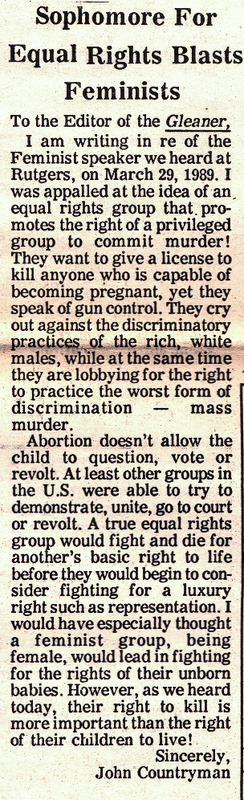
In this letter to the editor, John Countryman strongly criticizes a feminist speaker who visited campus and rebukes the pro-choice arguments of feminist groups.
National Collegiate Athletic Association and Presidents Council on Physical Fitness and Sports provides $22,000 to facilitate a youth sports program in the Camden Community. The University hopes that by providing an outlet, it can help improve the local community.
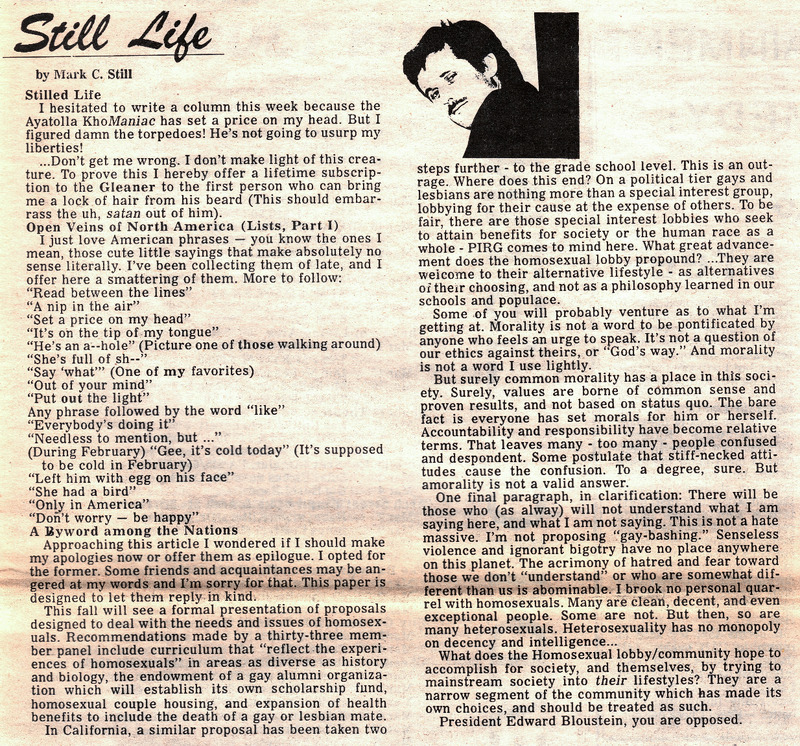
Article about the different legislation pushed by LGBTQ activists. He does not wish to enact harm on the community, but questions their motives and emphasizes the importance of morality.
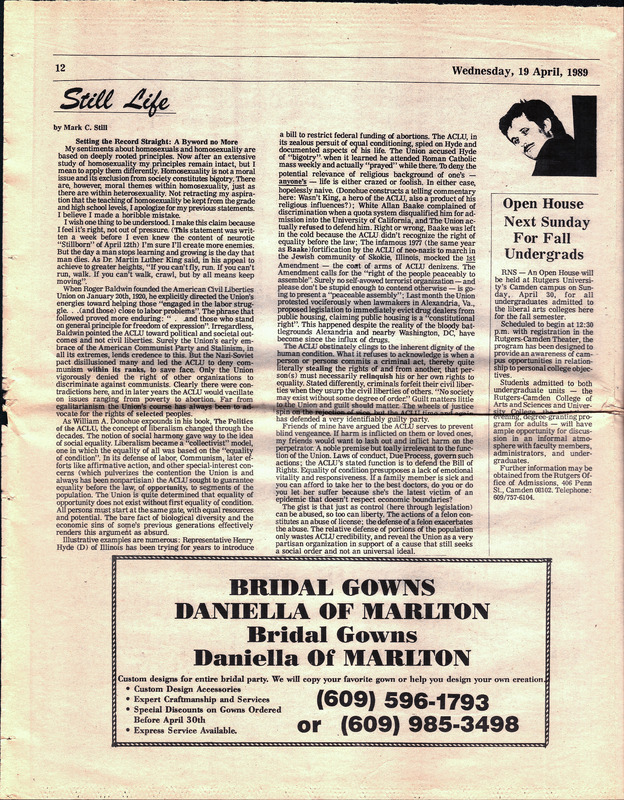
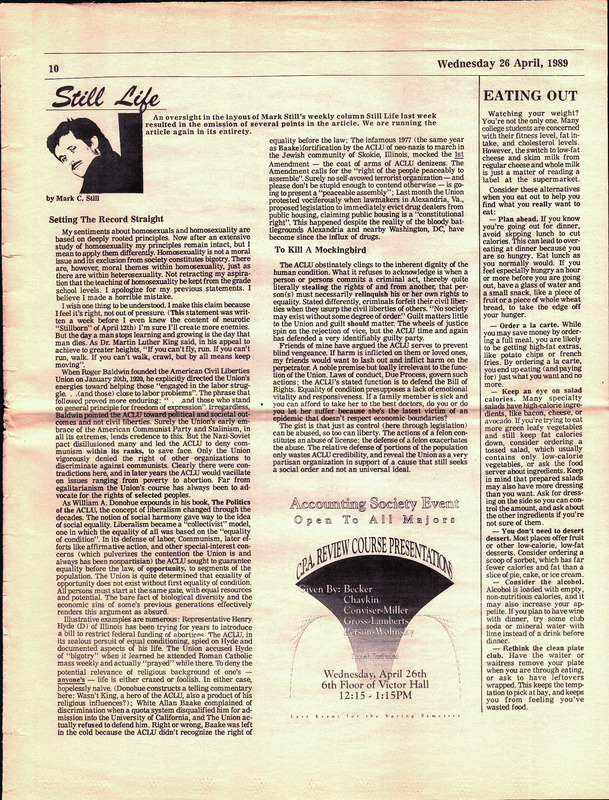
In the column "Still Life," Mark C. Still issues an apology for his previous comments regarding homosexuality, which he concedes were bigoted, but still asserts that homosexuality should not be discussed in K-12 schools. He then critiques the American Civil Liberties Union (ACLU), arguing that the organization has shifted from its original "universal ideal" of protecting civil liberties for all toward a more partisan support of specific social causes.
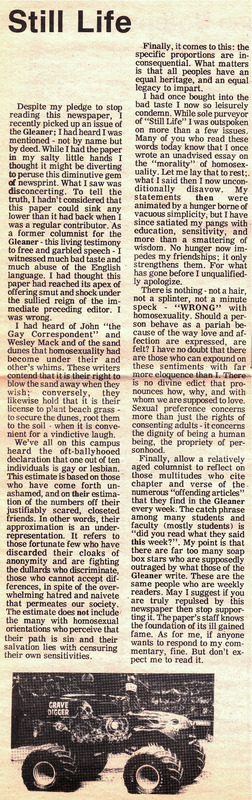
Though Mark C. Still is not directly listed as the author, based on the writing it is insinuated that Still wrote this piece. Still condemns the homophobia present in the Gleaner and on campus, going so far as to apologize for a previous article in which he described the morality of homosexuality. He also states that for those who are upset with the Gleaner, they should simply stop reading rather than complain and critique.
The recurring Still Life column written by Mark Still captures the casual, observational, and often humorous side of campus life at Rutgers-Camden. In this specific installment from the April 26, 1989, issue, the column provides a collection of witty remarks, student interactions, and brief anecdotes that reflect the community's personality during the busy end-of-semester period.
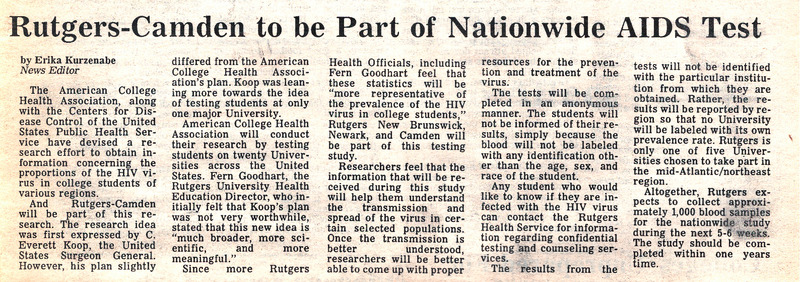
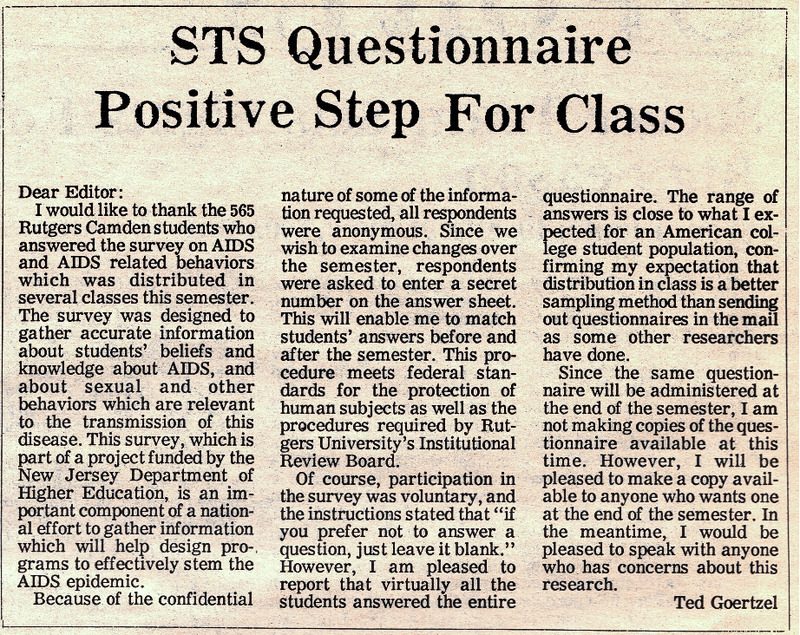
In a letter to the editor, Ted Goertzel (sociology professor) responds to concerns regarding the sexual behavior survey distributed in the Science, Technology and Society (STS) course. He explains that the survey is part of a project funded by the New Jersey Department of Higher Education aimed at gathering data to design programs to combat the AIDS epidemic. Goertzel defends the methodology, noting that the survey was voluntary, anonymous, and met federal and university standards for the protection of human subjects.
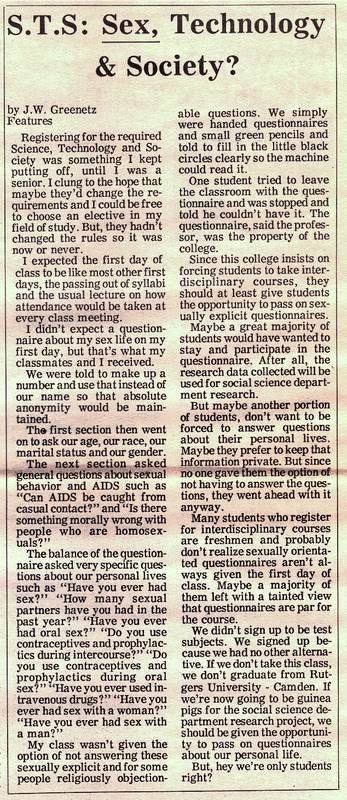
Greenetz writes about a questionnaire about AIDS, sex, and contraceptives given in their Science, Technology, and Society course. The piece denounces that the questionnaire was "forced" and too personal.
This article is from a disgruntled sophomore who is apalled and disgusted at the frequency of articles about gay people and homophobia, particularly those from Mallinger. They state that they don't hate gay people, but don't want to hear about Mallinger kissing a guy. They believe it is unnatural and therefore no one wants to hear about it in the Gleaner.
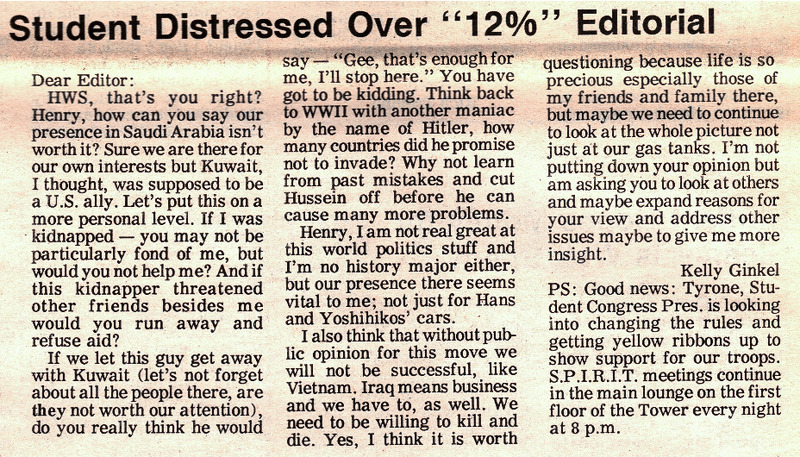
This "Letter to the Editor" is in response to the Gleaner's articles on Saudi Arabia and Kuwait. The writer believes the United States needs to have a presence in the Middle East and that the Gleaner is disregarding the risks posed by Iraq and Saddam Hussein.