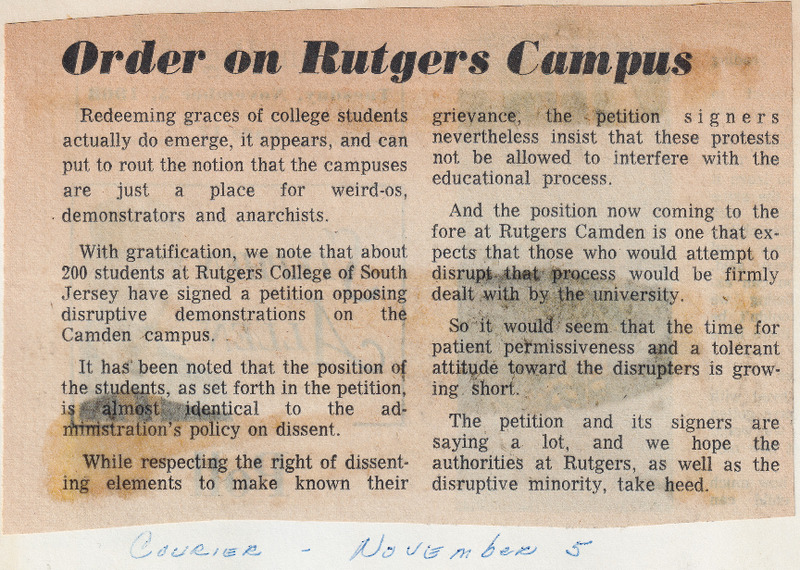
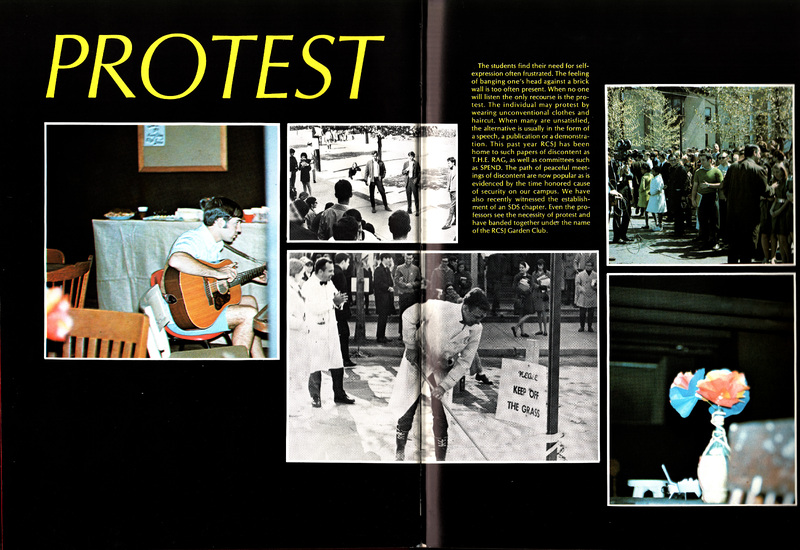
A group of 200 Rutgers students has signed a petition opposing "disruptive demonstrations" on campus. The author of the piece is pleased by this development, not wanting Rutgers to become a campus full of "weird-os, demonstrators, and anarchists" like other colleges.
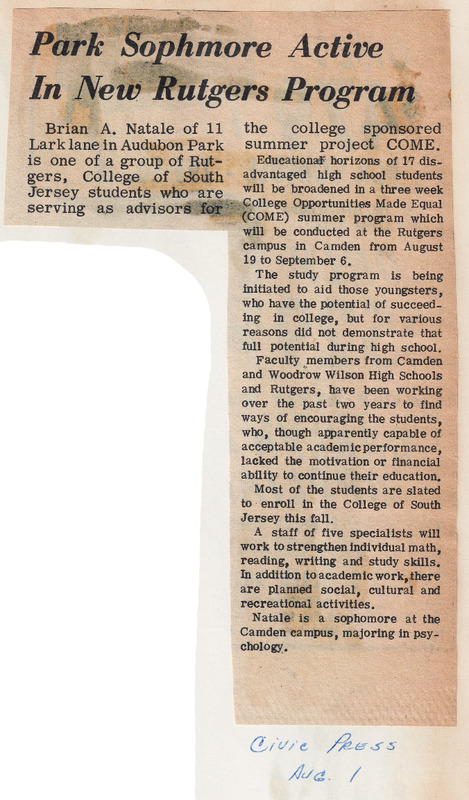
The new program, College Opportunities Made Equal (COME), is beginning in the coming summer, with a three-week program for disadvantaged students who will soon be attending Rutgers even despite lack of finances or motivation to continue. The program will have specialists who train the students in study skills as well as core subjects, as well as social programs.
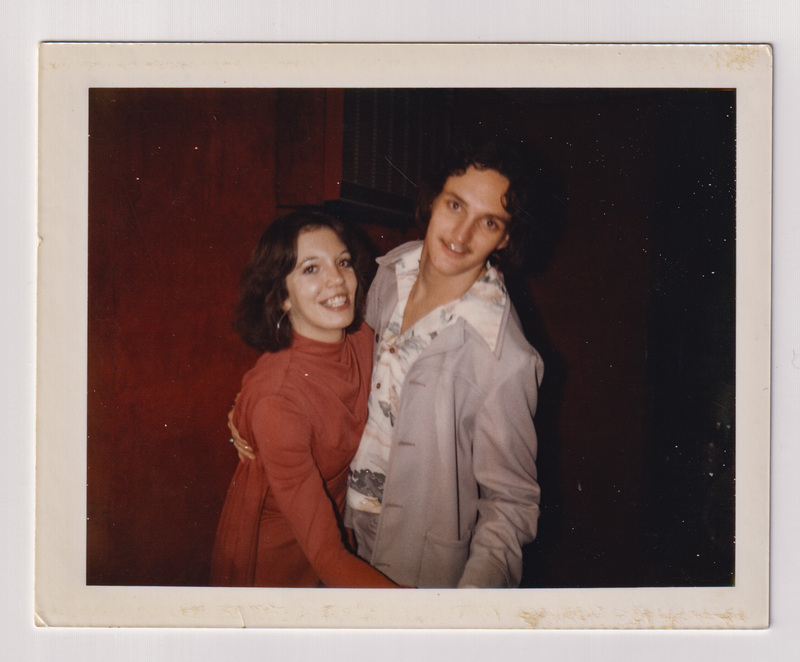
A pair of people, Pat and Henry, pose mid-dace for a photograph. Pat is wearing a red or oragne long sleeve highneck dress, and Henry is wearing a light colored suit.
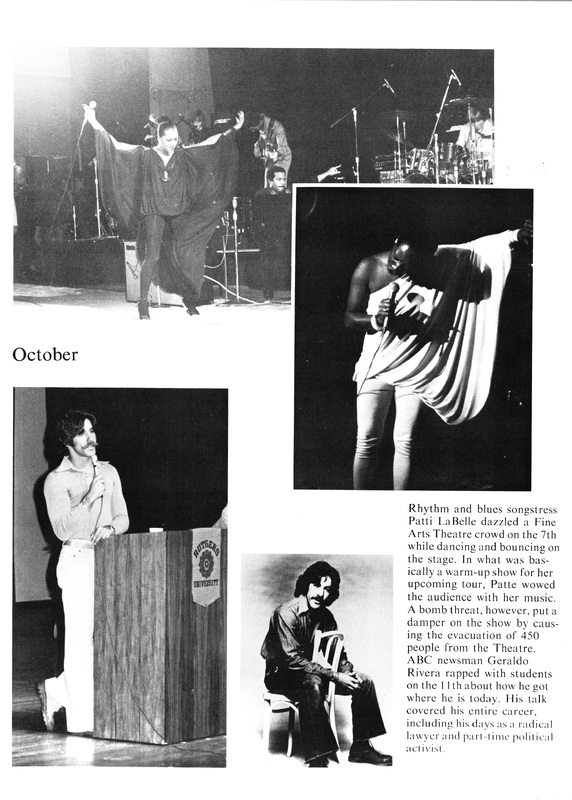
Photographs from the 1978 Mneme yearbook, featuring campus events with Patti LaBelle and Geraldo Rivera. The caption mentions that Patti LaBelle's performance at the Fine Arts Theatre was interrupted by a bomb threat.
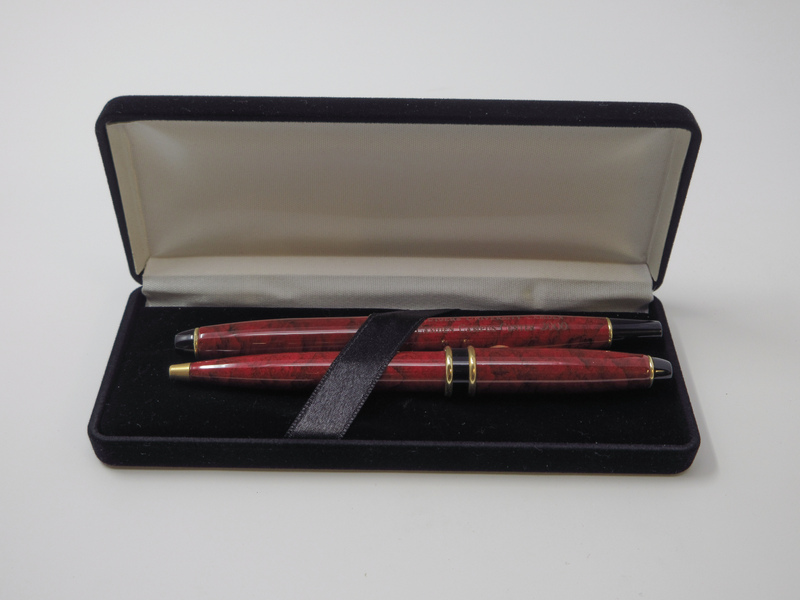
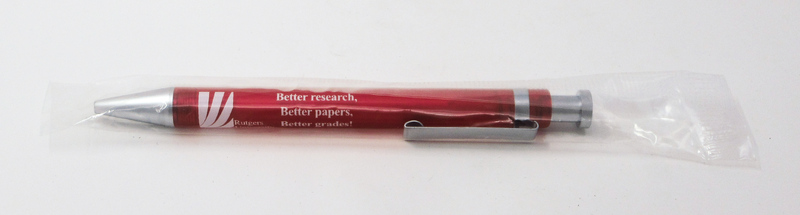
Red ballpoint pen with the Rutgers University libraries logo and the words "Rutgers University Libraries
Better Research! Better Papers! Better grades! Try Searchpath https://searchpath.libraries.rutgers.edu
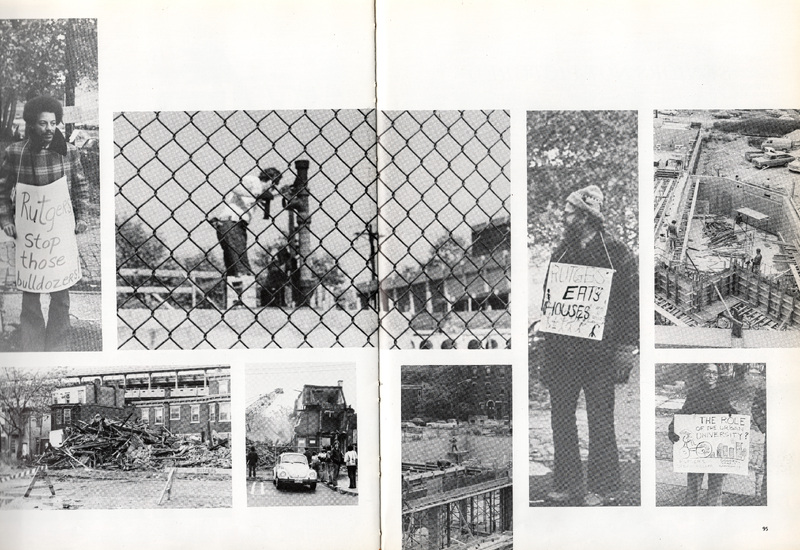
Photo (full spread) collage of debris and rubble from demolished buildings along with construction machines, such as cranes and excavators, as well as people holding up signs protesting Rutgers University's expansion by destroying houses in the Cooper-Grant neighborhood.
Protesters hold up signs:
"Rutgers stop those bulldozers!"
"Rutgers eats houses"
"The Role of the Urban University? Rutgers Steamroller / Cooper-Grant Community"
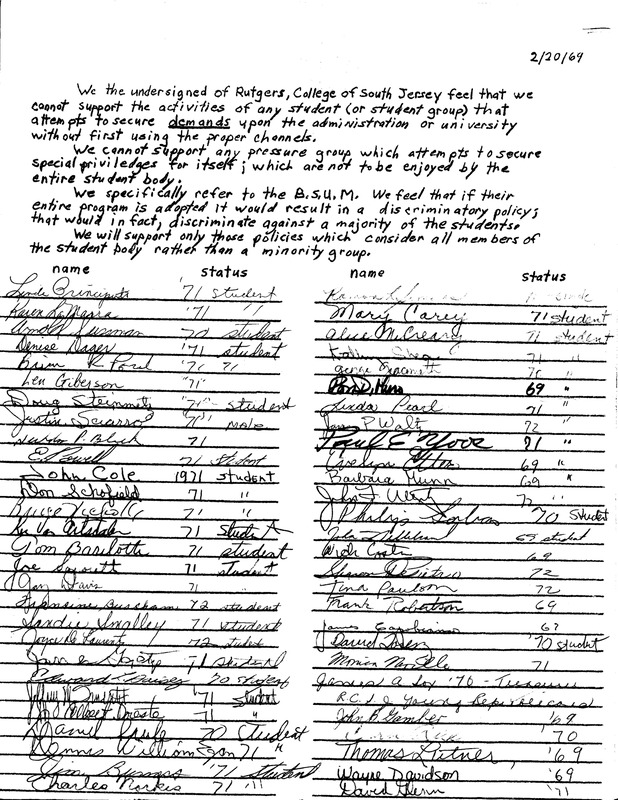
Copy of a petition with approximately 150 signatures of Rutgers-Camden students opposing the activities and demands of the Black Student Unity Movement (BSUM).
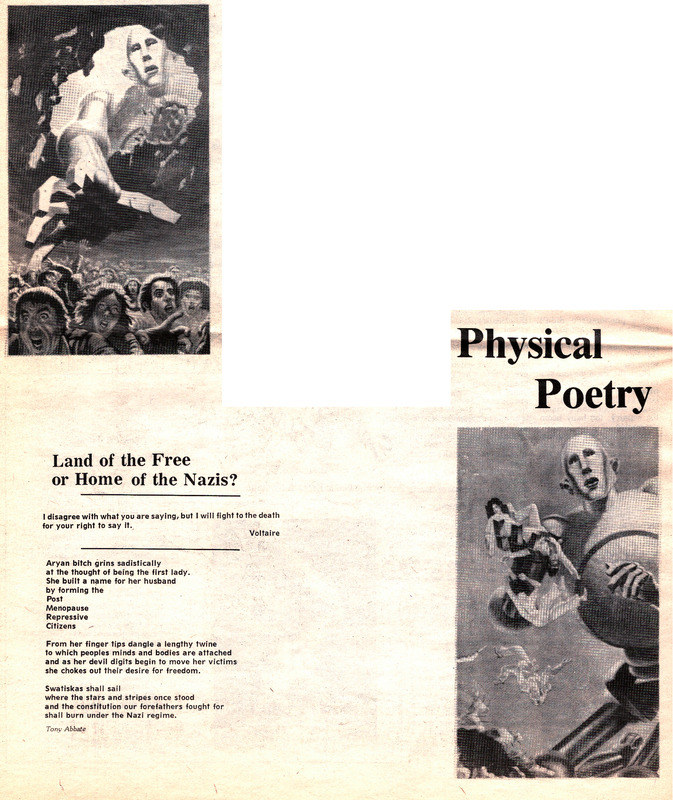
Poem "Land of the Free or Home of the Nazis?" by Tony Abbate published under the "Physical Poetry" section. Accompanying the poem are two illustrations that feature a giant robot-like figure and a crowd of panicked humans attempting to escape its grasp.
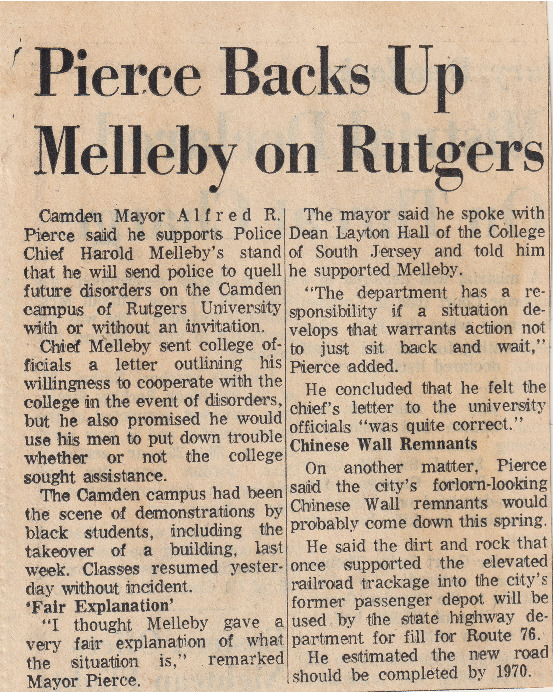
Alfred R. Pierce, the mayor of Camden, supported the chief of police in his decision to send police officers to Rutgers Camden when any protests occurred, regardless of whether or not the school invited them. This decision comes on the wings of a Black student takeover of one of the buildings the week previous.
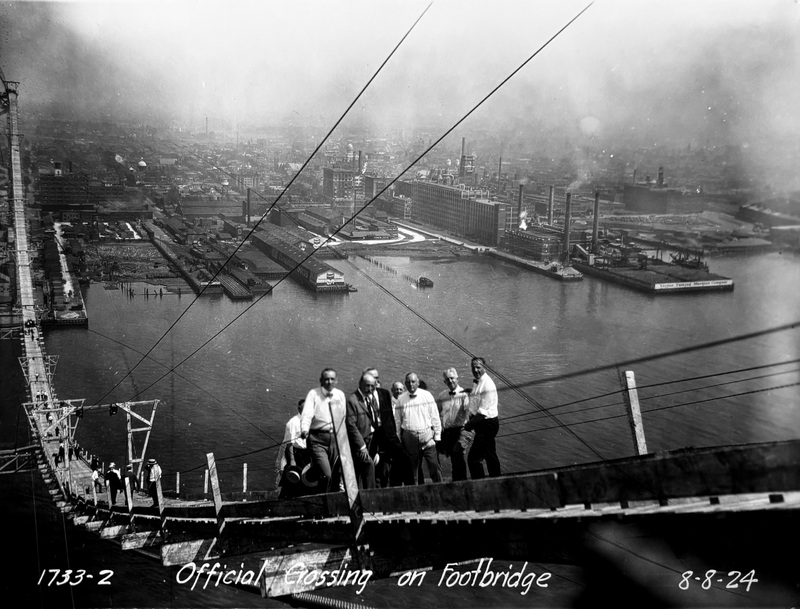
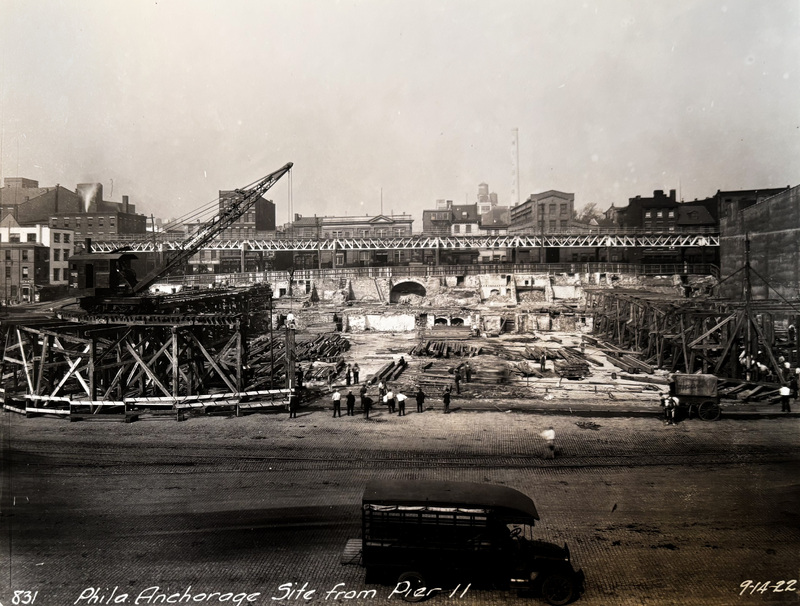
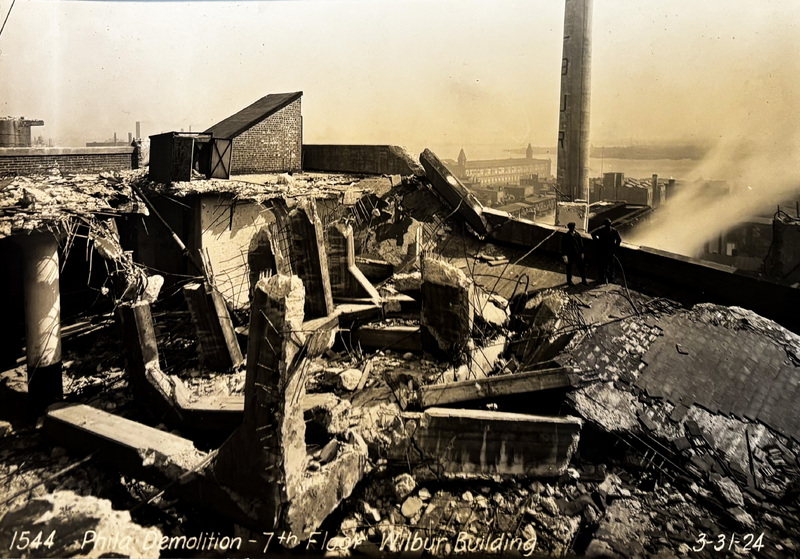
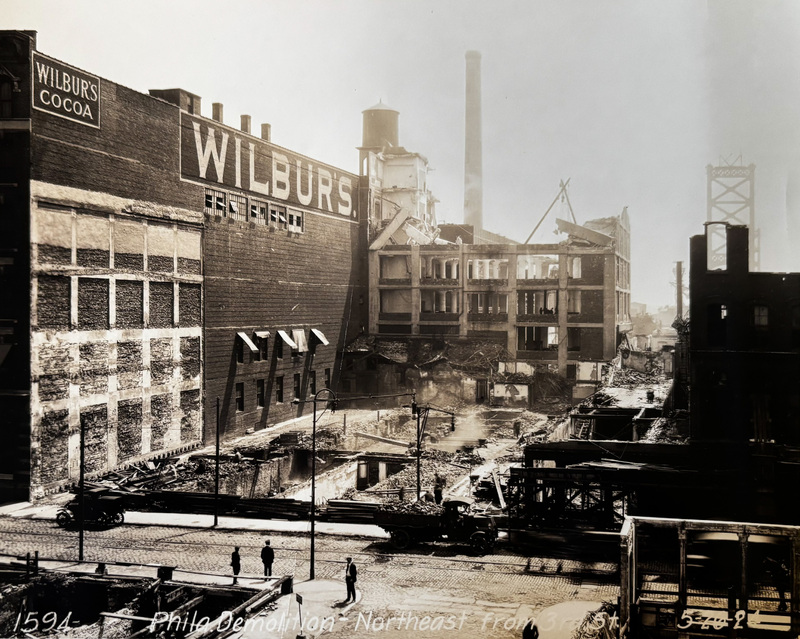
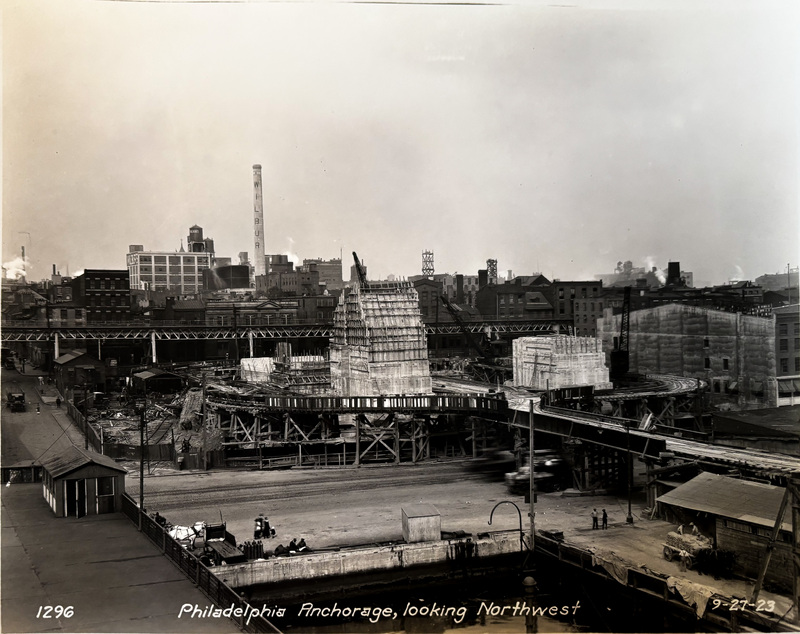
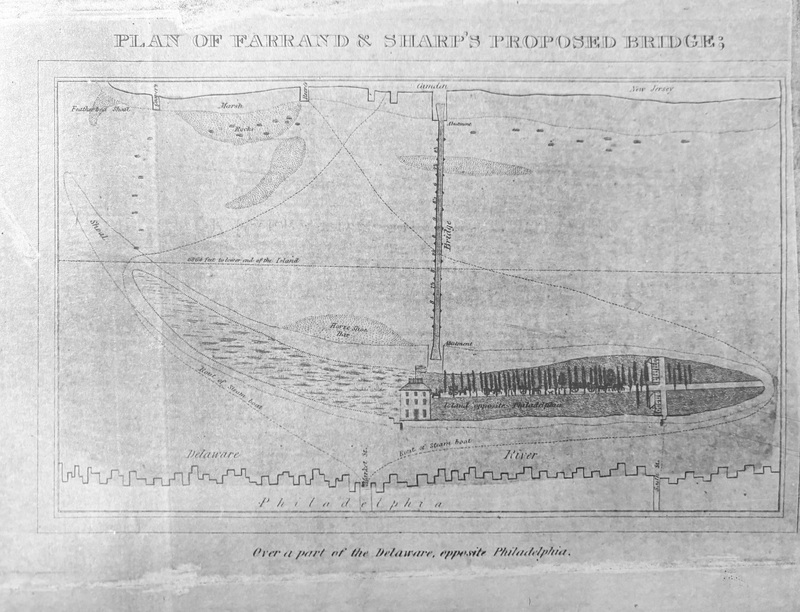
Rendering of an early 19th-century proposed plan for a bridge that would span part of the Delaware River from Camden to Windmill Island, opposite Philadelphia (Windmill Island was removed via dredging in the 1890s and no longer exists). Formally proposed in 1818, this bridge was never actually built. Another century passed before work on a bridge connecting Camden and Philadelphia actually started.
This rendering may have been originally created as early as 1813, according to the information published by the Free Library of Philadelphia, where a copy of this rendering appears in the Castner Scrapbook.
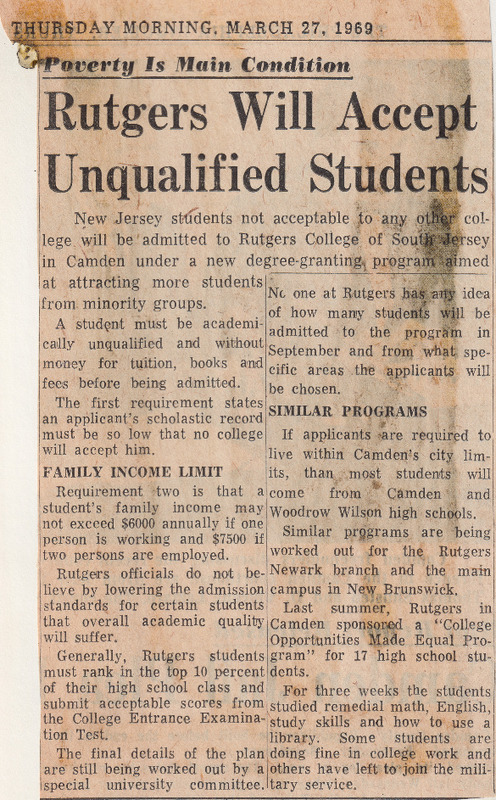
This article writes derisively about the new program for accepting disadvantaged students, despite noting that "Rutgers officials do not believe... that overall academic quality will suffer" and that the COME program from the previous summer was highly successful.
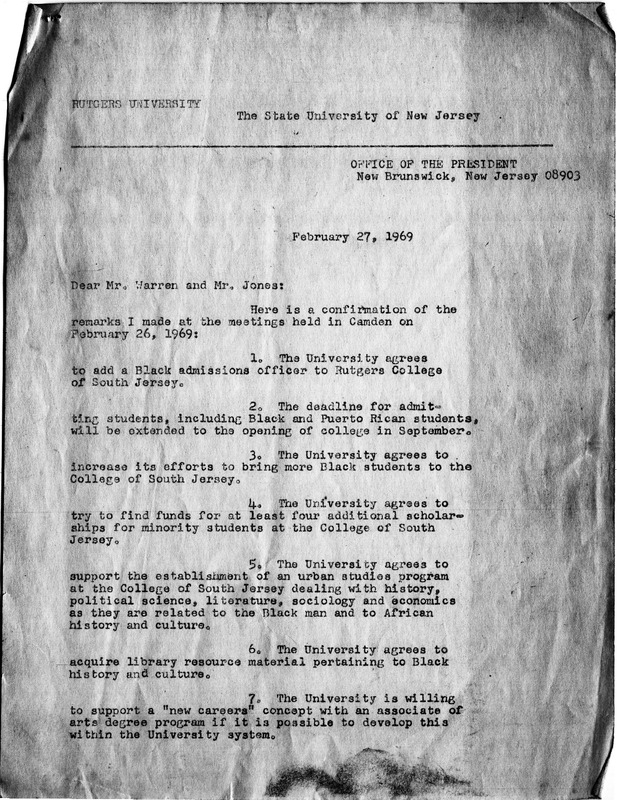
Letter from Rutgers President Mason W. Gross, dated February 27, 1969, to Rutgers–Camden students Thomas Warren and Roy Jones. The letter serves as a confirmation of the remarks that the president made at the meeting in Camden on February 26, 1969, regarding the Black Student Unity Movement's demands.
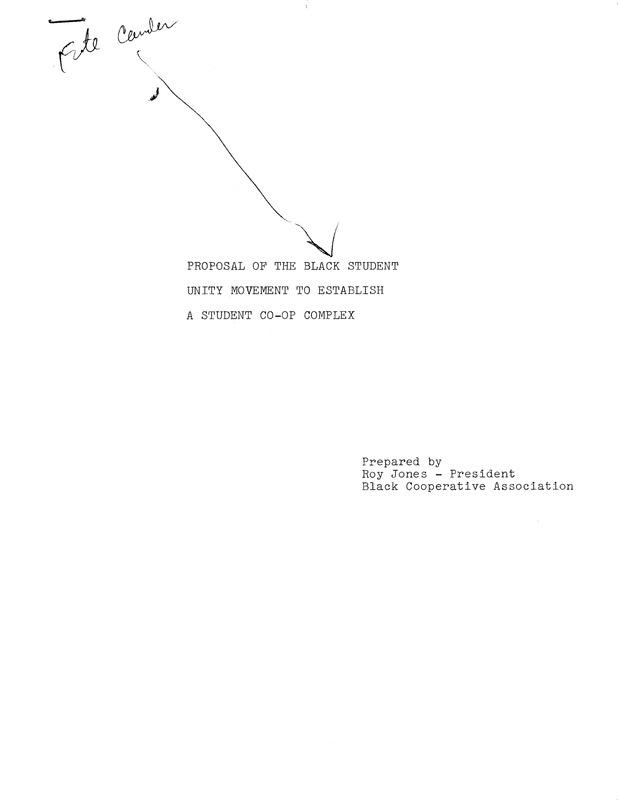
Prepared by Roy Jones, President of the Black Cooperative Association and member of the Black Student Unity Movement, this proposal outlines a plan to establish a student cooperative complex at Rutgers-Camden. The document includes information about the history and philosophy of the Black Cooperative Association, which was formed on March 20, 1969. The proposal explains that the Black Cooperative Association has already purchased a house at 301 N. 2nd St. and plans to purchase the adjacent property at 303 N. 2nd St. The proposal requests financial support from the university in the form of a loan to cover the purchase price of the second house and renovation costs.
The houses mentioned were located at the northwest corner of N. 2nd St. and Penn St., and they have since then been demolished.
The exact date of the proposal is not listed on the document, but its content suggests that it was written during the fall semester of 1969, because it refers to March 1969 as occurring "last semester."
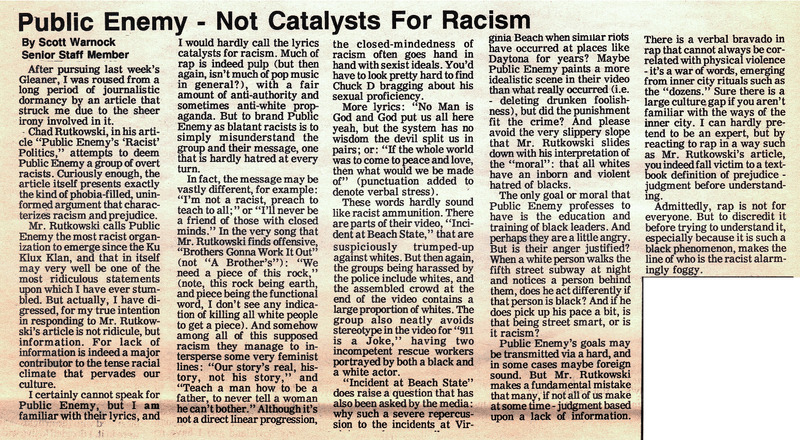
The article is a response to a previous article regarding the rap group Public Enemy. Warnock strongly disagrees with the Rutkowski's critiques that Public Enemy is racist and analyzes several sets of lyrics to prove his point. Warnock views Rutkowski's opinions as a sign of his own racism against black people.
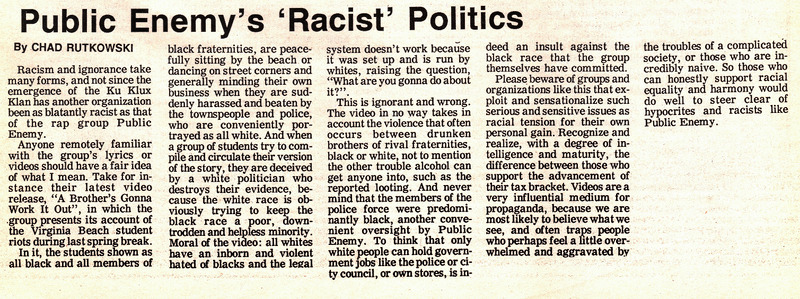
This article describes the rap group Public Enemy as extremely racist and comparable to the Ku Klux Klan. Rutkowski argues that their music video and lyrics portray white Americans incorrectly as entirely immoral and anti-black.
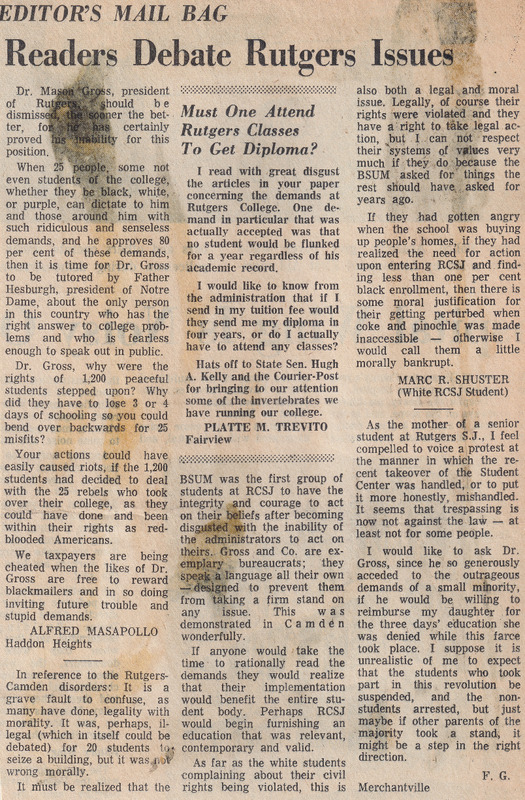
Courier-Post readers write in about the Rutgers sit-in, with three writing against its demands and one for them. One writes that she expects her daughter to be reimbursed for the three days of class she missed while the university was shut down, and another writes that those who are morally outraged about the protests should also have been outraged when Rutgers bought up people's houses to use as campus areas.
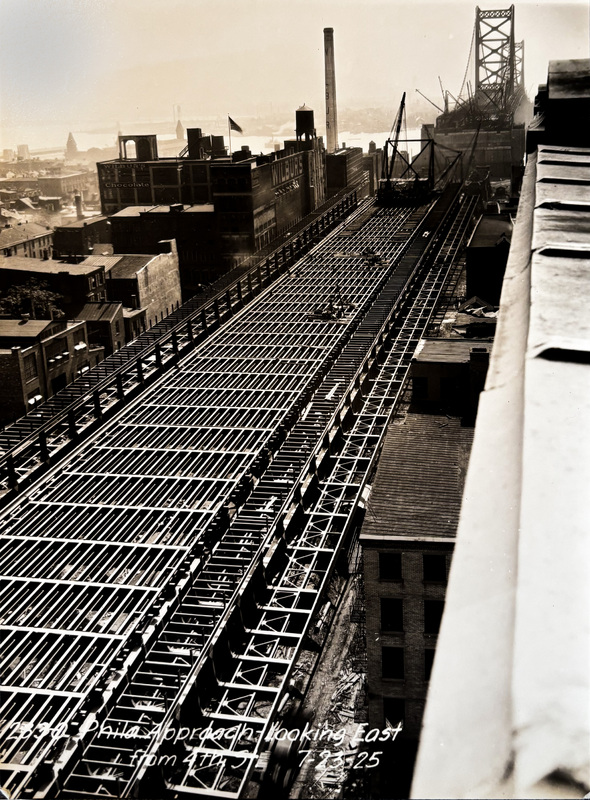
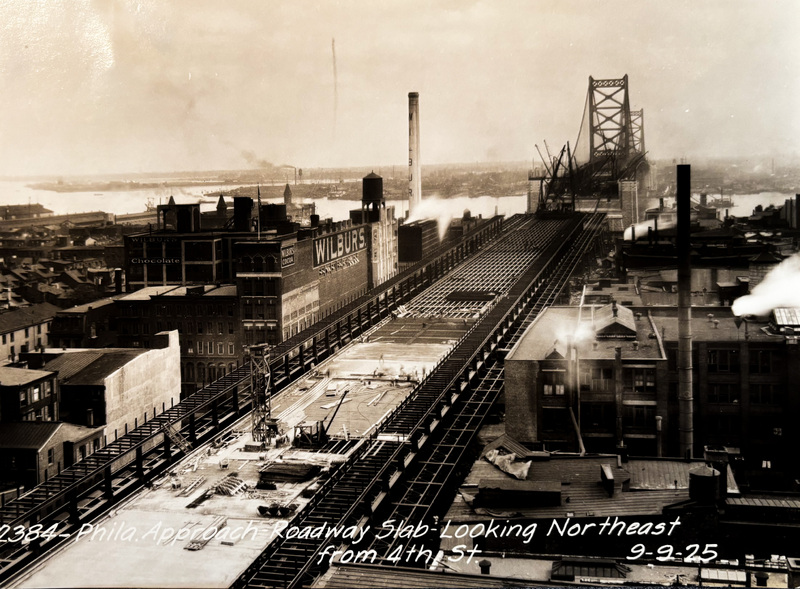
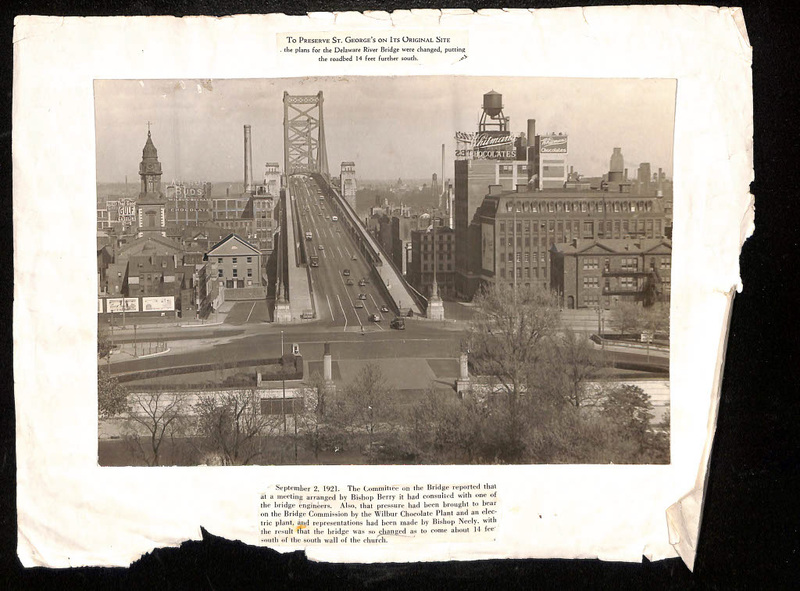
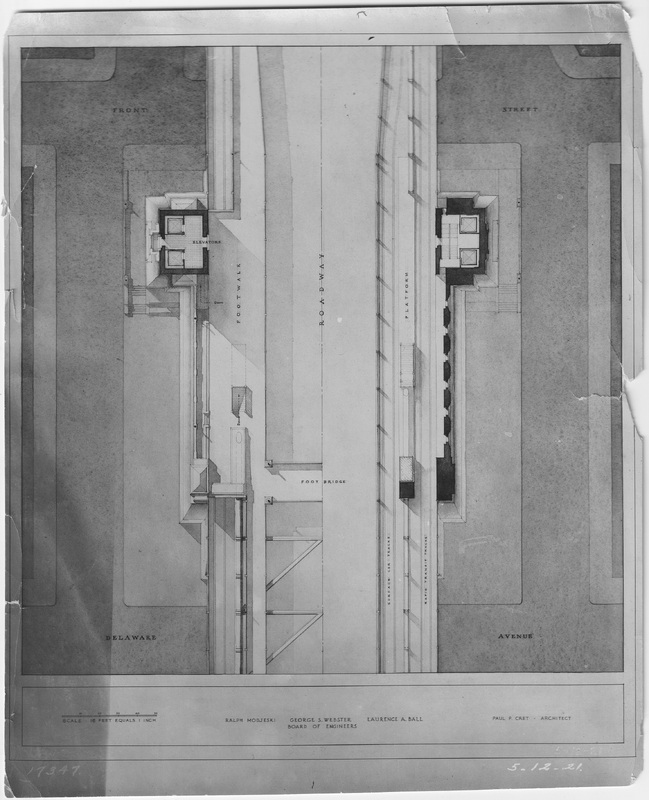
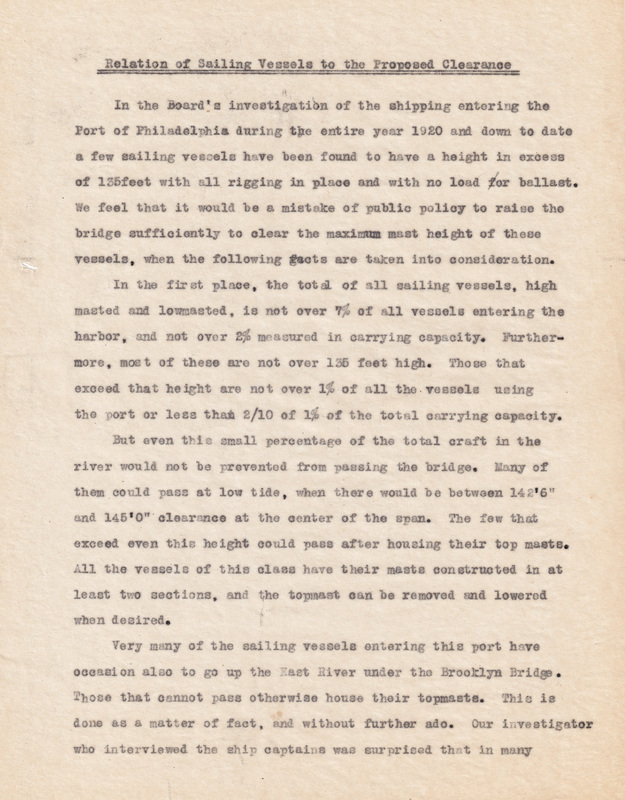
Memo discussing the heights of various sailing vessels entering the Port of Philadelphia. The memo advocates for capping the height of the proposed bridge over the Delaware River (Benjamin Franklin Bridge) at 135 feet and presents reasons why it would be a mistake to increase the bridge height to accommodate outdated tall sailing ships.
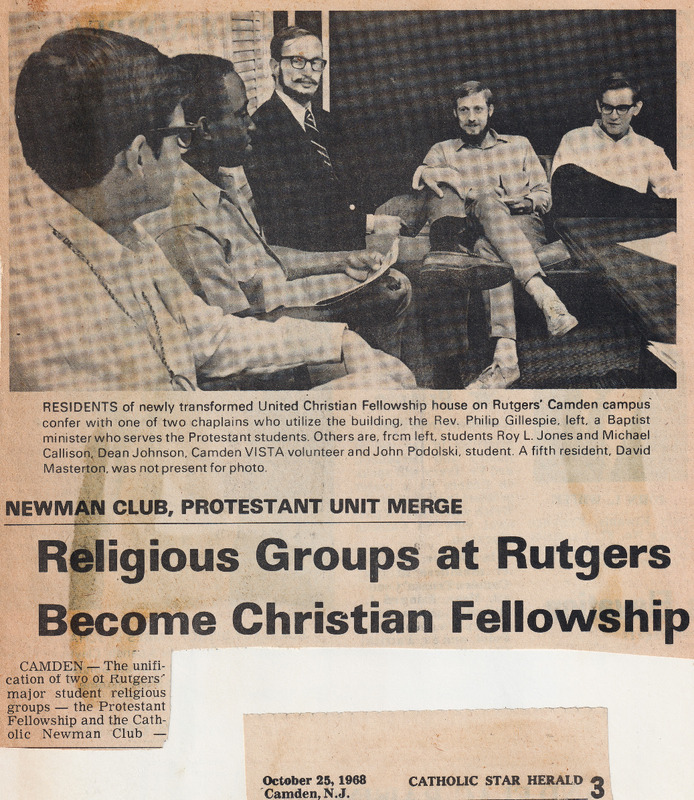
The new United Christian Fellowship is succeeding, and many students are living in UCF housing. Some are planning on a "live-in," where they will work with the North Camden Metropolitan Ministry on inner city issues and learn more about their city.
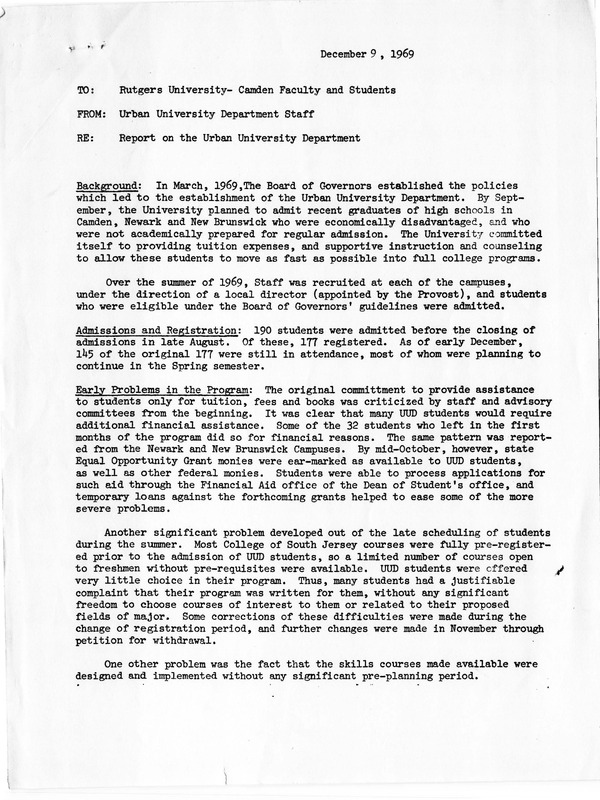
Two-page report from the Urban University Department (UUD) staff regarding the department's problems and progress since the program's inception at Rutgers–Camden in March of 1969. The report mentions the constructive criticism provided by the Black Student Unity Movement (BSUM) during UUD's early development.
UUD was an administrative and support initiative focused on college access, providing financial aid, remedial "skills" courses, and counseling for disadvantaged students. This program functioned as a support service to help students transition into the university and eventually evolved into the Educational Opportunity Fund (EOF) and academic foundation structures for student success.
UUD is not to be confused with the Urban Studies curricular program that also grew out of BSUM activism on campus.
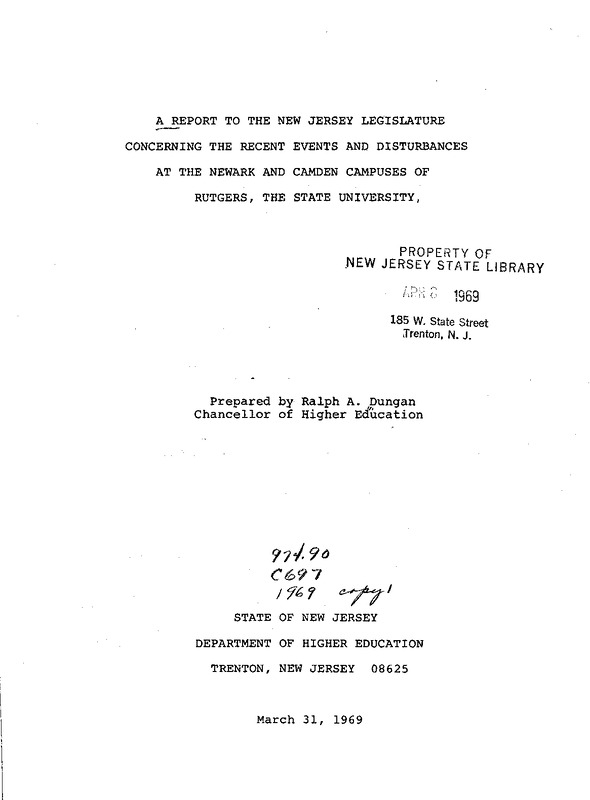
A report to the New Jersey Legislature prepared by Ralph A. Dungan, Chancellor of Higher Education, concerning the Black students' protests at Rutgers-Newark and Rutgers-Camden in February of 1969. The report includes a chronology of the events at Newark and Camden and a list of recommendations. Nine appendices are attached, including a list of demands from the Black Organization of Students at Rutgers-Newark, a list of demands from the Black Student Unity Movement at Rutgers-Camden, a resolution adopted by the Rutgers Board of Governors on March 14, 1969, and other memos related to the protests.
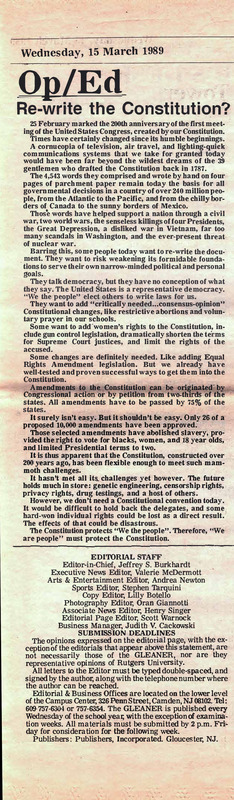
This op-ed reflects on the 200th anniversary of the first meeting of the U.S. Congress while arguing against the call for a new Constitutional Convention.