“Freedom is a hard-bought thing and millions are in chains, but they strain toward the new day drawing near.” - Paul Robeson, 1956
The Free People of the World and World War II
World War II was the single largest and most destructive war in human history with it's origins in the 1937 Japanese invasion of China and the 1939 German invasion of Poland. The war was primarily fought between the forces of fascism, nazism, and unchecked militarism that made up the Axis versus the forces of democracy, communism, and nationalism that made up the Allies. Having been a main supporter of the Repulican cause during the Spanish Civil War and an ardent now politically active leftist Paul Robeson served as an extremely active media personality on the side of the allies during World War II. He performed at war bond rallies, entertained troops, and used his platform to speak out against fascism and racism. Robeson also uniquely campaigned for equal treatment of African American soldiers and workers, emphasizing the need for social justice during the war, something he would famously continue to fight after after the war as well. In 1943 Paul Robeson would release the "Songs of Free Men" taking many folk and labor songs from a variety of different nations involved in the fight against fascism and compiling them into one collection performed by him to raise money and internationational support. We invite you to listen and learn about the history and activism of Paul Robeson who brought many of these songs to English audiances thanks to this albumn.
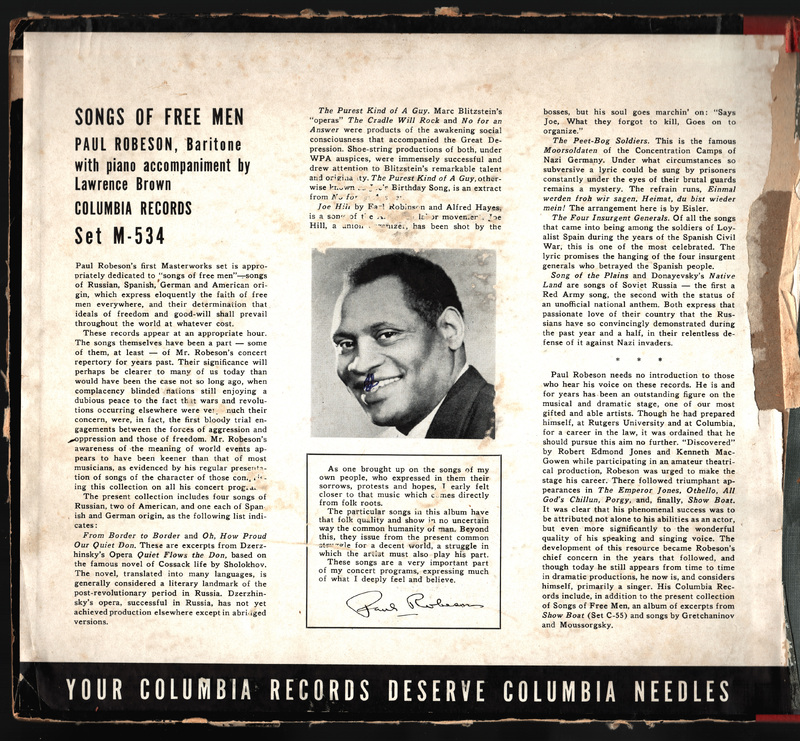
Inside cover
Paul Robeson to raise sopport for this albumn is quoted in the center bottom alongside his singature reads that "As one brought up on the songs of my own people, who expressed in them their sorrows, protests, and hopes, I early felt closer to that music which comes direcly from folk music. The particular songs in this albumn have that folk quality and show in no uncertain way the common hummanity of man. Beyond this, they issue from the present common struggle for a decent world, a struggle in which the artist must play his part. These songs are a very important part of my concert programs, expressing much of what I deeply feel and believe."
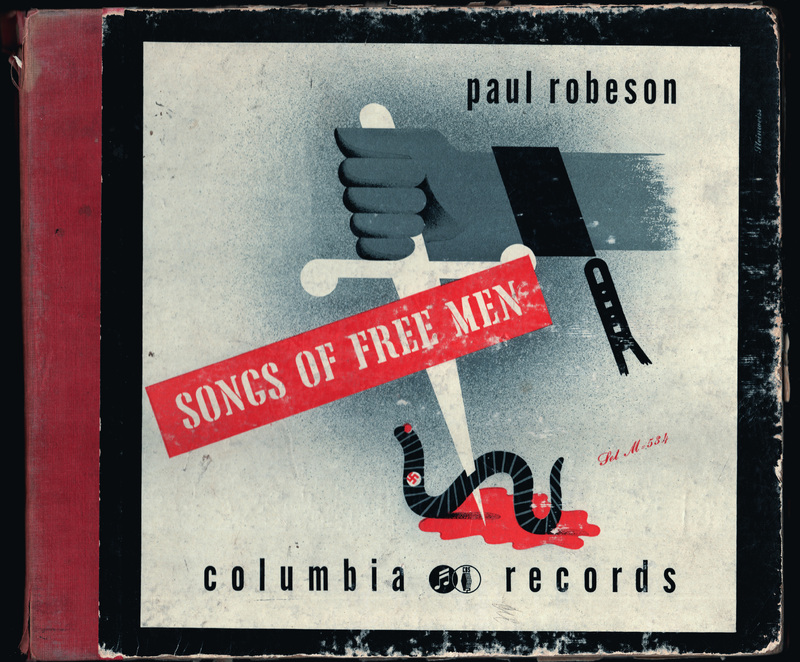
Cover
"Songs of Free Men" by Paul Robeson has one of the more striking cover designs of it's day. This record was release in the year 1943 in America, right in what would become the middle year of World War II for most of the west. It's message is clear for the raising of support and money for the death of Nazism and the honoring of the many free man across the world resistting it as part of a grand struggle againsy Tyranny. As such the record contains songs from across the world translated and performed by Paul Robeson.
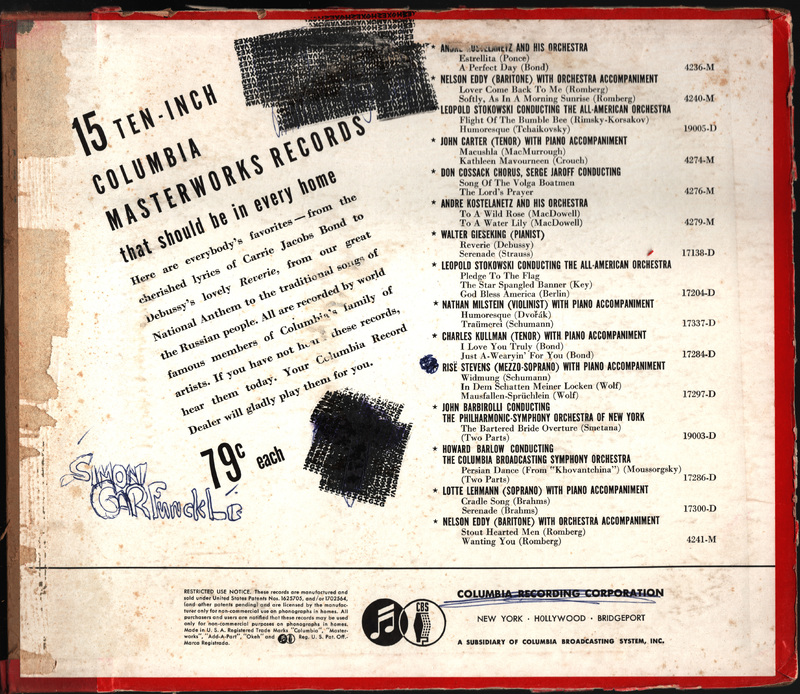
Inside back cover
On this back page is more of a product description and detailing of everything located within the wider vinyl collection. It uniquely though has a full Columbia Records Corporation logo and office locations which is not as common in the rest of the work highlighting their more direct hand in this work.
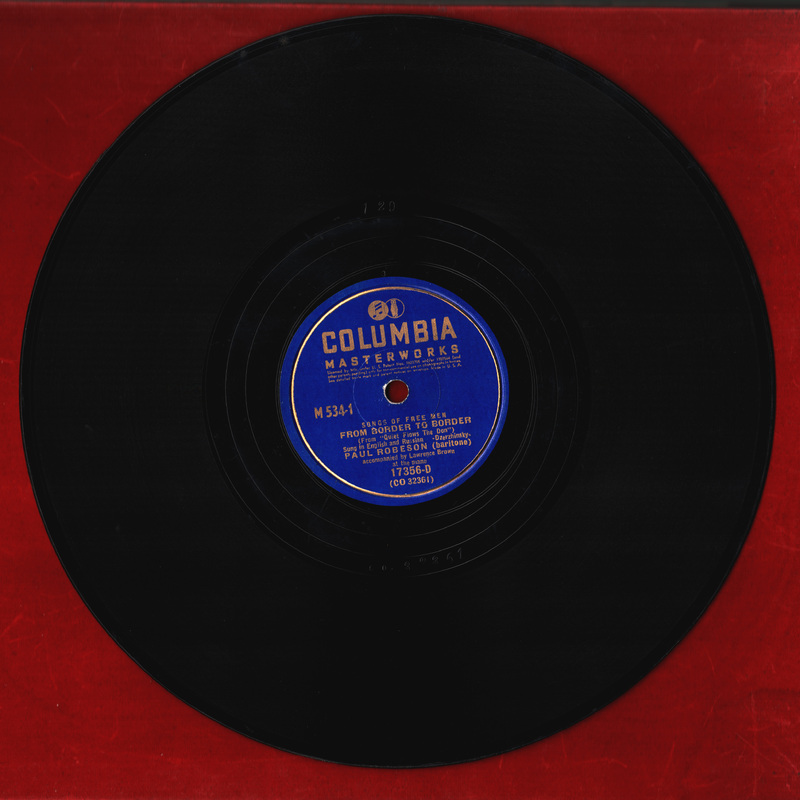
“From Border to Border from Quiet Flows the Don” is a song deeply rooted in Russian cultural and historical heritage of which Paul Robeson became lover of during his visits to the Soviet Union. The title references the Don River, one of the largest and most dominant rivers in Russia and serves as a common referenced feature in Russian literature and folklore. This song draws inspiration from themes of the Don region reflecting the lives, struggles, and traditions of freedom upheld by the Cossacks who historically inhabited the area. It can specifcally be rooted to the early Soviet era of Russian media, when many compositions celebrated the landscape and people of Russia emphasizing patriotism and unity.
The lyrics express themes of resilience, homeland, and the interconnectedness of the Russian people. During World War II the song took a greater meaning as a popular folk tune, performed by various artists and ensembles during morale events and war drives celebrating Russian history and Soviet unity against the forces of oppression.
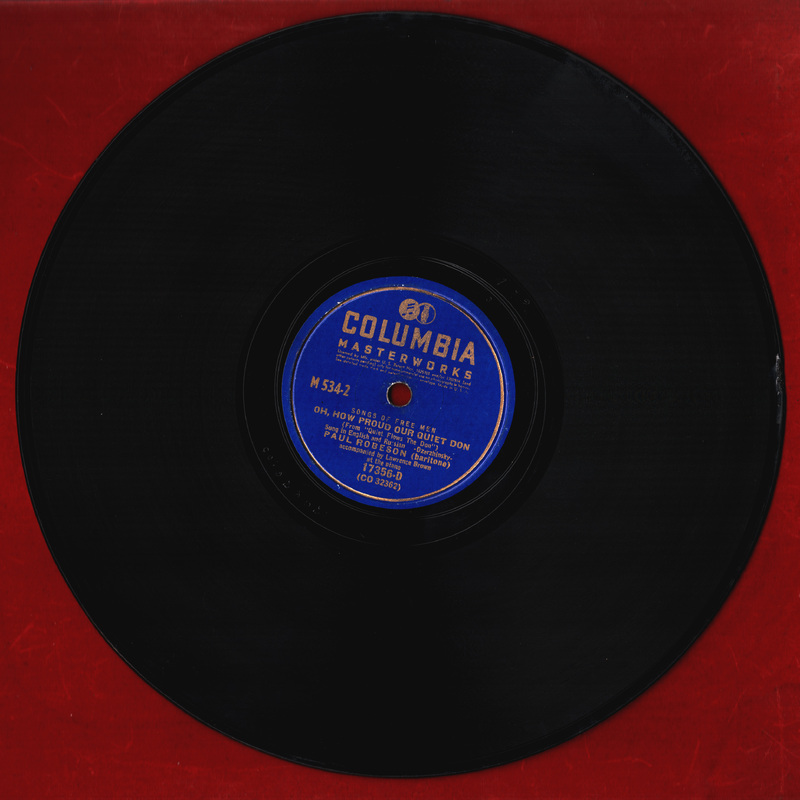
"Oh, How Proud Our Quiet Don" is a poignant song that was first featured in the Soviet film adaptation of Mikhail Sholokhov's novel, "Quiet Flows the Don.". The novel is a classic of Russian literature chronicling the lives of the Don Cossacks during the tumultuous years of World War I, the Russian Revolution, and the Russian Civil War to the eventual good years of Soviet unity. The song itself captures the spirit, pride, and sorrow of the Don River and its people reflecting through the lyrics aiming to convey their deep connection to the land and history like the previous song.
Paul Robeson famously performed the song in both English and Russian throughout World War II. His choice in this rendition brought international attention to the piece, especially during the mid-20th century when cultural exchanges between the Soviet Union and the West were rare. Through his performance, Robeson helped bridge a cultural divide introducing Western audiences to Soviet art and literature and reinforce the international effort against the Axis.
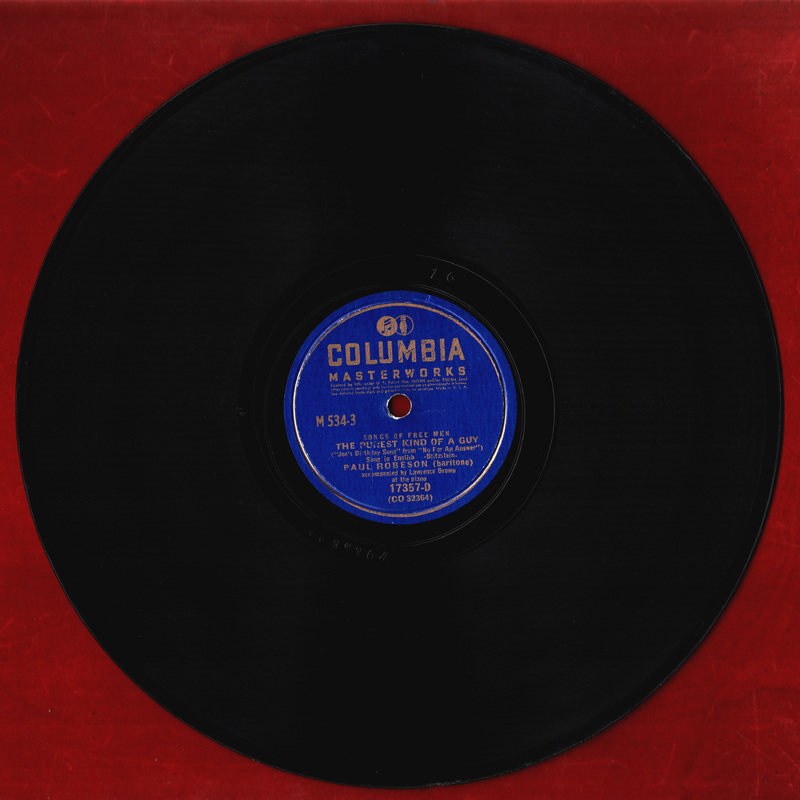
"The Purest Kind of Guy" also known as "Joe's Birthday Song" is a notable piece from the opera No For An Answer by Marc Blitzstein. Artistically the piece was intended as a statement on labor rights and the resilience of ordinary people. "The Purest Kind of Guy" stands out for its sincere expression of appreciation for Joe, portraying him as a symbol of integrity and kindness among his peers as a laborer. The song itself is performed during a pivotal scene in the opera celebrating the character Joe's birthday. Its lyrics are heartfelt capturing the camaraderie and the struggles faced by the working class in the story and in real life.
Despite its initial limited run due to political controversy and Blitzstein's challenges in staging the full opera, "Joe's Birthday Song" has endured as a beloved highlight thanks to Paul Robeson whose patronage and support of the song, labor, and the fine arts was well known. Over time, the song has been performed in various revivals and recordings including this one here to ensure it's immotralization.
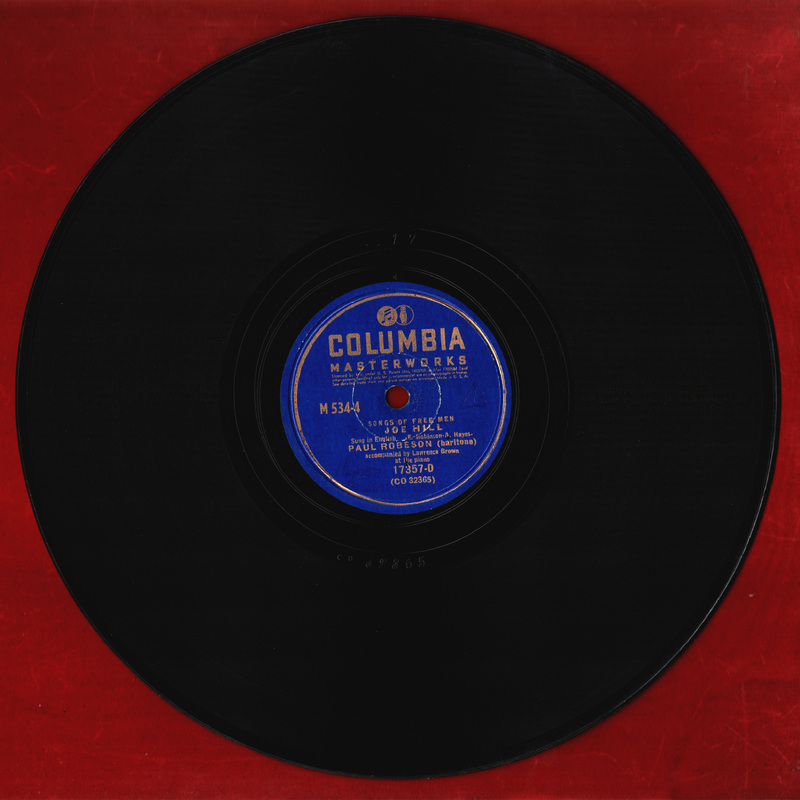
“Joe Hill” is a folk song that commemorates the life and legacy of Joe Hill, a Swedish-American labor activist and songwriter who was executed in 1915 over a 1914 killing many suspect he was innocent of. The same evening that killing occured Hill arrived at a doctor's office with a gunshot wound. He refused to explain further, even after he was accused. His life and story became the basis for several major folk songs. The lyrics for this specific version were penned by Alfred Hayes in 1930, and the music was composed by Earl Robinson in 1936.
Paul Robeson aimed throughout his career to poularize “Joe Hill”. This rendition is celebrated for achieving such as it brought new attention to the song’s message. Robeson often performed "Joe Hill" at rallies and concerts linking the struggle of workers to broader themes of justice and equality. The song became an anthem for labor movements expressing themes of resilience and solidarity among workers while highlighting Hill's enduring influence after his death thanks to such.
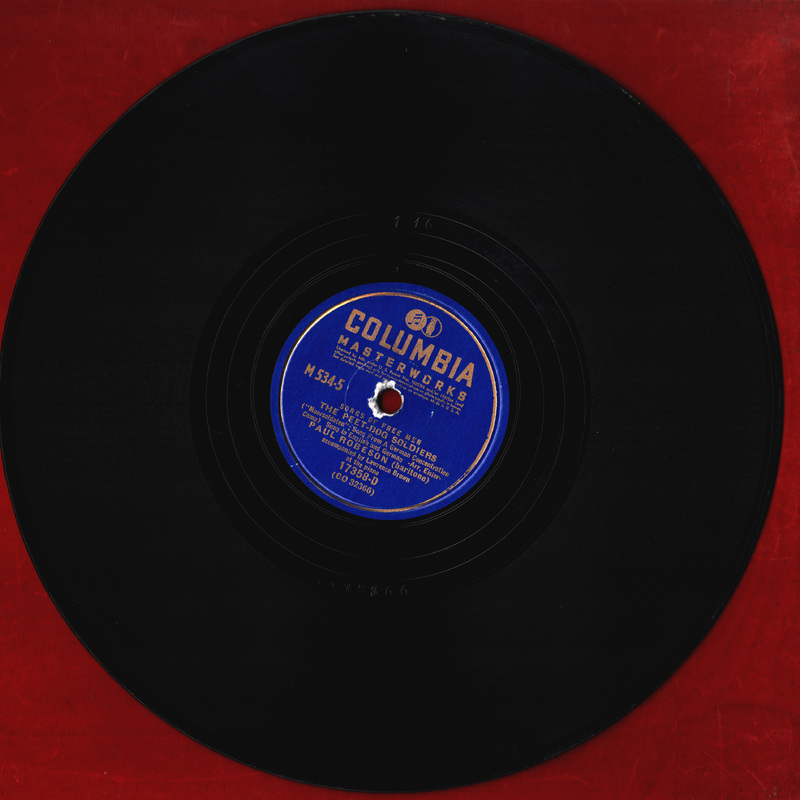
"The Peat-Bog Soldiers" occurs again in this Robeson collection due to its role as a powerful protest song against Nazi Germany during the early 1930s. It was first written in 1933 by political prisoners held in the Börgermoor concentration camp in Germany. The lyrics were penned by Johann Esser and Wolfgang Langhoff while the music was composed by Rudi Goguel. The song was created as an act of resistance and solidarity among the inmates, many of whom were opponents of the Nazi regime.
The original German lyrics describe the harsh labor of digging peat in the bogs, enforced upon the prisoners by the Nazi regime as a form of punishment. Despite its somber tone the song carries a message of hope and resilience, symbolizing spirit of those who suffer under oppression which struck deeply with Paul Robeson and his own activism. "The Peat-Bog Soldiers" became an anthem for anti-fascist movements across Europe, especially during the Spanish Civil War where it was adopted by the International Brigades.
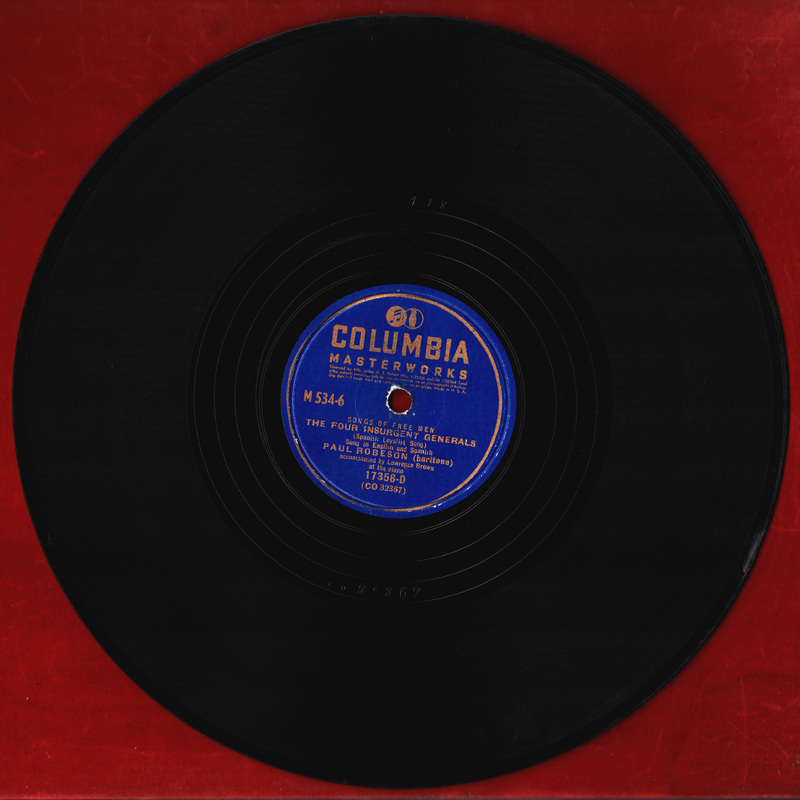
“The Four Insurgent Generals” is also another re-occuring song within the Robeson history. It is a powerful and evocative that depicts four military leaders who played pivotal roles in various revolutionary movements, symbolizing the struggle against oppression and the quest for liberation. The history of “The Four Insurgent Generals” is intertwined with Robeson's own political activism in the mid-20th century. He was deeply influenced by global anti-colonial and civil rights movements, and his art often reflected his commitment to equality and resistance.
Over the years, “The Four Insurgent Generals” has been celebrated for its artistic and historical significance. Today the work continues to resonate with audiences, reminding them of Robeson's enduring legacy as both an artist and a champion for human rights.
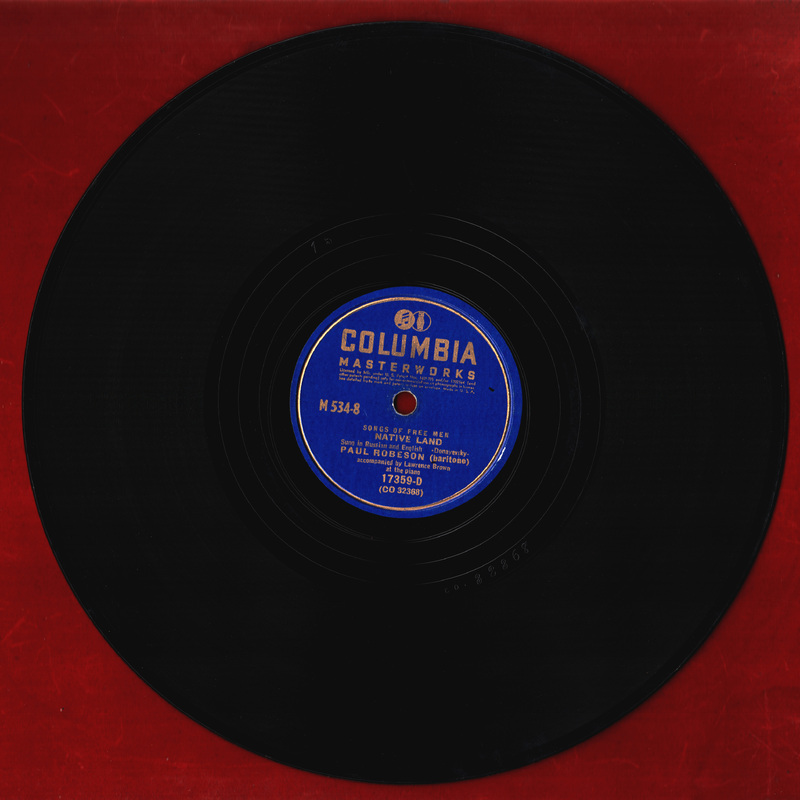
“Native Land” is a powerful song performed direcly named after a 1942 docudrama film directed by Leo Hurwitz and Paul Strand that depicted the struggle of trade union against union-busting corporations. Paul Robeson was a part of this film as the narrator and vocalist where the early versions of this song came from. Its lyrics reflect both the struggles and hopes of those who seek freedom and equality, echoing Robeson’s lifelong advocacy for human rights.
The history of “Native Land” is closely tied to Robeson’s activism. Paul Robeson became an influential figure in the civil rights movement by using his music and public presence to challenge racial discrimination and promote unity. “Native Land” was often featured as a tribute to oppressed peoples worldwide symbolizing the universal yearning for dignity and justice. As Robeson traveled the song resonated with diverse audiences, further cementing its place in the history of protest music.
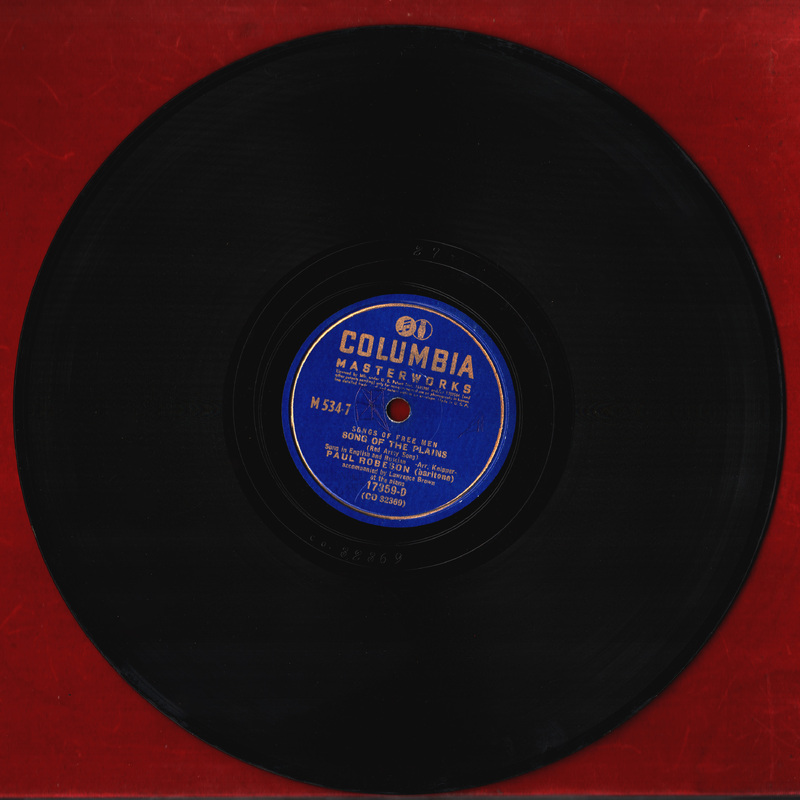
“Song of the Plains” is a stirring musical piece famously performed by Paul Robeson from Russian translations. The song, originally titled “Polyushko-polye” in Russian, was composed by Lev Knipper in 1933 and became one of the best-known Soviet patriotic songs. Its lyrics evoke the vastness and beauty of the Russian steppes like other works within this collection. Paul Robeson brought “Song of the Plains” to international audiences during his tours seeking to bridge western and Soviet gaps.
The history of “Song of the Plains” in Robeson’s repertoire is significant because it exemplifies his commitment to using music as a tool for social change and international understanding. By embracing songs from various cultures Robeson sought to highlight the universal themes of struggle and unity. “Song of the Plains” remains a testament to his legacy and his enduring influence on world music and political thought. Though it would also be used heavily in later House of Un-American Activties prosecution against him.