"Every artist, every scientist, every writer must decide now where he stands. The artist must take sides. He must elect to fight for freedom or for slavery. I have made my choice. I had no alternative." - Paul Robeson, 1937
The International Brigades and the Spanish Civil War
In July of 1936 a right-wing military coup was launched against the Second Spanish Republic plunging the Spanish Republic. Quickly the conflict became the proxy battleground between Fascism, Democracy, and Leftism with the couping Spanish State recieving support from military expeditionary forces from Nazi Germany and Fascist Italy while the Spanish Republic recieved support from the Soviet Union and a myriad of foriegn anti-fasicst volunteers in the form of democratic volunteer militias or Communist International "International Brigades". While the American government itself took a stance of neutrality on the conflict many Americans took the fight against fascism as a grave threat with Paul Robeson being inspired to the fight for it. Some of the most famous volunteers being the 3,000 Americans who formed the Lincoln Battalion of the International Brigades. While Robeson himself did not serve in this formation he was one of the largest popular figures in raising money and hosting supporting events for the International Brigade. Robeson did a myraid of activities for such visiting his fellow Americans and other volunteers in Spain and perofmring to hosting and speaking at numerous rallies and fundraisers for the organization. One such way he did so was through his artistic music producing and driving support for fundraiser production songs personally signing copies that sold at special events even, including one we hold in our own collection. We invite you to listen and learn about the history and activism of Paul Robeson.
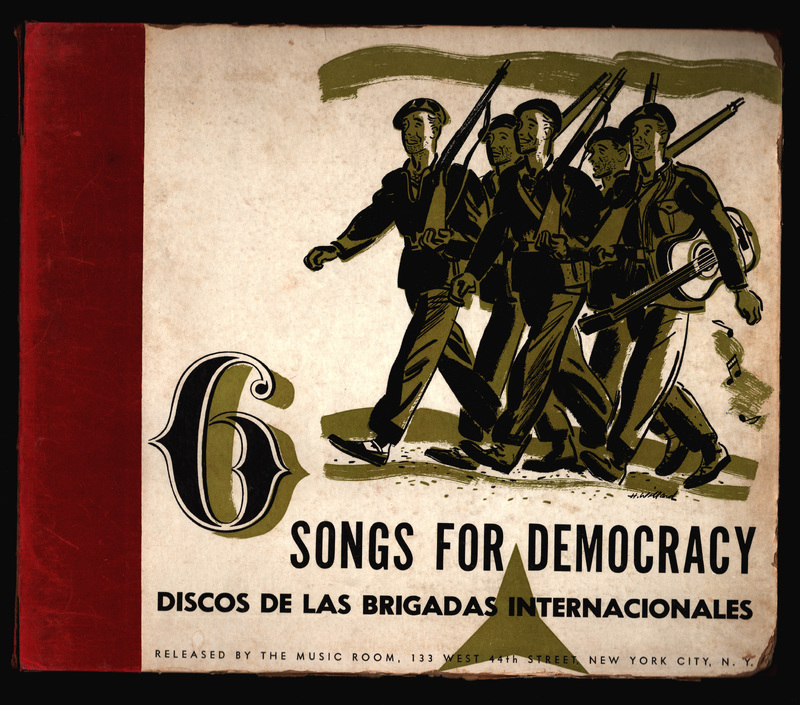
Cover
The cover art for the "6 Songs for Democracy: Discos de Las Brigadas Internacionales" vinyl is striking aims to reflect the political significance of the album as part of the Spanish Civil War. Historically, this record was released first in Spain in 1938 in Barcelona and then the United States in 1940. The albulm itself captured songs sung by members of the International Brigades, whose symbol is at the bottom right, who fought against fascism in Spain. The album was distributed as a means of spreading awareness and fundraising for the anti-fascist cause
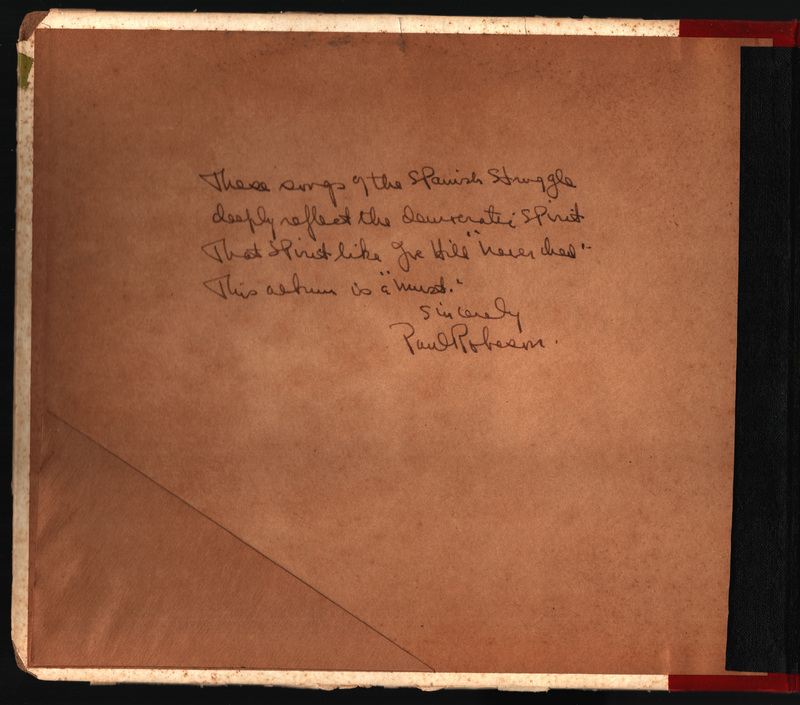
Inscription
Paul Robeson was deeply inspired and motivated by the cause of anti-fascism becoming increadibly politically active during the Spanish Civil War. He regularly attended rallies across America and Europe to raise suppot, even going into Spain itself during the war for the troops. At many of these events such as seen here he would sign copies of the albumns to help raise support for the cause. On this specific one it reads "These songs of the Spanish Struggle deeply reflect the democratic spirit. That spirit like Joe Hill "Never Died". This album is a must."
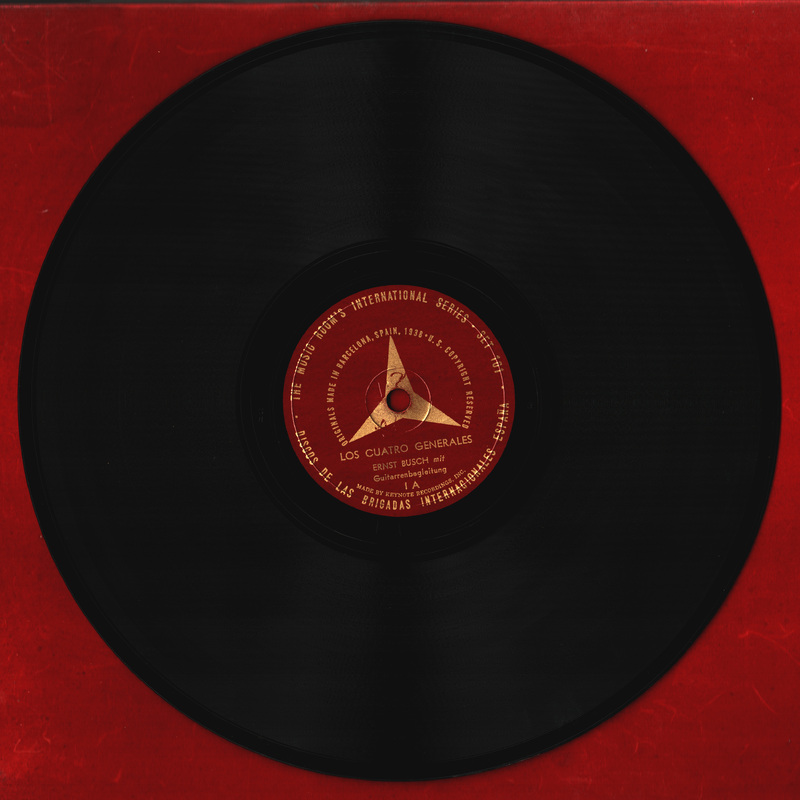
“Los Cuatro Generales” (The Four Generals) is a well-known Spanish Civil War song featured as the first song in the collection. The song recounts the story the four generals who led the Nationalist forces against the Spanish Republic in a coup starting the civil war: Emilio Mola, Francisco Franco (later leader of Spain), Queipo de Llano, and José Enrique Varela. Its lyrics serve as a rallying cry for the Republican side, mocking the generals and expressing the determination of the defenders of Madrid to resist the Nationalst Spanish siege that was occuring when the song was recorded. The melody is stirring and repetitive, designed for easy singing by large groups. As such the song became a well sung anthem for both Spanish and international volunteers fighting in the International Brigades in ceremony and marches including by Paul Robeson who would include it several later albumns.
“Lied der Einheitsfront” (Song of the United Front) is one of the most prominent labor pieces featured in the collection “Six Songs for Democracy.”. Originally composed by Hanns Eisler with lyrics by Bertolt Brecht, the song was written during the turbulent 1930s in Germany as a call for solidarity among workers and leftist groups, urging them to unite against the rising threat of fascism. As such it has become one of the most famous German political songs and one of the most prominant, performed, and recorded labor songs in history still being used today by leftist and labor organizations. The song’s stirring direct rallying lyrics emphasized the importance of collective action and social unity with this unique take on it by Ernst Busch featuring himself as a solo performance of the song rather than the traditional chorus acoompanying.
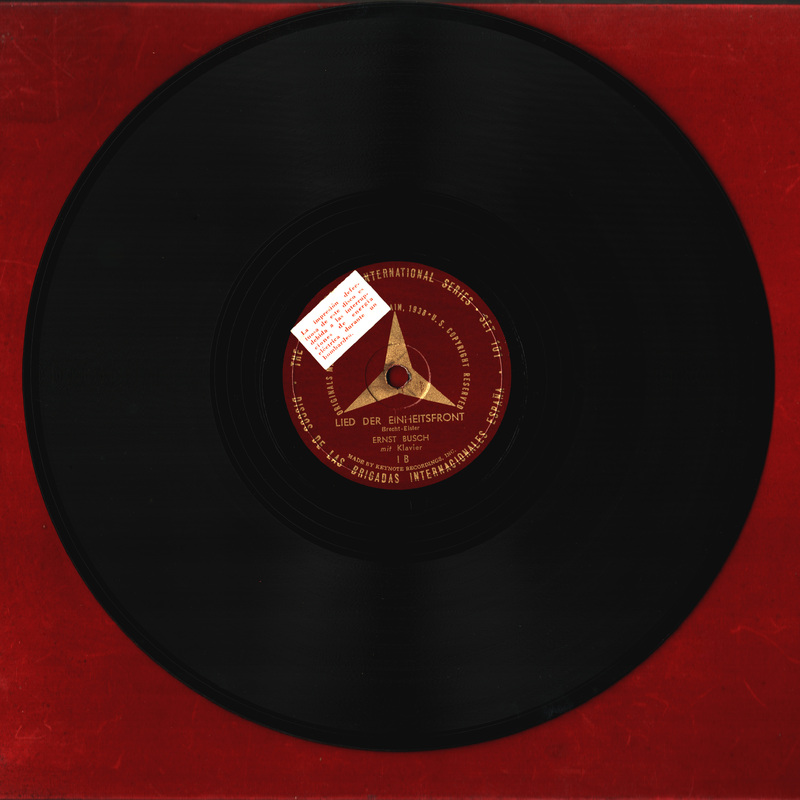
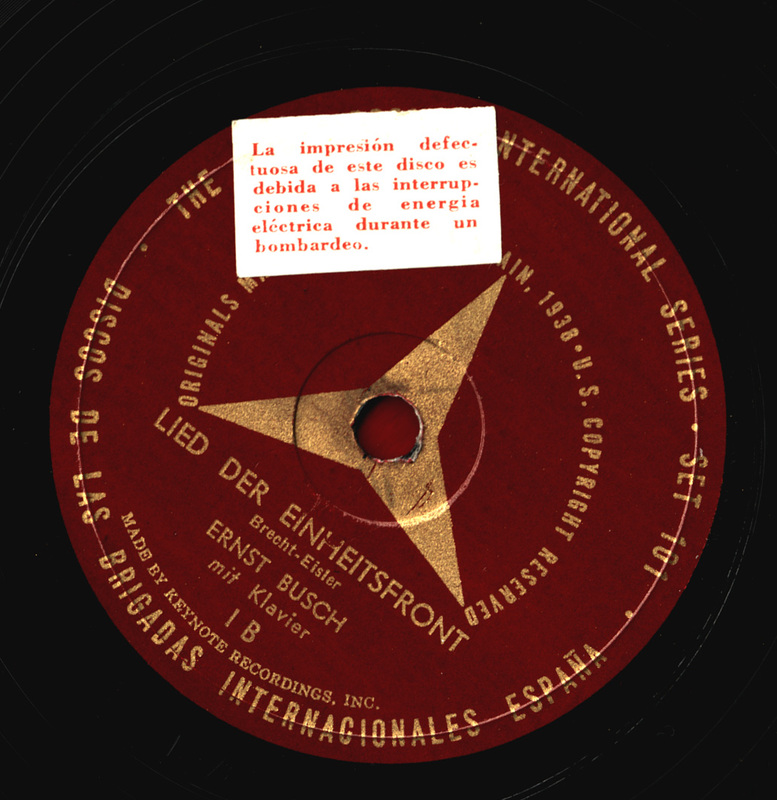
Sticker detail
One of the more unqiue aspects of the vinyl within our collection is the recording making of the Spanish Civil War in 1938. These tracks were orginally produced in Barcelona by the International Brigades, a group of volunteers from around the world who fought against fascism in Spain while the city was under siege. This specific sticker when translated provides a humerous apology for some of the quality of the songs, as their electical energy was interrupted regulary under the intense air bombardment by the Spanish State and it's Nazi German and Fascist Italian allies.
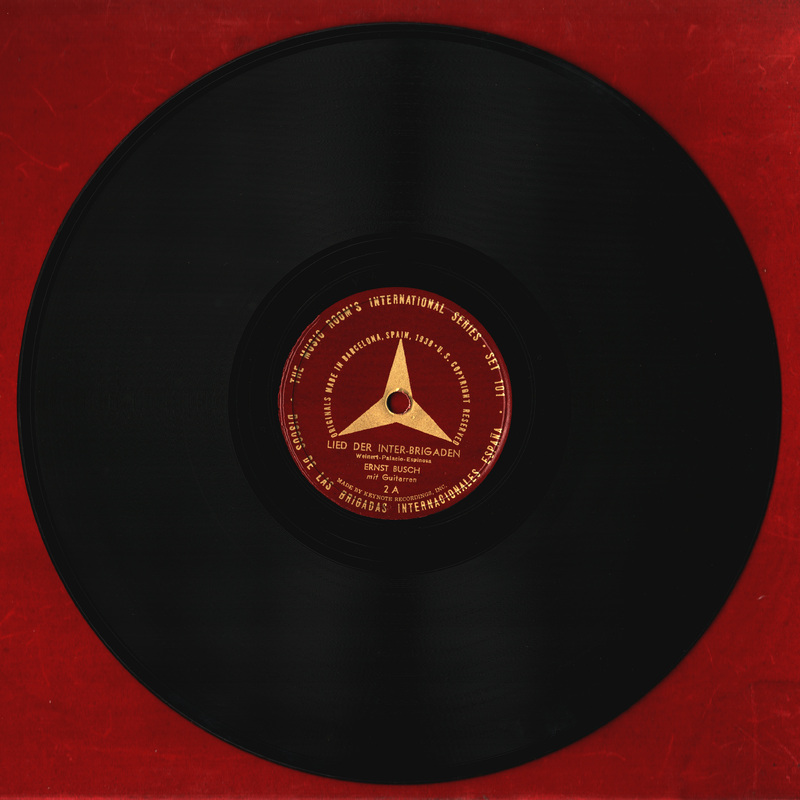
"Lied der Internationalen Brigaden" (Song of the International Brigades) is the unofficial anthem associated with the International Brigades that this albumn is centered around. These were volunteer units made of anti-fascist members from across the world that fought for the Spanish Republic during the Spanish Civil War. The majority came from Europe and the America's and were backed by funding from the Communist International these forces quickly became one of the single most effective paramiliary units in the Spanish Republican Army.
The specific song celebrates the unity, solidarity, and diversity of the struggle against fascism by this group of volunteers from around 50 nationalities. Many members of the units would go on to become key leaders in a variety of countries leftist and labor polical movements. Paul Robeson was a favored performer to these brigades, especially the American Arbraham Lincoln Brigade, who would visit Spain to perform for them on several occassions throughout the war. Their logo is proinelty featured on this collection both on the cover and vinyls.
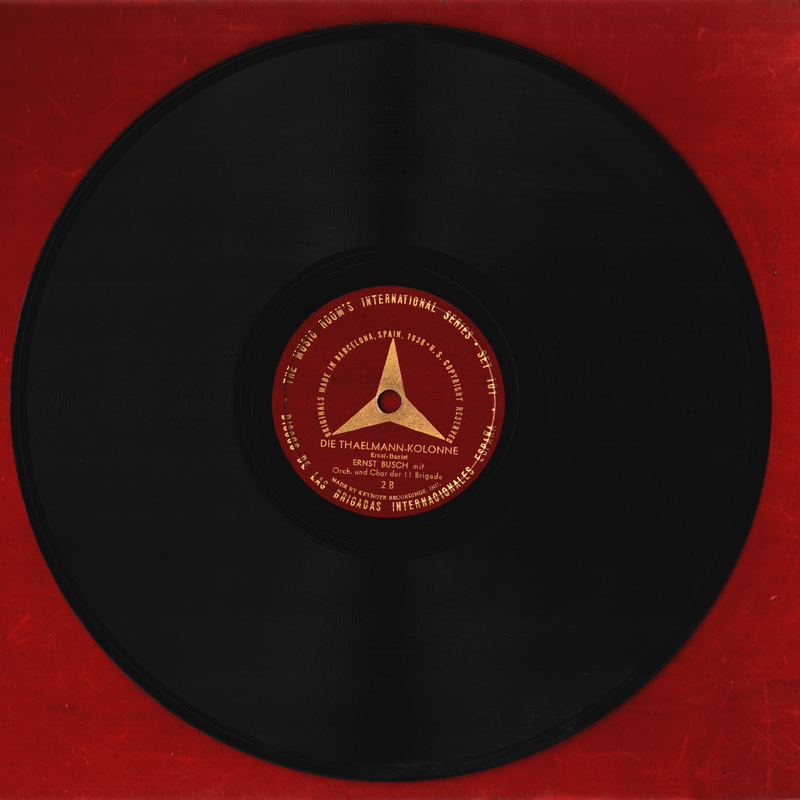
“Die Thälmann Kolonne” (The Thaelmann Column) is another famous German revolutionary song that emerged during the turbulent years of the early 1930s. It's origins were specifically used as the rallying anthem for the Communist Party of Germany (KPD) of which many of it's members had gone into exile for after the rise of the Nazis. Ernst Busch was one such member who had fled to Spain in exile making this song especially personnal for him. The song is specifcally named after Ernst Thälmann, a prominent leader of the KPD who became a symbol of resistance against fascism and the Nazi regime due to his execution by the Nazis.
The lyrics of the song celebrate the solidarity, courage, and determination of Thälmann’s followers, often referred to as the “Thälmann Column,” who fought against oppression and injustice during a period of intense political strife. The song was frequently performed at rallies, demonstrations, and gatherings, serving both as a morale booster and a statement of defiance against the growing threat of Nazism which was a ally in both troops and material to the Spanish Nationalists.
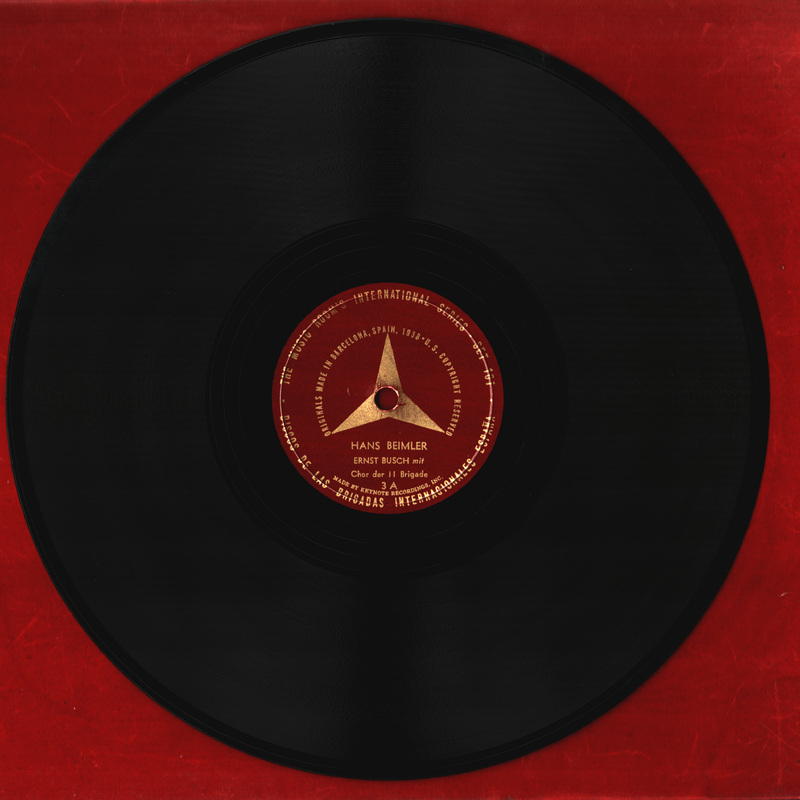
“Hans Beimler” is another German political song that emerged during the Spanish Civil War from this albumn directed primarily by German exiles in the International Brigades. The song honors Hans Beimler who was a German Communist and member of the International Brigades that had became a symbol of anti-fascist resistance after his death in combat in December of 1936. The song was composed shortly after his death and quickly adopted by volunteers fighting for the Spanish Republic, particularly among German-speaking anti-fascists such as Ernst Busch who created this albumn.
The lyrics of the song recount Hans Beimler's escape from Nazi imprisonment at Dachau concentration camp, his journey to Spain, and his ultimate sacrifice in the Battle for Madrid fighting in the International Brigade. The melody is based on a popular Russian folk tune lending the piece a sense of solidarity and internationalism. Today the song is often referenced in historical documentaries, commemorative events, and scholarly works about the Spanish Civil War and the international anti-fascist movement.
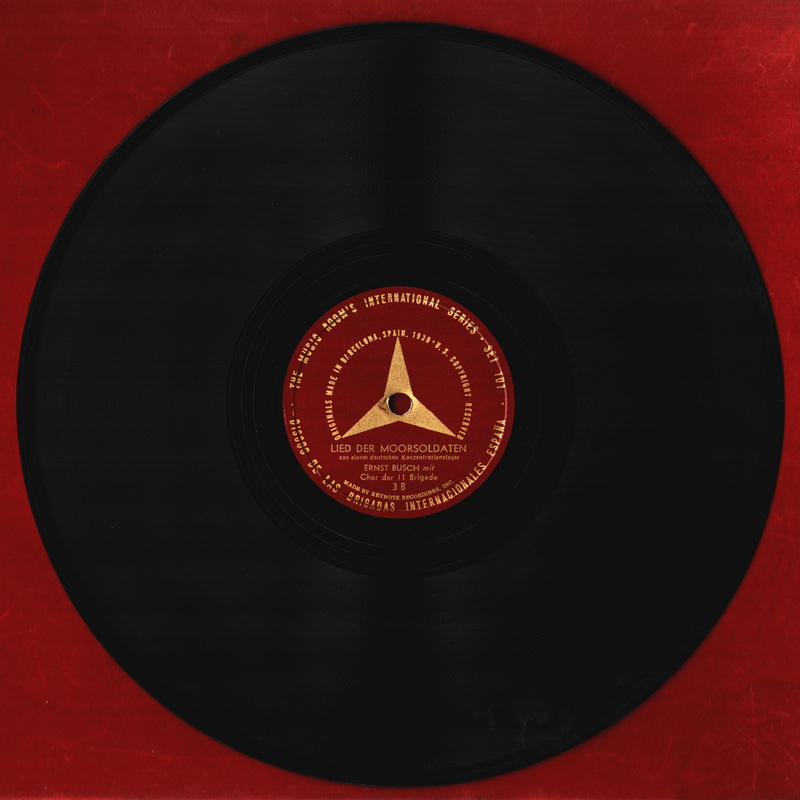
“Die Moorsoldaten” (The Peat Bog Soldiers) is a German protest song originally written in 1933 by political prisoners in the Börgermoor concentration camp in the Lower Saxony province of German. The lyrics were composed by Johann Esser and Wolfgang Langhoff, while the melody was created by Rudi Goguel. The song was performed for the first time by inmates as part of a camp revue. As members escaped the song would spread to the wider German lefitst exile community with it joining the ranks of the International Brigade during the Spanish Civil War.
This version describes the bleak conditions of forced labor in the peat bogs that were common in the concentration camp. It's lyrics reflect the prisoners' longing for freedom and their resilience under Nazi tyranny. The song would became a powerful symbol of resistance as such. Paul Robeson himself would perform this song many times as it's messages of seeking freedom and resliance struck deeply with him. Today it is still often performed at events honoring victims of Nazi persecution.