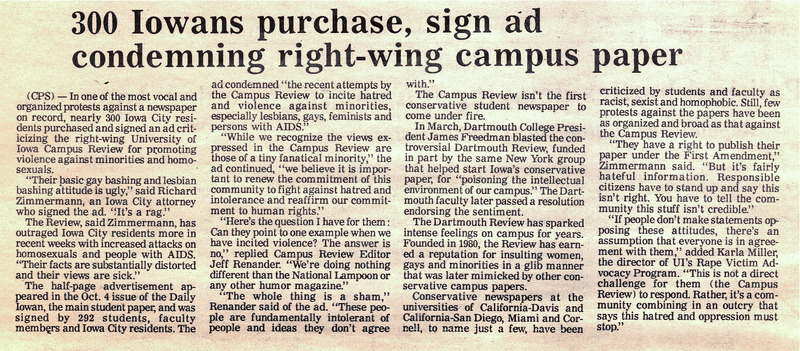
Article about a large protest on the University of Iowa against a right-wing publication for being homophobic and bigoted. The article discusses free speech, homophobia, racism, and sexism. College Press Service (CPS) and syndicated to the Gleaner.
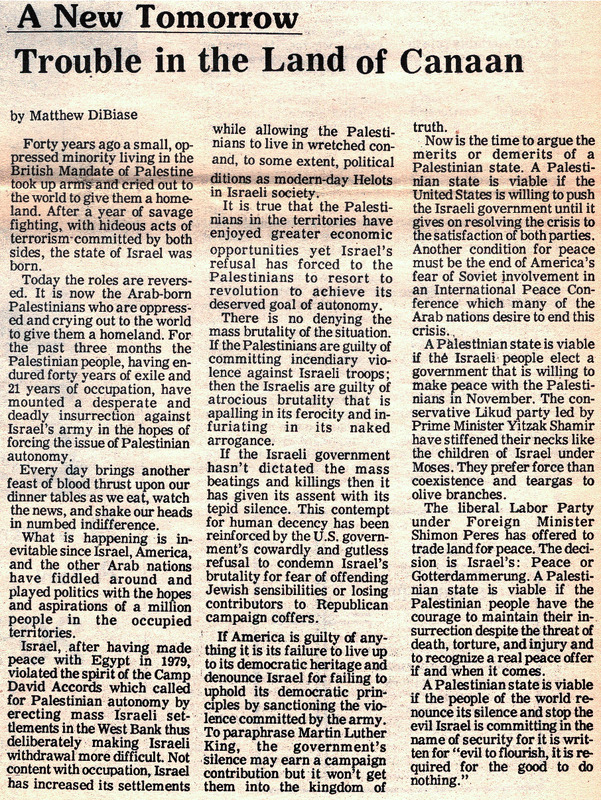
Matthew DiBiase criticizes the Israeli government's treatment of Palestinians and calls for the establishment of a Palestinian state, urging the United States to push for a resolution to the "deadly insurrection" in the occupied territories.
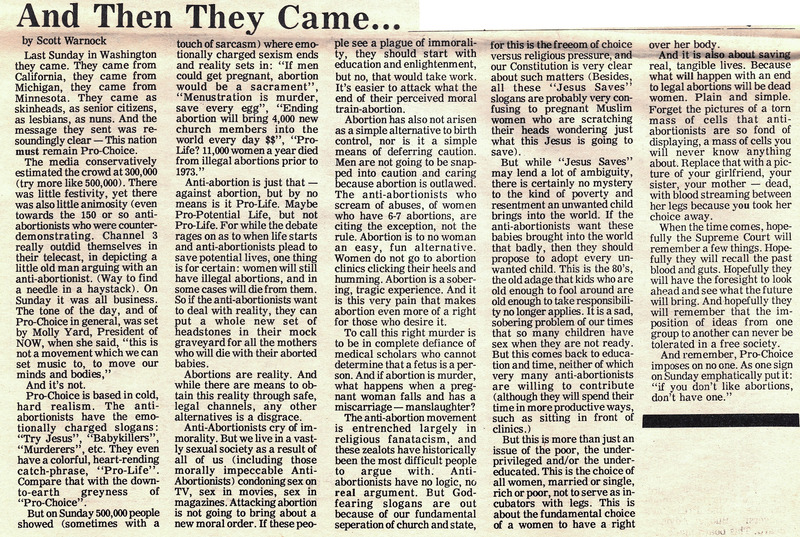
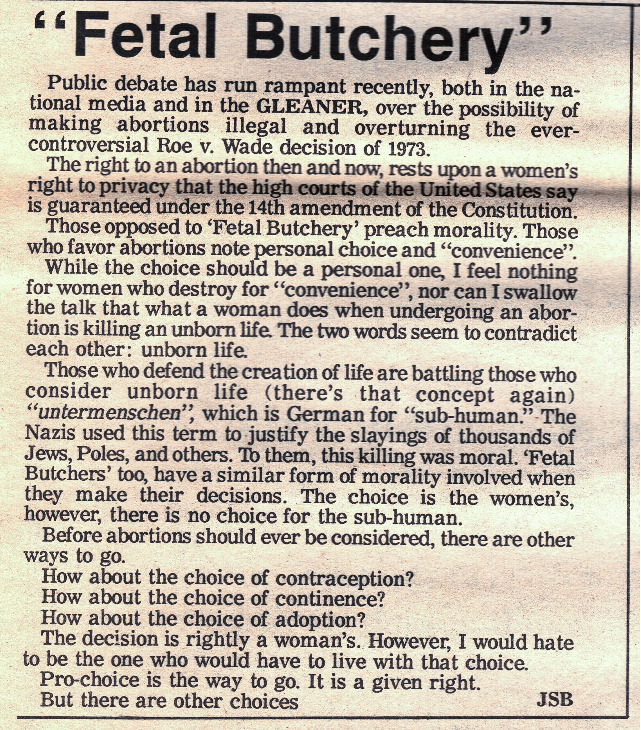
Warnock discusses abortion and argues that the pro-life movement is entrenched in religion and is not realistic. He argues for access to abortion to save women's lives and recognizes that it is a difficult decision for women.
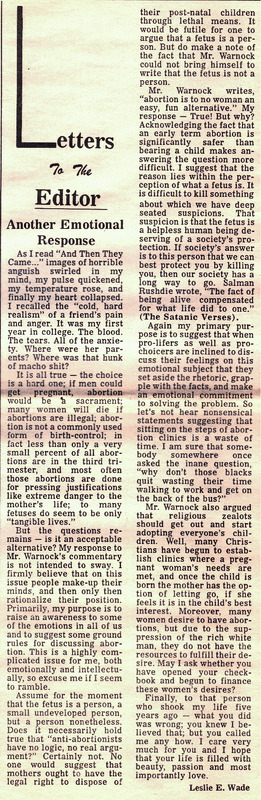
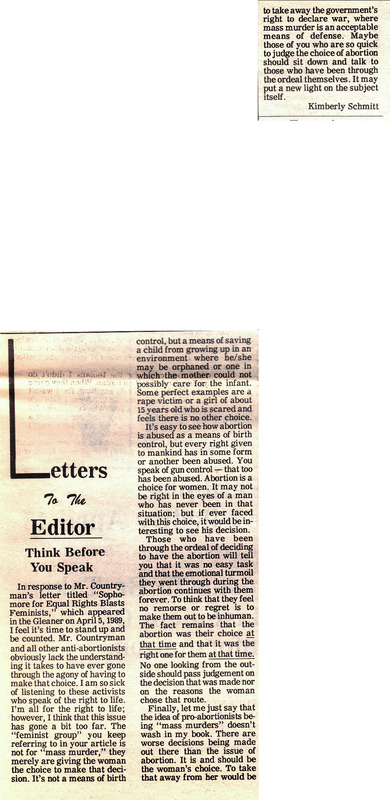
This letter from Leslie E. Wade discusses the issue of abortion and is in response to a previous article published in The Gleaner, "And Then They Came..." Wade reflects on the emotional and intellectual complexity of the issue.
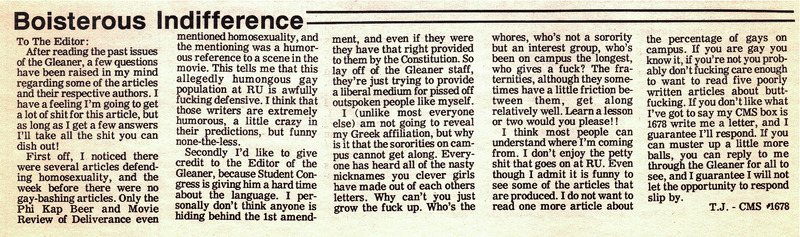
This letter to the editor discusses several problems he sees with the Gleaner's recent publications and their reception. He sees the gay community on campus as overly defensive and thinks sororities need to get along better like the fraternities. He defends the Gleaner for offering a platform to students despite critiques from readers about hiding behind the 1st Amendment. He doesn't want to read more about gay people but offers his CMS box for anyone who would like to respond to him.
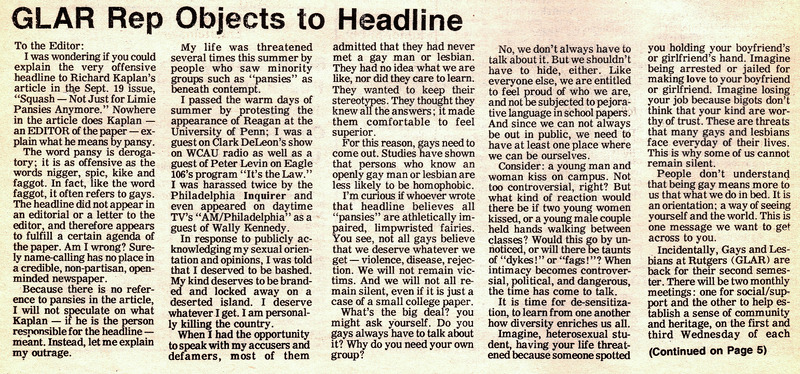
Letter to the Editor about Richard Kaplan's use of the word "Pansies" in the previous publication. The writer, Scott Mallinger, criticizes the usage of the term as homophobic and offensive against the LGBTQ community. He promoted the student organization, Gays and Lesbians at Rutgers (GLAR) as well. Mallinger's letter is followed by a brief response from John, a gay correspondent at the Gleaner, who argues that Mallinger needs to "loosen up" and that the use of "pansy" in a headline is different from the hateful use of slurs.
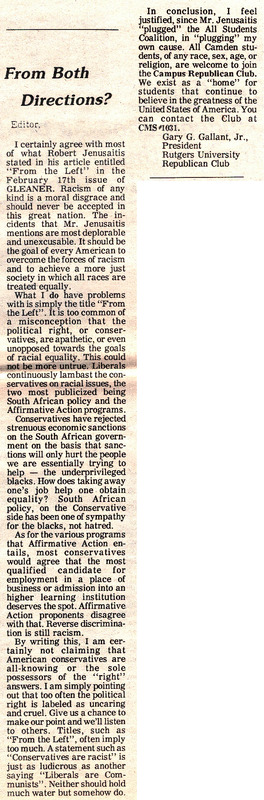
In a letter to the editor, Rutgers University Republican Club President Gary G. Gallant, Jr. responds to Robert Jenusaitis’s previous column by arguing against the "misconception" that conservatives are apathetic toward racial equality.
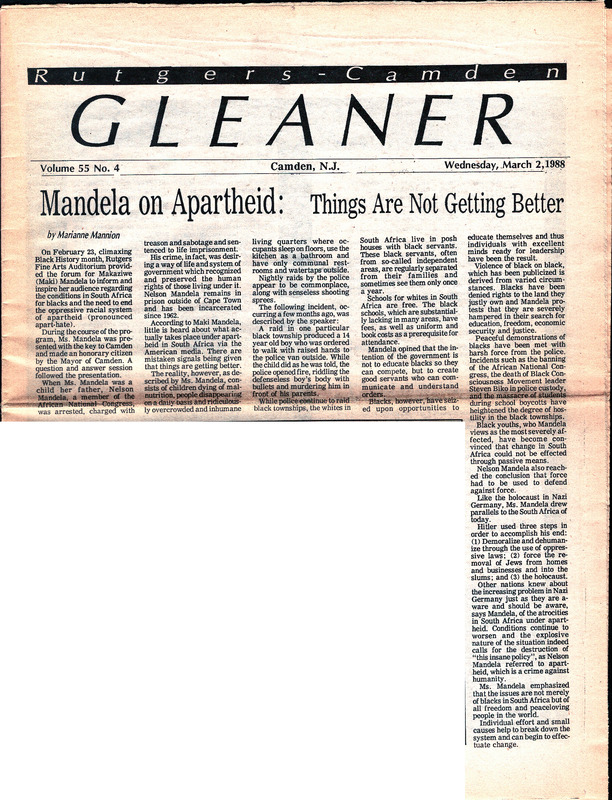
As part of a Black History Month event in the Rutgers Fine Arts Auditorium, Makaziwe (Maki) Mandela delivered a lecture on the brutal realities of apartheid in South Africa, describing police violence and systemic dehumanization. During the program, the Mayor of Camden presented Mandela with the key to the city and named her an honorary citizen.
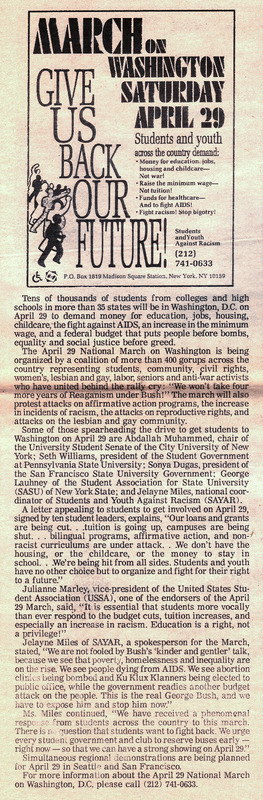
This is an advertisement for an upcoming march on Washington, DC, for more funding for education, housing, jobs, the AIDS epidemic, and increasing the minimum wage. The protest is organized by a coalition of several hundred groups focused on equity, social justice, racism, sexism, affirmative action, homophobia, etc.
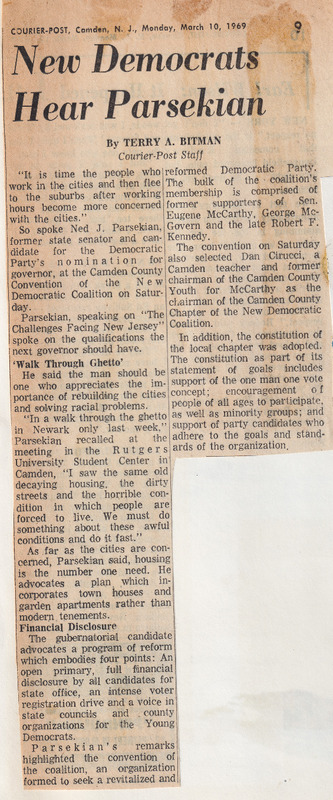
Democratic candidate for the governorship, Ned Parsekian, speaks at Rutgers campus about the housing crisis. He encourages all local Democrats to participate in his campaign.
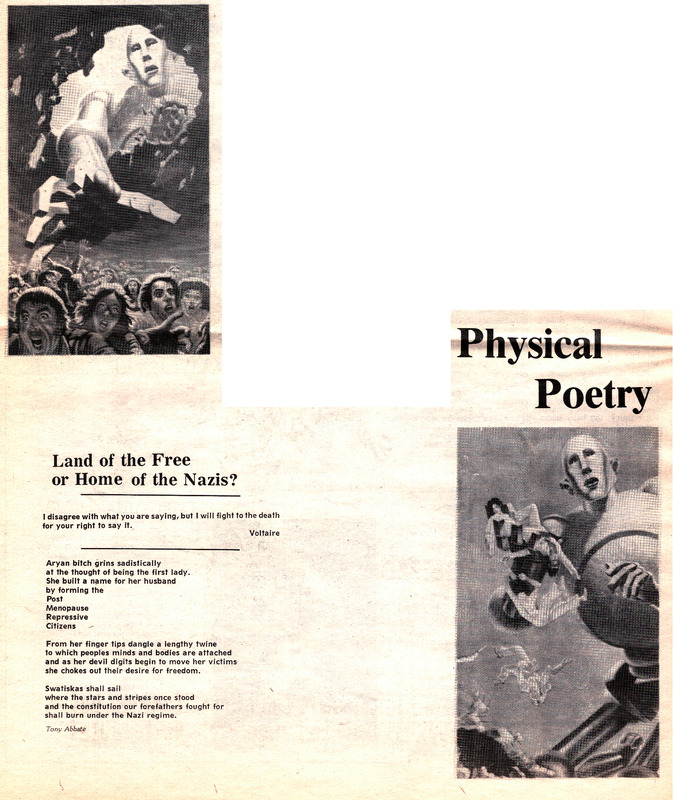
Poem "Land of the Free or Home of the Nazis?" by Tony Abbate published under the "Physical Poetry" section. Accompanying the poem are two illustrations that feature a giant robot-like figure and a crowd of panicked humans attempting to escape its grasp.
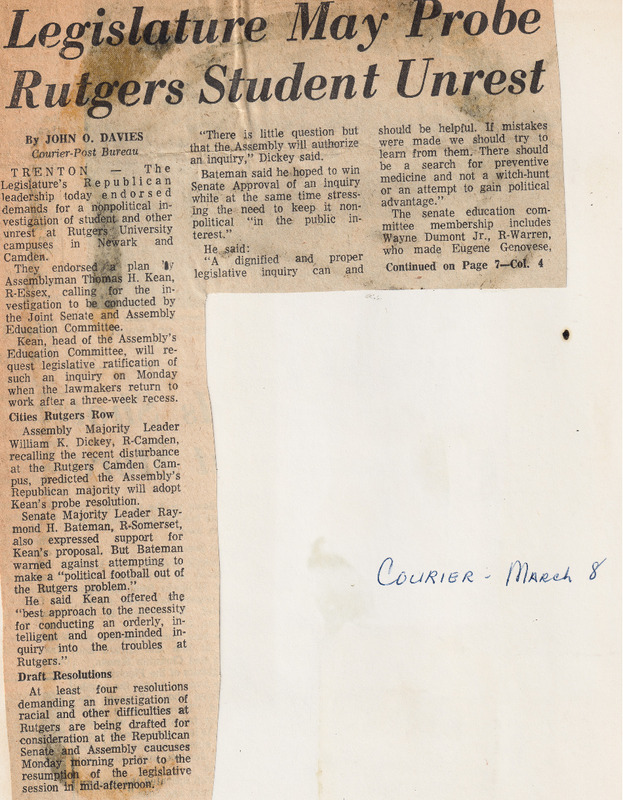
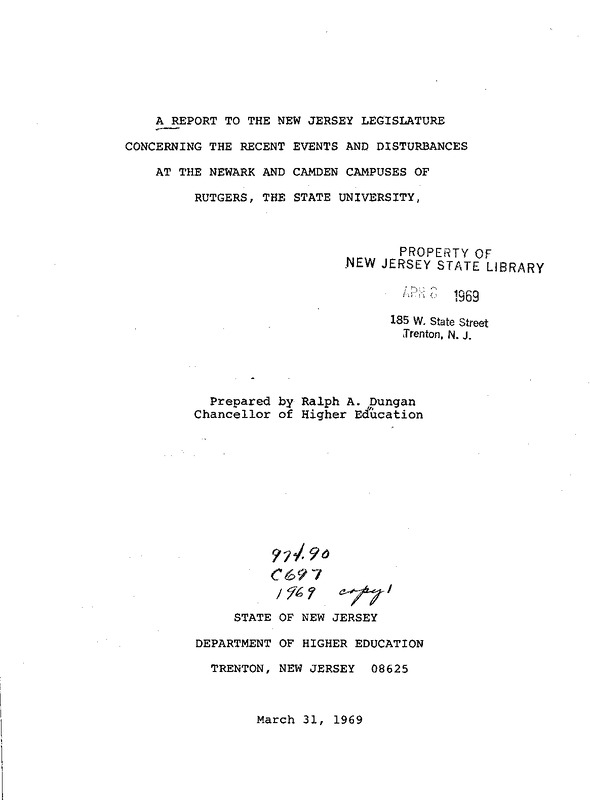
A report to the New Jersey Legislature prepared by Ralph A. Dungan, Chancellor of Higher Education, concerning the Black students' protests at Rutgers-Newark and Rutgers-Camden in February of 1969. The report includes a chronology of the events at Newark and Camden and a list of recommendations. Nine appendices are attached, including a list of demands from the Black Organization of Students at Rutgers-Newark, a list of demands from the Black Student Unity Movement at Rutgers-Camden, a resolution adopted by the Rutgers Board of Governors on March 14, 1969, and other memos related to the protests.
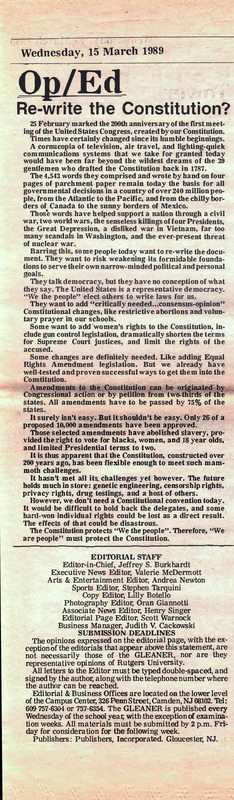
This op-ed reflects on the 200th anniversary of the first meeting of the U.S. Congress while arguing against the call for a new Constitutional Convention.
Rutgers students, who voted in a national poll called "Choice '68," voted for Eugene McCarthy for president, as well as having 54.7% votes for reduction of military activity in Vietnam, 33.95% for complete cessation of bombing, and 33.33% for a reduction of bombing.
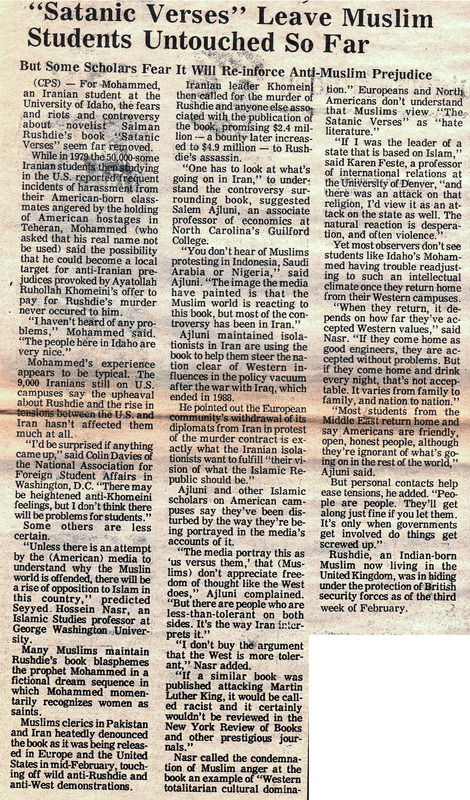
Article about the riots and controversy regarding Salman Rushdie's book "Satanic Verses" and Iranian and Pakistani anti-West demonstrations. Includes perspectives from Muslim and Iranian students and scholars about the situation. Created by College Press Service (CPS) and syndicated to the Gleaner.
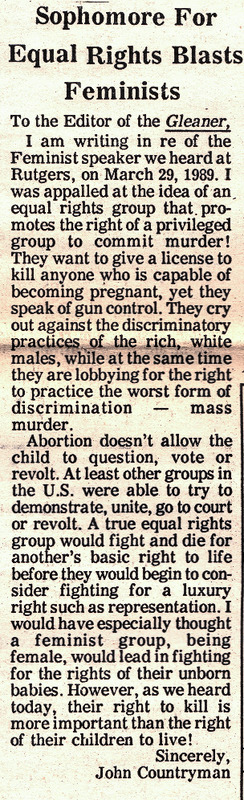
In this letter to the editor, John Countryman strongly criticizes a feminist speaker who visited campus and rebukes the pro-choice arguments of feminist groups.
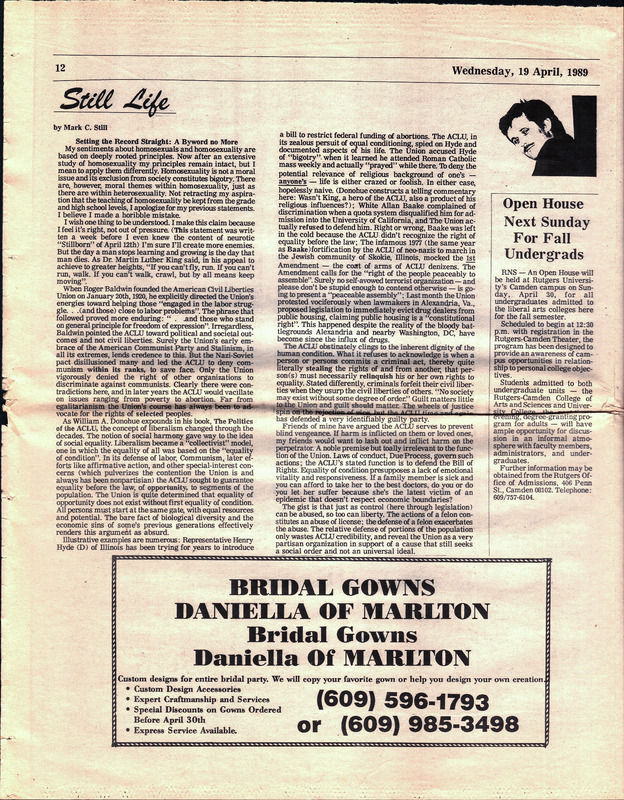
In the column "Still Life," Mark C. Still issues an apology for his previous comments regarding homosexuality, which he concedes were bigoted, but still asserts that homosexuality should not be discussed in K-12 schools. He then critiques the American Civil Liberties Union (ACLU), arguing that the organization has shifted from its original "universal ideal" of protecting civil liberties for all toward a more partisan support of specific social causes.
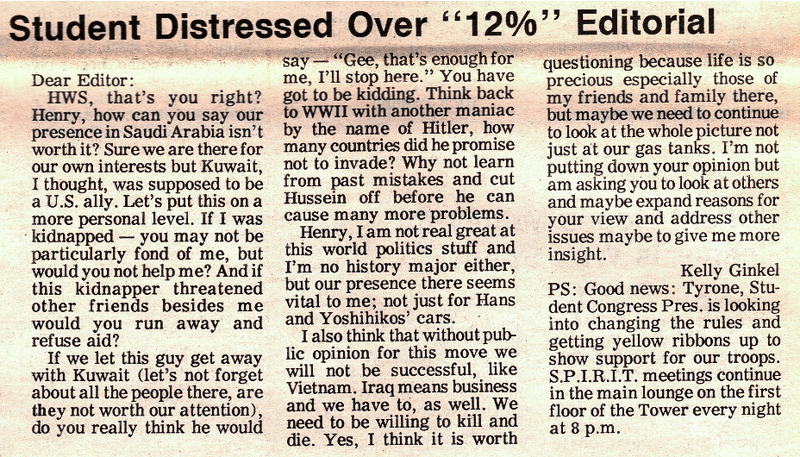
This "Letter to the Editor" is in response to the Gleaner's articles on Saudi Arabia and Kuwait. The writer believes the United States needs to have a presence in the Middle East and that the Gleaner is disregarding the risks posed by Iraq and Saddam Hussein.
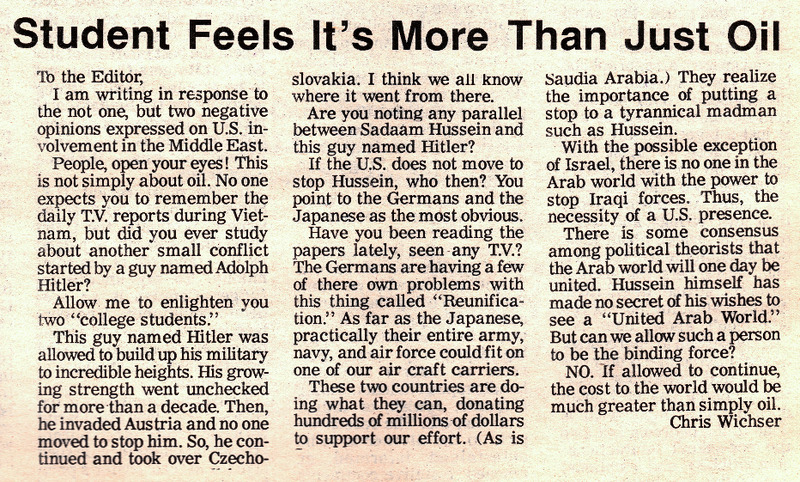
This letter to the Editor sarcastically details the the conflict in the Middle East in response to previous articles published in the Gleaner. He argues that Saddam Hussein's actions mirror those of Hitler and that the conflict can cause issues for more than just oil.
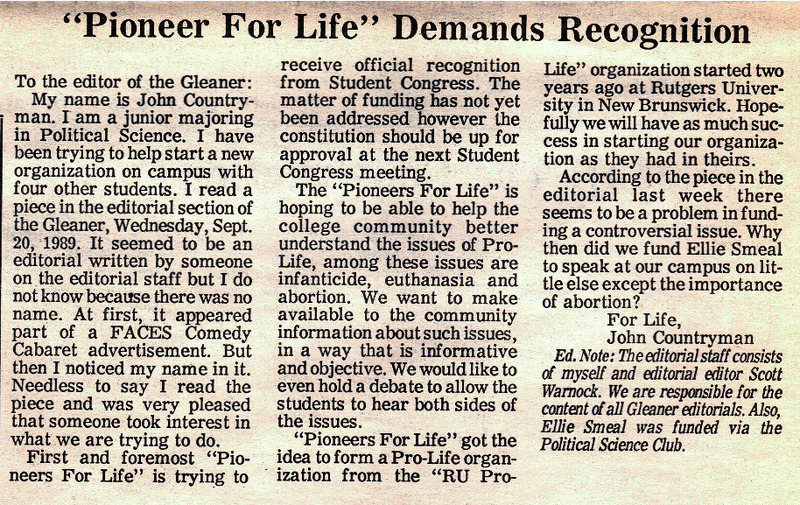
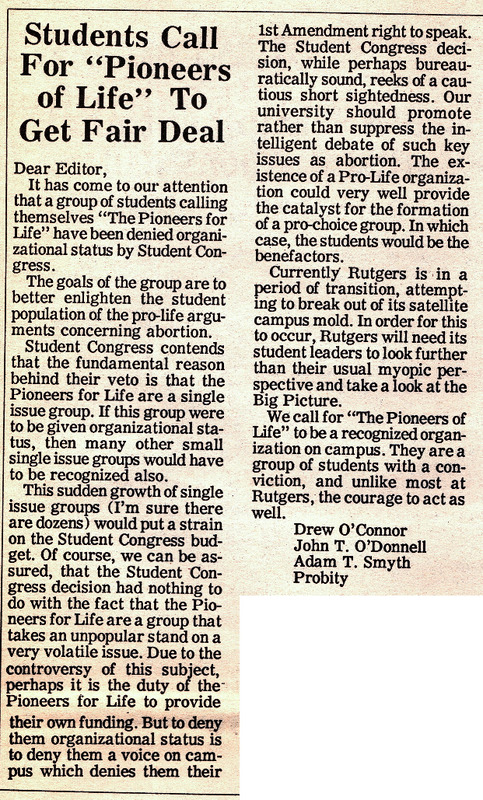
This is a "Letter to Editor" in which a group of students argue that a pro-life student group deserves organizational status from the Student Congress. They argue that university should promote discussions on abortion.
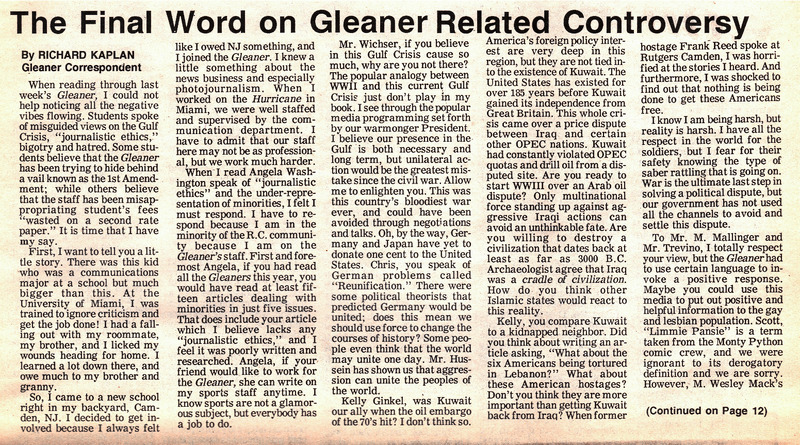
The article is a response to multiple recent "Letters to the Editor." Richard Kaplan criticizes each writer and their complaints, arguing that the Gleaner staff diligently put together the newspaper every week and deserve more respect for their efforts.
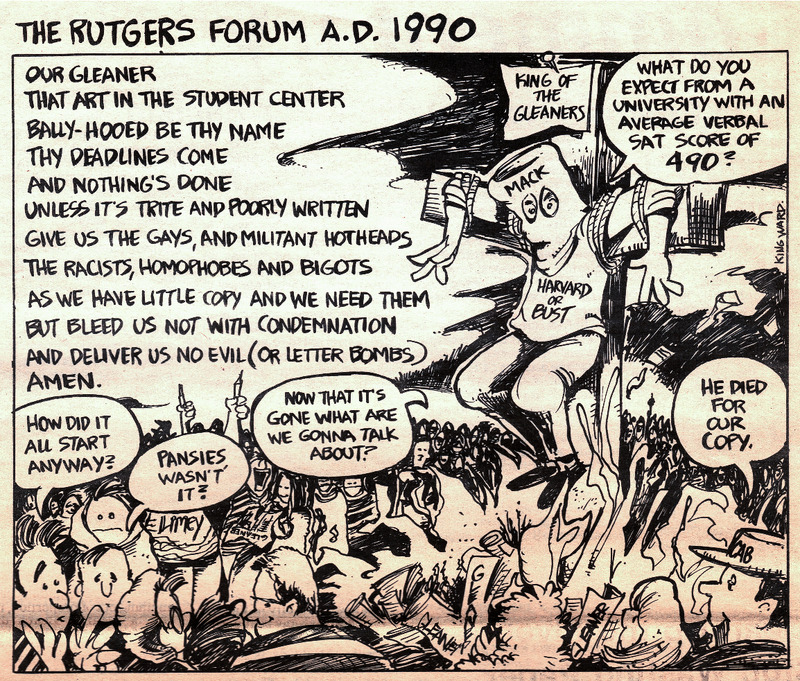
This satirical cartoon and poem mock the recent controversies surrounding the Gleaner. The cartoon depicts Michael Mack, Executive Editor of the Gleaner, being burned at the stake by critics of the student newspaper. The crowd struggles to remember why he is being executed, while Mack questions the intelligence of the Rutgers-Camden student body.
This letter responds to a previously published letter from Mr. Countryman about abortion. Schmitt is pro-choice and refutes Mr. Countryman's arguments.
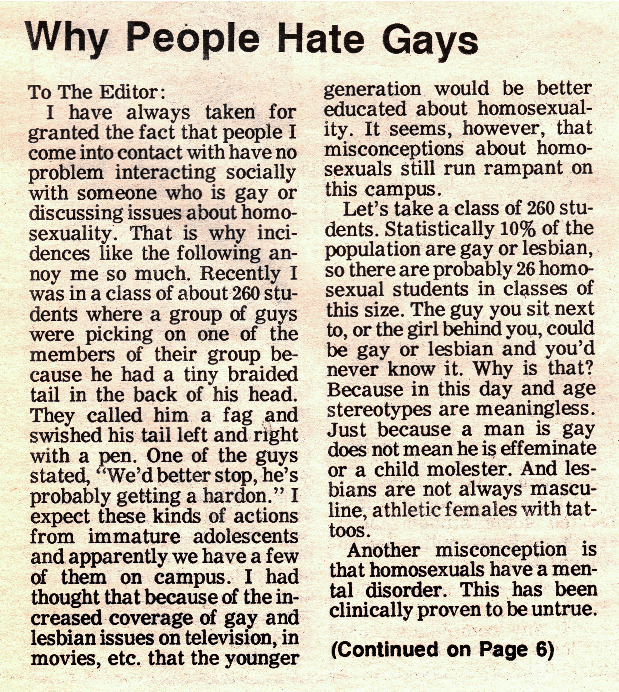
In a letter to the editor titled "Why People Hate Gays," Rich Trevino addresses the persistence of homophobia on the Rutgers–Camden campus. Trevino critiques the Gleaner for its "irresponsible" use of language, specifically referencing the recent "pansy" headline.