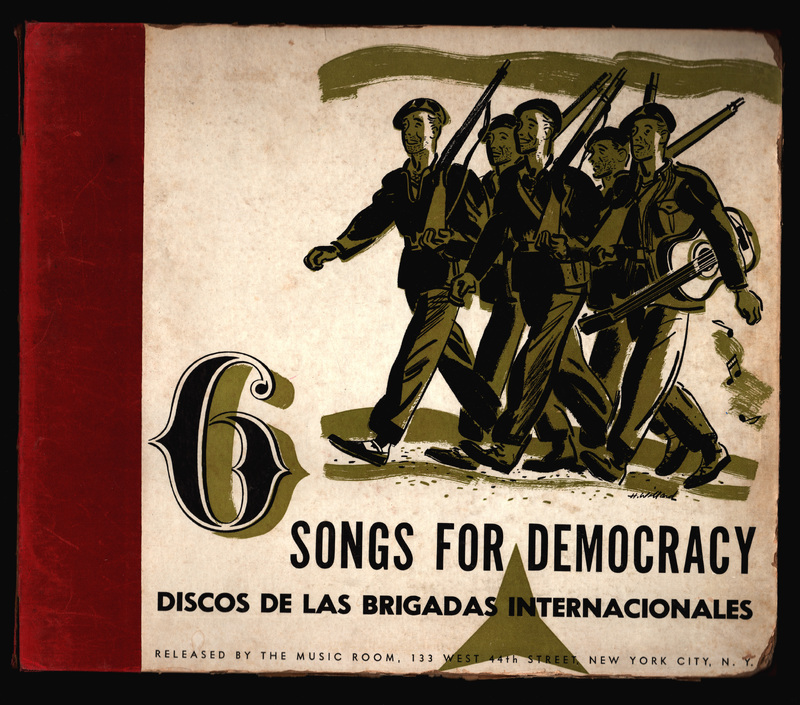
A complete three-disc 78rpm album set titled "6 Songs for Democracy: Discos de Las Brigadas Internacionales," featuring Ernst Busch and the Chorus and Orchestra of the 11th International Brigade. The songs are performed in Spanish and German. Originally recorded in Barcelona in 1938 during the Spanish Civil War, these discs were manufactured by Keynote Recordings, Inc. and released by The Music Room (133 West 44th Street, New York City, N.Y.).
The tri-color (white, red, and yellow) album sleeve depicts five Spanish Republican soldiers, one carrying a guitar. This specific copy is significant for a handwritten inscription on the interior sleeve by Paul Robeson, which reads:
"These songs of the Spanish struggle
deeply reflect the democratic spirit.
That spirit like Joe Hill 'never died.'
This album is a 'must.'
Sincerely,
Paul Robeson."
Each disc features a red and gold label with the logo of the International Brigade of the Spanish Republic. Labels include the text: "Originals made in Barcelona Spain, 1938. US copyright reserved."
The label for track 1B ("Lied Der Einheitsfront") includes a Spanish-language sticker regarding the recording conditions: "La impresión defectuosa de este disco es debida a last interrupciones de energia eléctrica durante un bombardeo" (The defective printing of this record is due to the interruptions of electrical energy during a bombardment).
This edition was originally issued with a descriptive booklet; however, that component is not included in the copy of the record held by Special Collections.
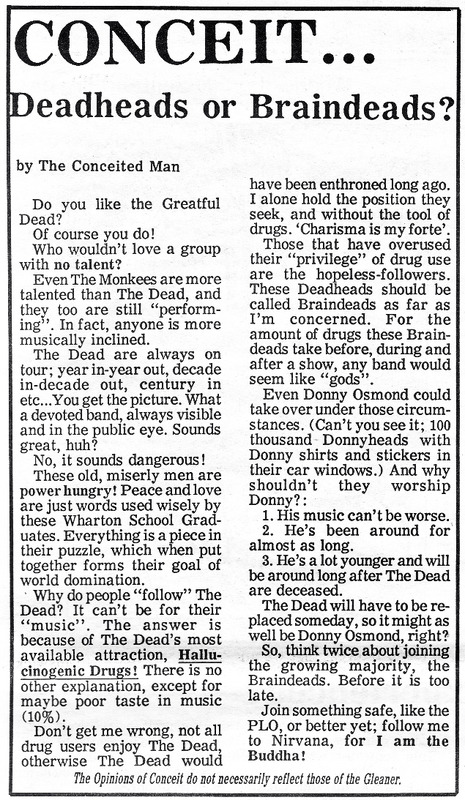
The author delivers a harsh critique of Grateful Dead fans, arguing that their devotion is fueled more by "hallucinogenic drugs" than musical talent. He even suggests that Donny Osmond would be a more logical choice for worship, given his longevity and cleaner image.
Miniature ceramic version of Nipper the dog from the logo of His Master's Voice record company. Given out for the opening of the Victor apartments by Dranoff.
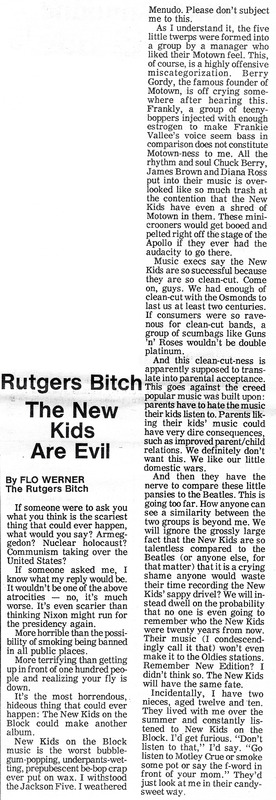
Flo Werner scathingly critiques the boy band New Kids on the Block, dismissing their music as manufactured, corporate "drivel" that lacks the soul of legendary acts like the Beatles. She argues that the group's popularity is a fleeting marketing fluke and predicts that they will be completely forgotten by the public within twenty years.
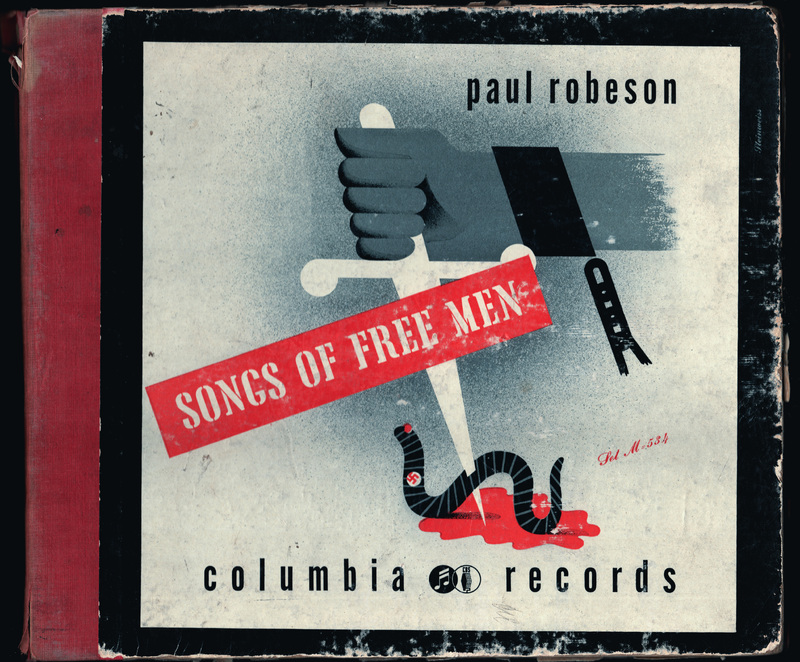
A complete four-disc 78rpm album set titled "Songs of Free Men," performed by baritone Paul Robeson with Lawrence Brown at the piano. Robeson sings in English, Russian, German, and Spanish. Released in 1943 by Columbia Masterworks (Set M-534), the tri-color (white, red, and black) sleeve features cover art by Alex Steinweiss: a hand with a broken shackle plunging a knife into a wormlike creature bearing a swastika emblem.
The interior of the sleeve contains a white page with black text providing context for the collection as a call against the destruction of fascism and for the liberation of peoples. This section features a portrait of Paul Robeson with a printed autograph and a statement from the artist:
"As one brought up on the songs of their own people, who expressed in them their sorrows, protests and hopes, I early felt closer to that music which comes directly from folk roots. The particular songs in this album have that folk quality and show in no uncertain way the common humanity of man. Beyond this, they issue from the present common struggle for a decent world, a struggle in which the artist must also play his part."
This specific copy includes hand-drawn markings on the Robeson portrait and on some of the disk labels.
Each black phonograph record features a blue and gold Columbia Masterworks label. Labels provide information about supporting musical sections and groups for certain tracks.
The back of the album is a solid red sleeve. The interior of the back sleeve features promotional information from the Columbia Recording Corporation, including their logo and office locations in New York, Hollywood, and Bridgeport.
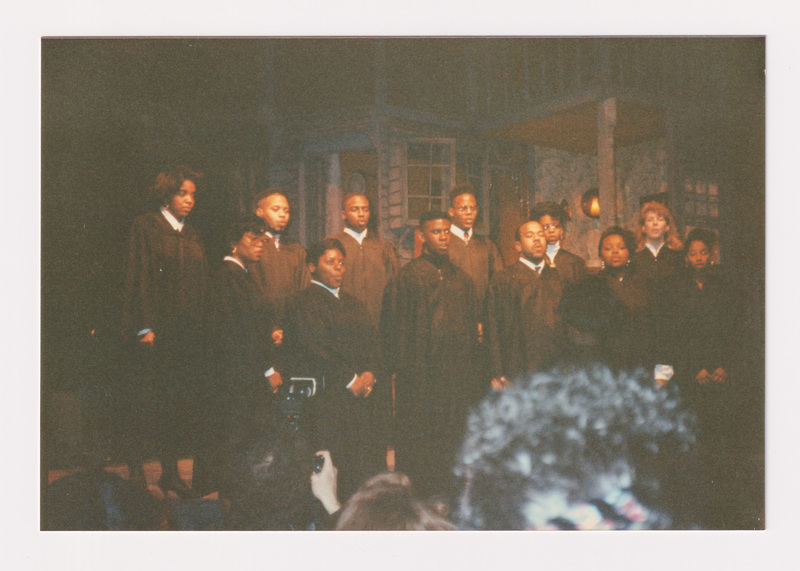
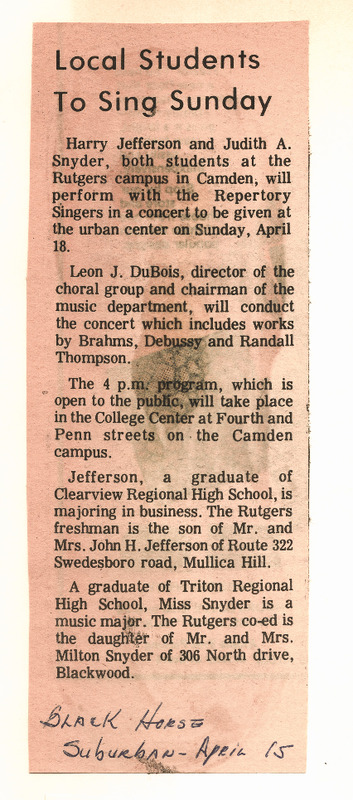
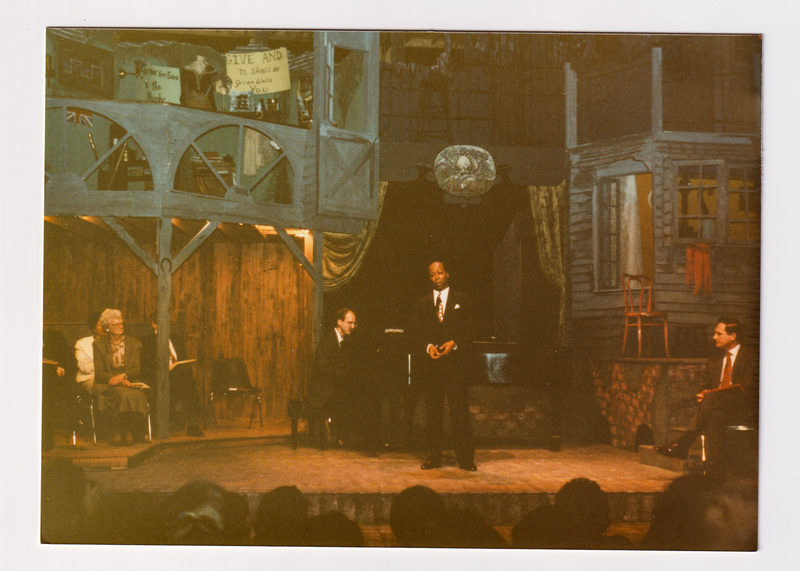
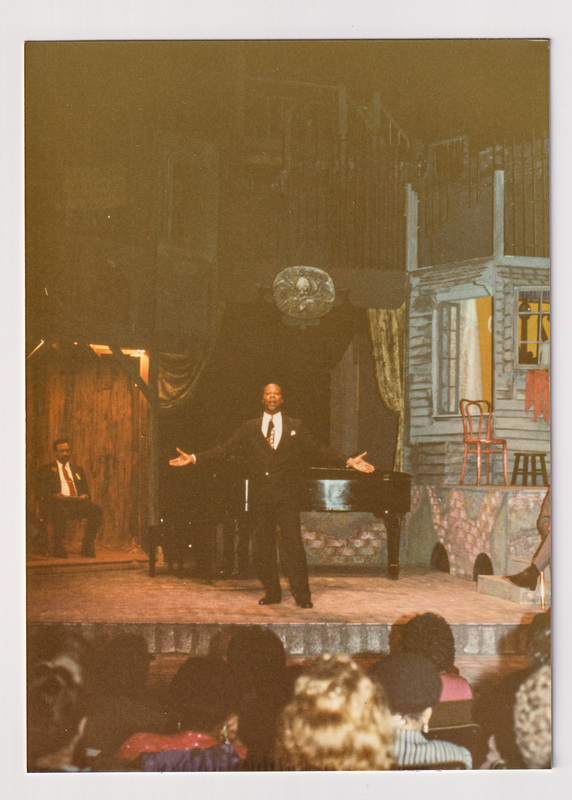
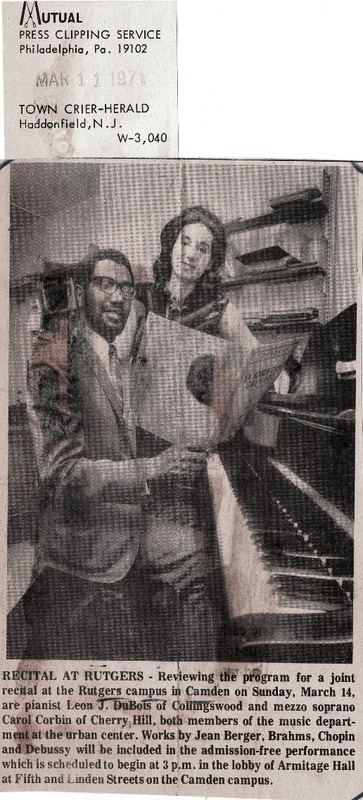
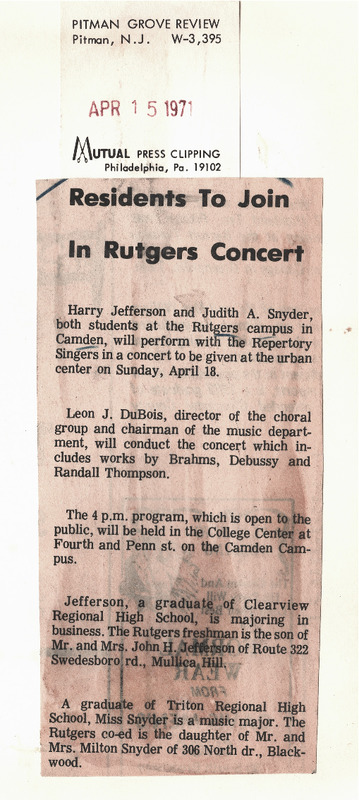
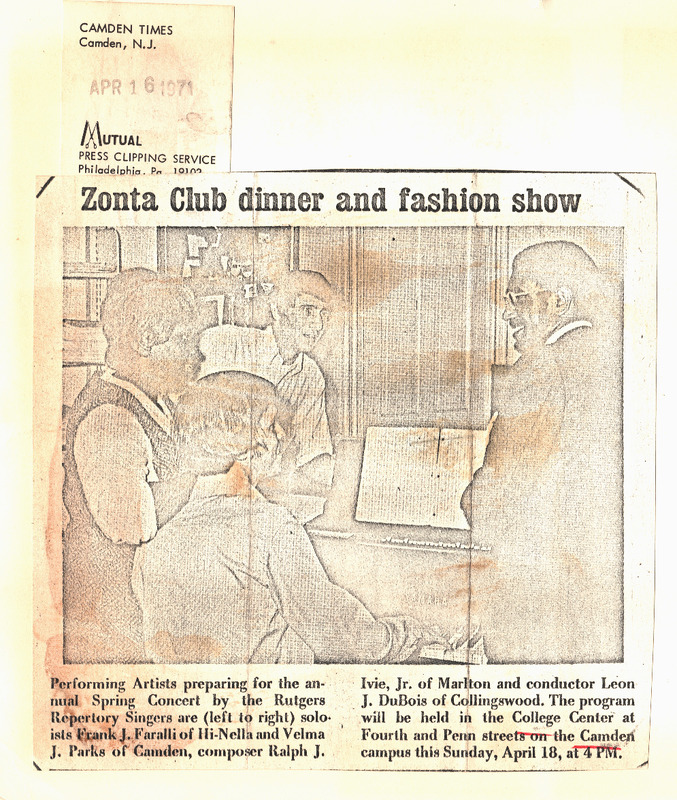
Performing Artists preparing for the annual Spring Concert by the Rutgers Repertory Singers soloists, Frank J. Faralli and Velma J. Parks, composer Ralph J. Ivie Jr. and conductor Leon J. DuBois.