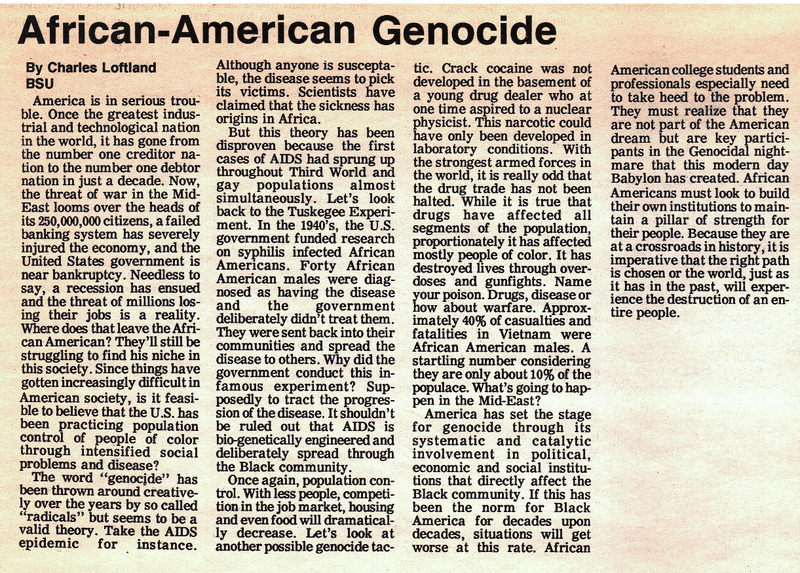
This article critiques the United States for the treatment of African Americans and believes it amounts to genocide. Charles Loftland describes when the government allowed Tuskegee men to spread syphilis in their communities for research purposes and suggests that AIDS may have been similarly engineered. He also discusses the rise in crack cocaine in African American communities. The byline identifies Loftland as a member of BSU (Black Student Union).
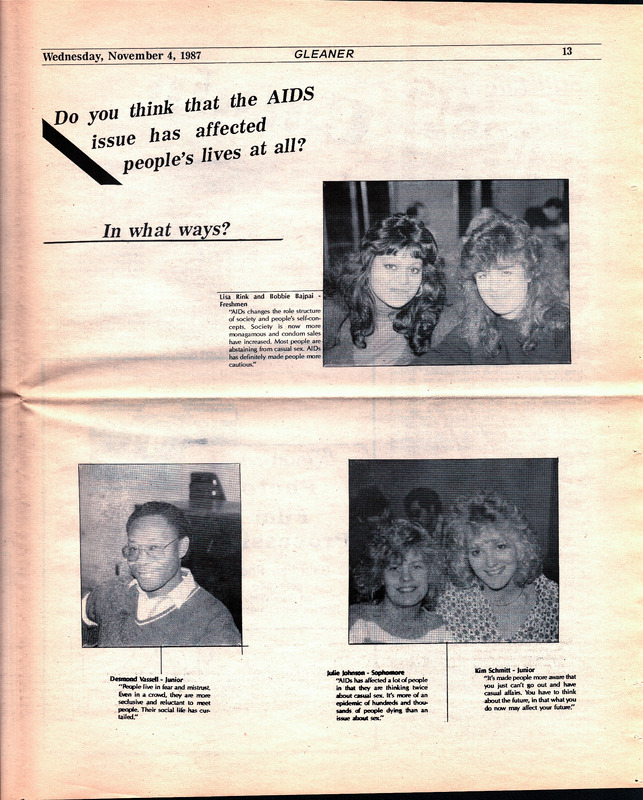
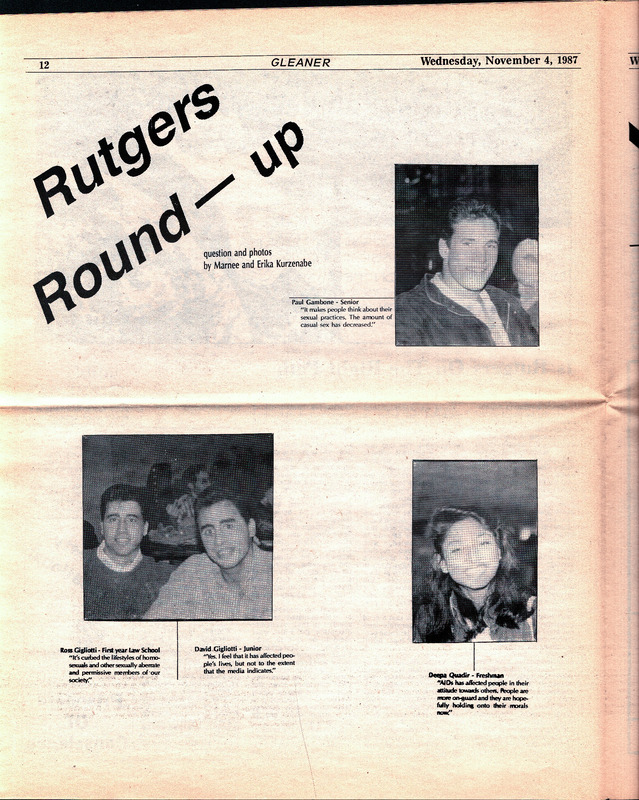
The Gleaner asked different students around campus, "do you think that the AIDS issue has affected people's lives at all?" and recorded their responses alongside their pictures.
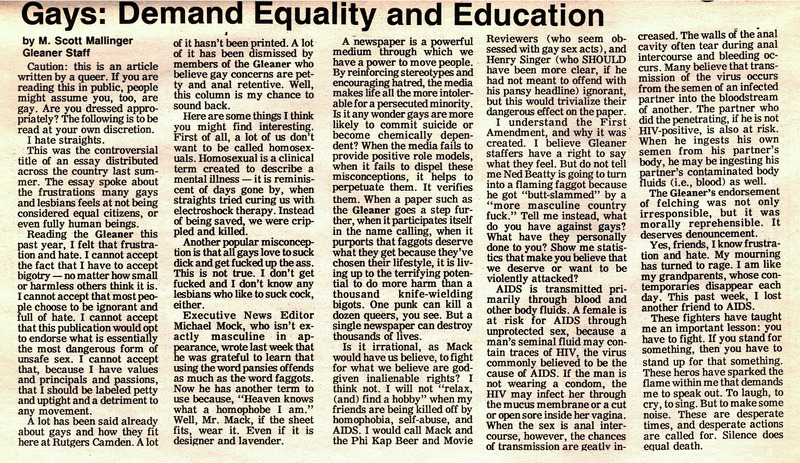
Mallinger's column criticizes the Gleaner's previous use of the word "pansy" in a headline and how it further spread homophobia on Rutgers-Camden's campus. Moreover, Mallinger explains how AIDS is commonly contracted and how his experiences with death and homophobia push him to speak out for the gay community.
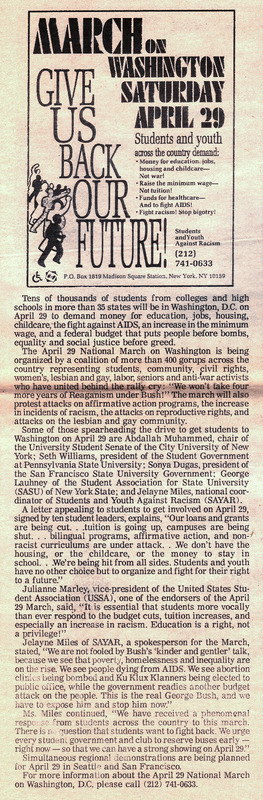
This is an advertisement for an upcoming march on Washington, DC, for more funding for education, housing, jobs, the AIDS epidemic, and increasing the minimum wage. The protest is organized by a coalition of several hundred groups focused on equity, social justice, racism, sexism, affirmative action, homophobia, etc.
The Gleaner asked different students around campus, "do you think that the AIDS issue has affected people's lives at all?" and recorded their responses alongside their pictures.
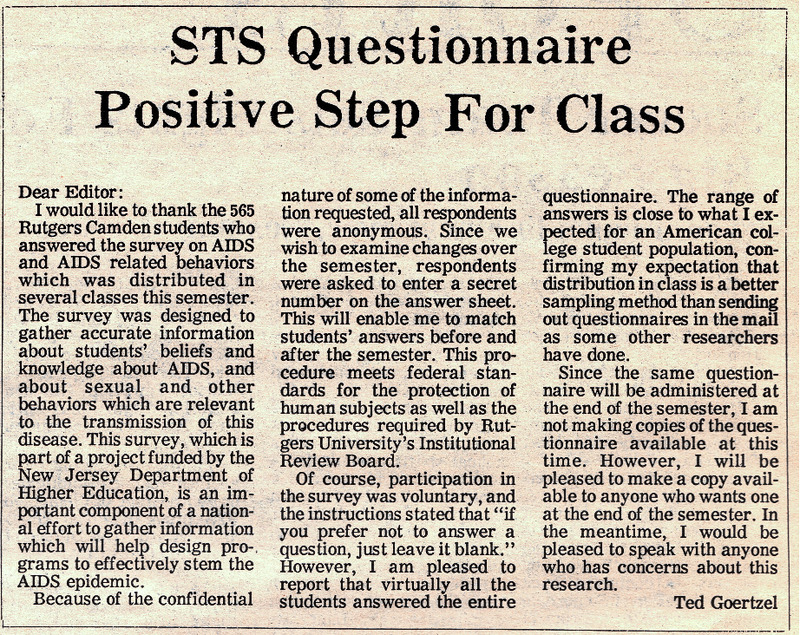
In a letter to the editor, Ted Goertzel (sociology professor) responds to concerns regarding the sexual behavior survey distributed in the Science, Technology and Society (STS) course. He explains that the survey is part of a project funded by the New Jersey Department of Higher Education aimed at gathering data to design programs to combat the AIDS epidemic. Goertzel defends the methodology, noting that the survey was voluntary, anonymous, and met federal and university standards for the protection of human subjects.
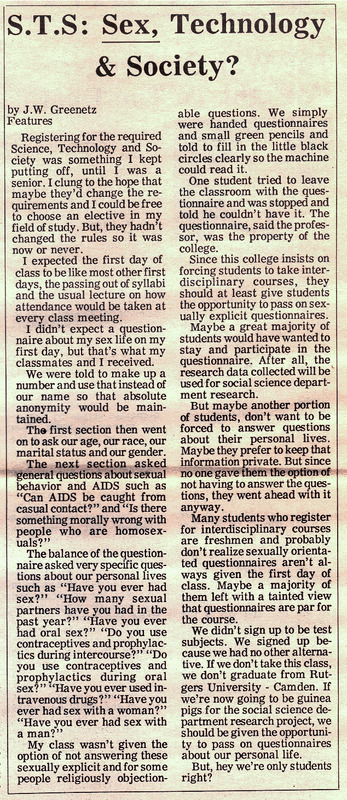
Greenetz writes about a questionnaire about AIDS, sex, and contraceptives given in their Science, Technology, and Society course. The piece denounces that the questionnaire was "forced" and too personal.