The Movement
Articulating Demands and Administrative Response
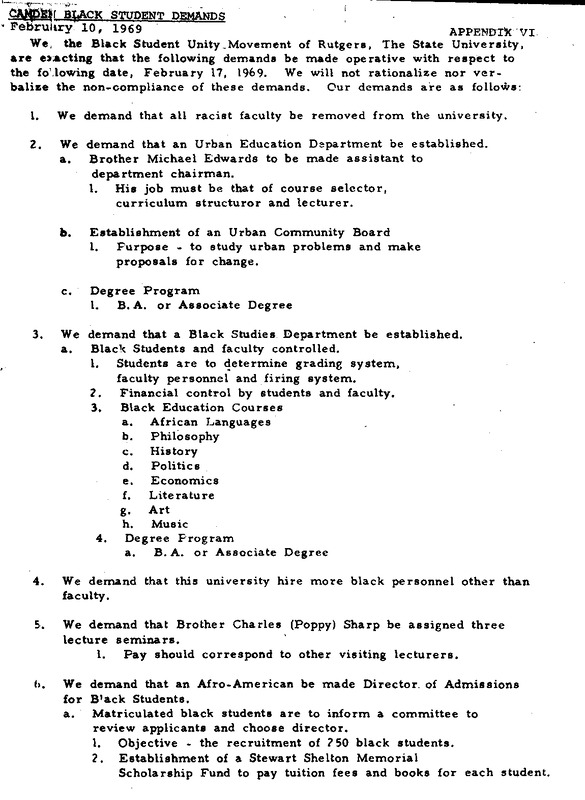
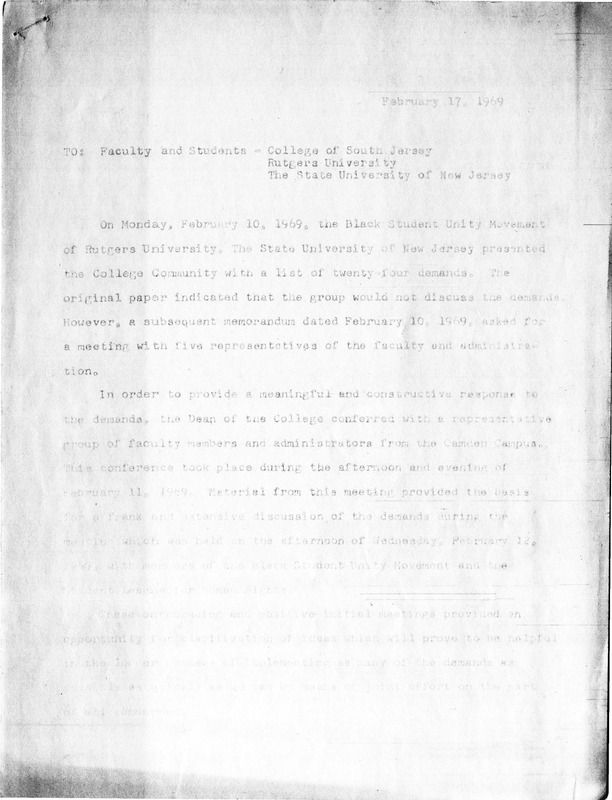
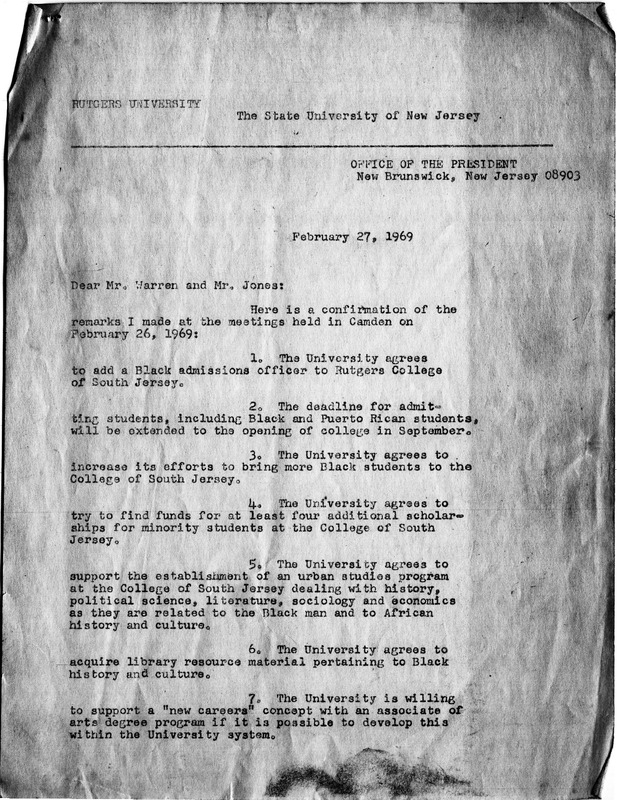
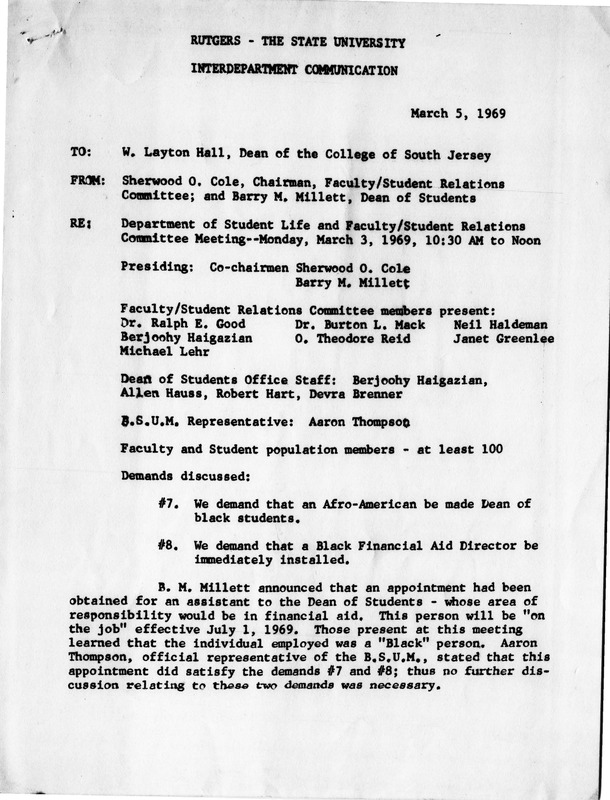
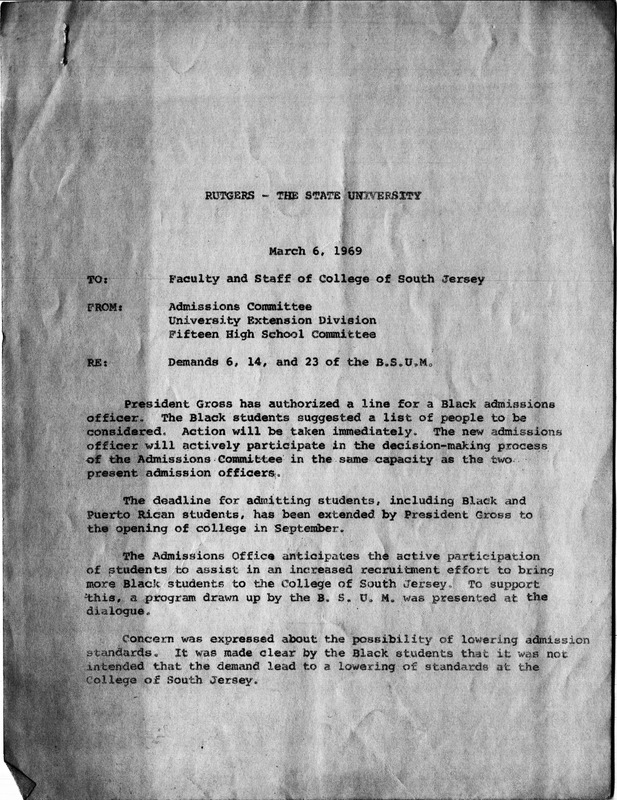
In the late 1960s, Black students at Rutgers-Camden confronted the systemic inequities of the university. The Black Student Unity Movement (BSUM) was a collective of students who organized to articulate and demand changes to the admissions process, cirriculum and institutional accountability. These demands were a response to events on campus the conditions of Camden, a majority Black and and reflection of the larger waves of Black Power and student activism that rippled across the United States during this time.
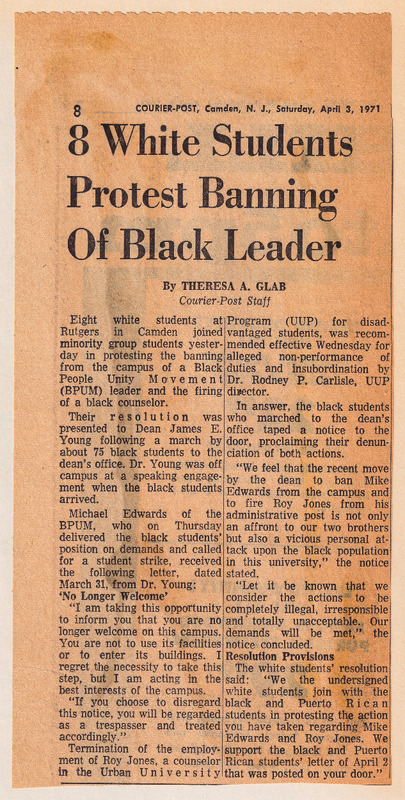
Roy L. Jones emerged as one of the leading figures of the BSUM at Rutgers-Camden, playing a major role in organizing students and articulating the movement's demands. Along with other student activists, Jones pushed the university to confront questions about the treatment of Black students on campus, admissions, curriculum, student resources, and Rutgers University's relationship with the city of Camden.
For a firsthand account of the movement and its impact, see Roy L. Jones Oral History Interview in the Rutgers Oral History Archives.
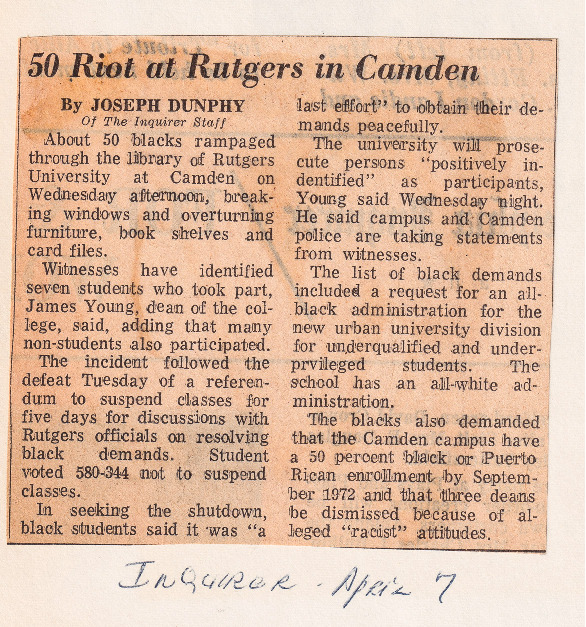
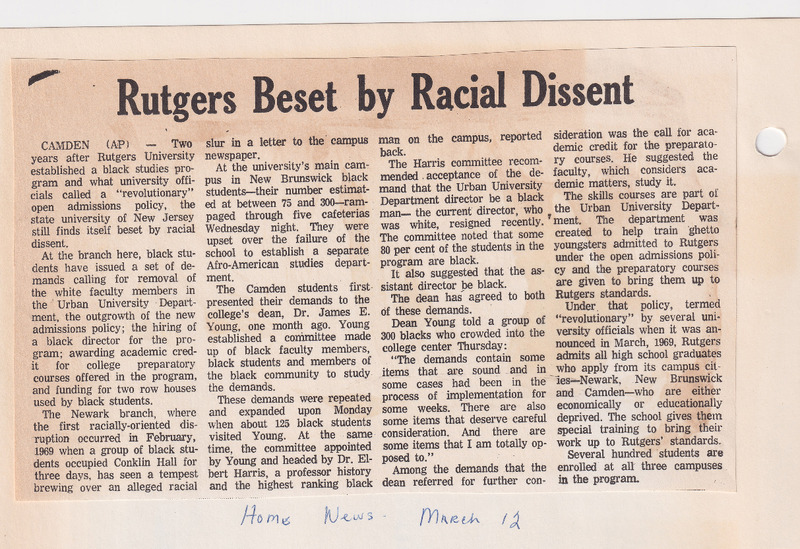
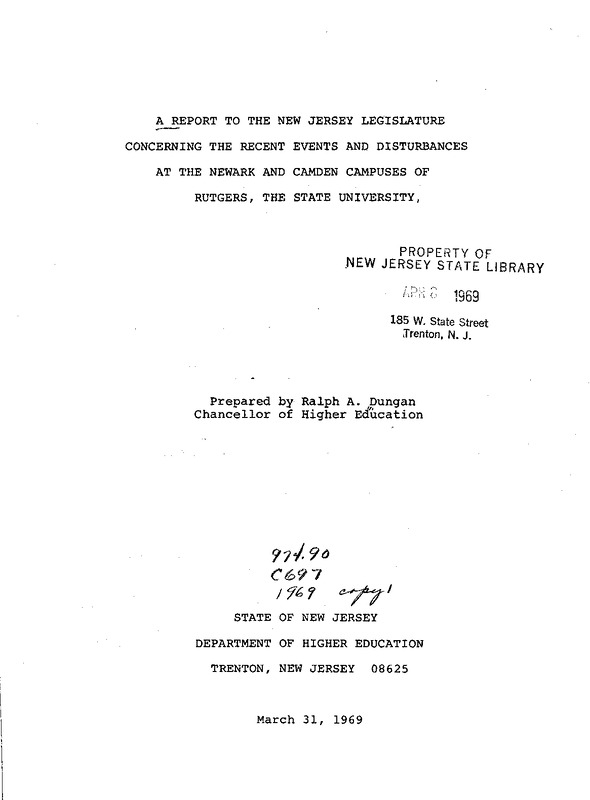
Although local and national media covered these waves of student protests on college and university campuses, they often framed protest and resistance to discriminatory practices as instigating crisis and disorder. This frequent portrayal of Black student organizing as disruptive and dangerous . These documents give us insight into the progression of the movement on campus -- from correspondence and negotiations between the administration and student body, to institutional response and implementation of these institutional changes.
The BSUM also faced opposition from some students and groups on campus who disagreed from the organization's methods and demands. As the demands for institutional change became more visible, many members of the Rutgers-Camden community organized a petition against the organization and its leadership. These tensions reflect the broader opinions and debates around race, student protest, and accountability and access during the late 1960s and early 1970s.
Media Depiction of the Movement