Reactions
Reactions in Pennsylvania
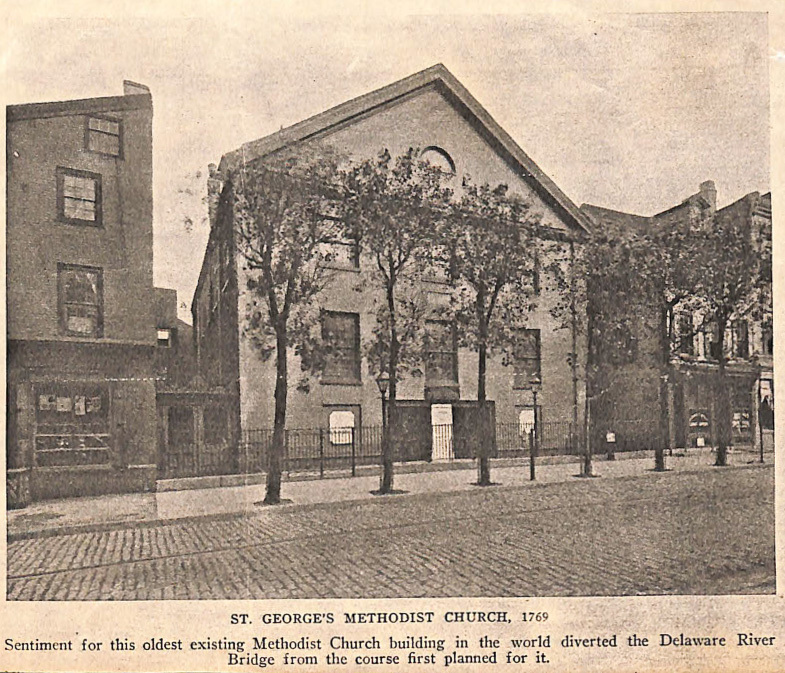
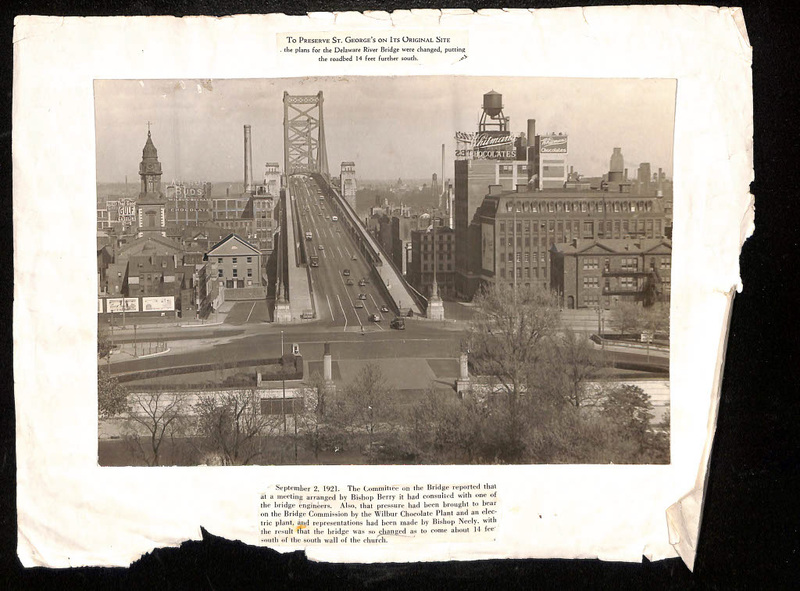
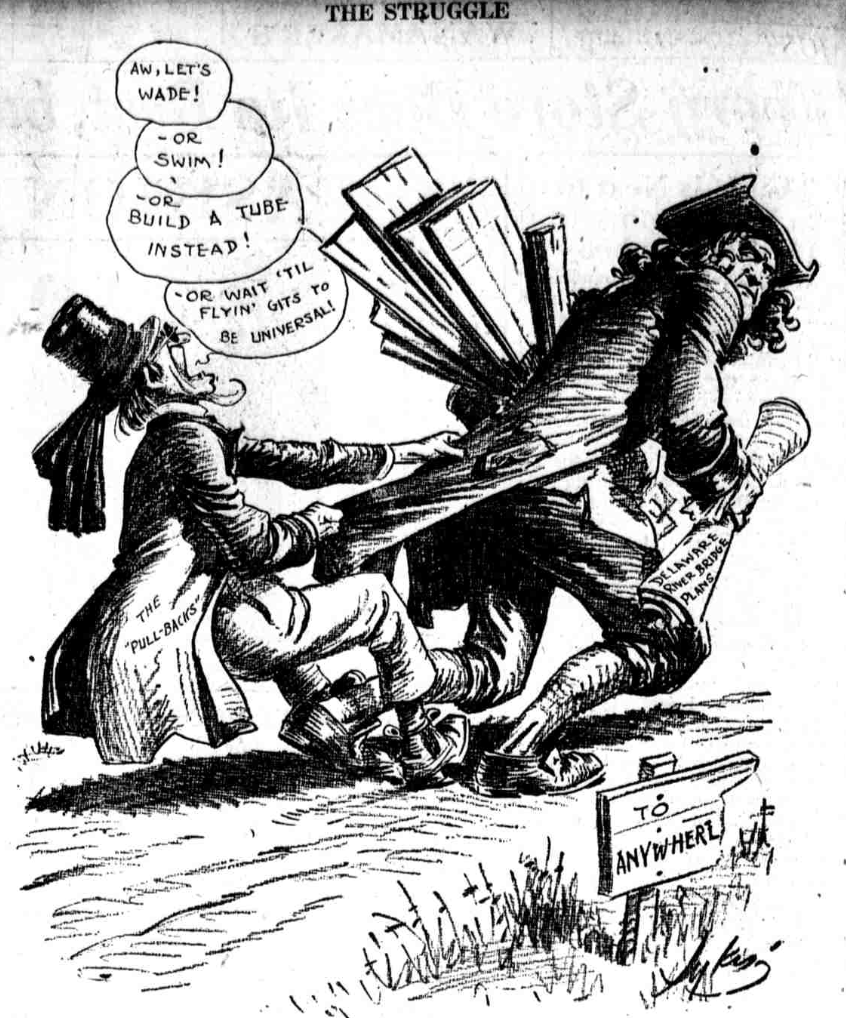
Pennsylvanians, especially Philadelphians, had great hope for the bridge and believed it would help them take over the "fertile gardens of New Jersey." (McCain, 1920) The hope that Camden and South Jersey suburbs would become the new Brooklyn was driven largely by land speculators. One group of Philadelphians was very concerned about the bridge, the congregants of St. George's Methodist Episcopal Church. They reviewed the bridge plans and noticed that it was supposed to go directly through their sanctuary. Bishop Thomas Neely took the Delaware River Joint Commission to court. Despite Modjeski's claim that the church could be moved without damage, Neely won his case and the church remained. Philadelphians were struck by a South Jersey fever and supported more infrastructure to connect the two places, first constructing the Bridge Line transit service in 1936 and then the Port Authority Transit Corporation (PATCO) Speedline in 1969.
Reactions in New Jersey
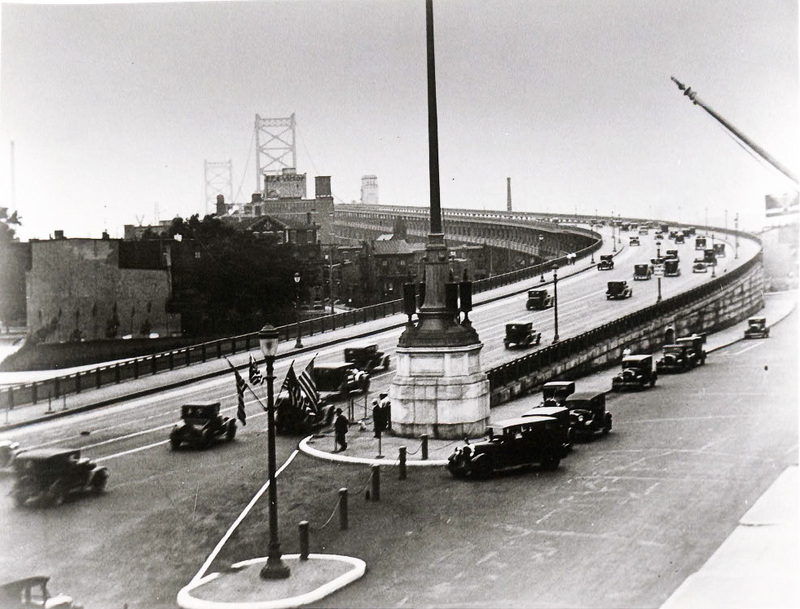
Journalists and ordinary residents of Camden were far more wary of the new bridge, as it appeared to pass the city by and threatened not one but three of their churches (one of which, Tabernacle Methodist Episcopal, was demolished in 1924). Even members of the Chamber of Commerce, normally supportive of large, commercial infrastructure, questioned whether the bridge would benefit Camden or simply bring it under the control of Philadelphia. Newspapers published only a few days after the bridge also noted heavy traffic and pile ups caused by the bridge and the President's visit. These required a temporary doubling of the size of the Camden Police Department. The state and city governments in New Jersey would spend the following decades trying to build new roads which would properly connect the bridge to the city, resulting in the construction of Interstate-676 in the 1970s. This road went straight through downtown Camden in contrast to US Route 30, which was built with the bridge and passed by Camden as it took Philadelphians directly to suburbs like Haddonfield and Lindenwold on its way to Atlantic City.
The Judgement of Engineers
The engineers and architects who viewed the bridge after 1926 had mixed reactions. The artist Joseph Pennell called the Delaware River Bridge "The ugliest bridge in the world." (Petroski, 2002) However, other engineers found it to be a monument of form and function. The anchors and towers make it a strong representation of architecture in the 1920s. In the century since it has become an essential part of the Philadelphia and Camden skyline.