Planning
Early Plans
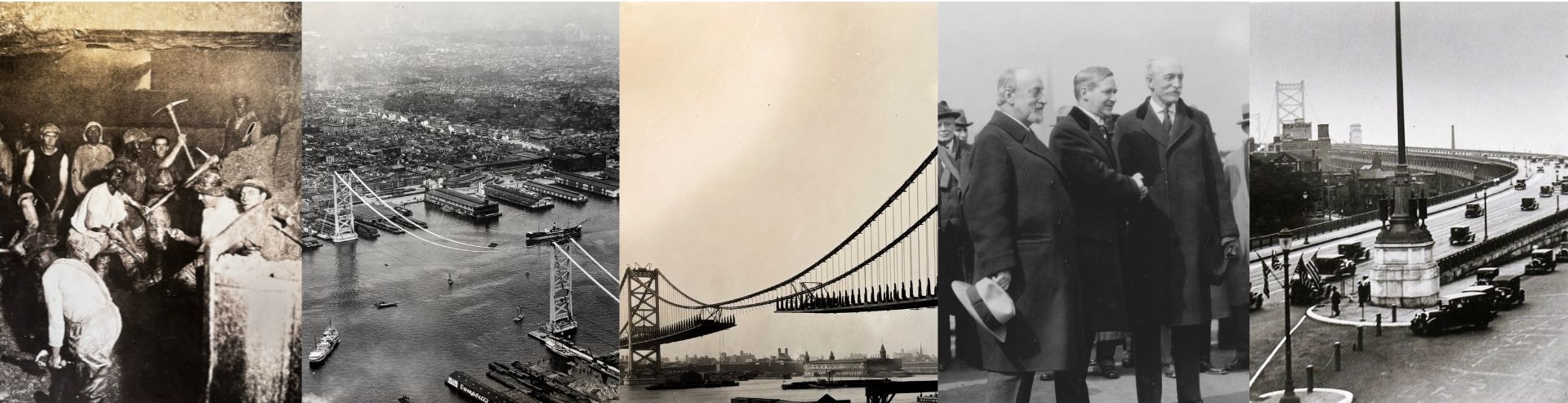
There had been plans to bridge Philadelphia and New Jersey since 1818, when the company Farrand & Sharp sought to connect Philadelphia to Camden via Smith Island (removed in 1893). Another failed proposal came from John C. Trautwine for a suspension bridge which included four, 1,000 foot sections. Throughout the nineteenth century, the ferries which connected the two states were sufficient, and boosters in Philadelphia were uninterested in expanding east.
Taking Shape
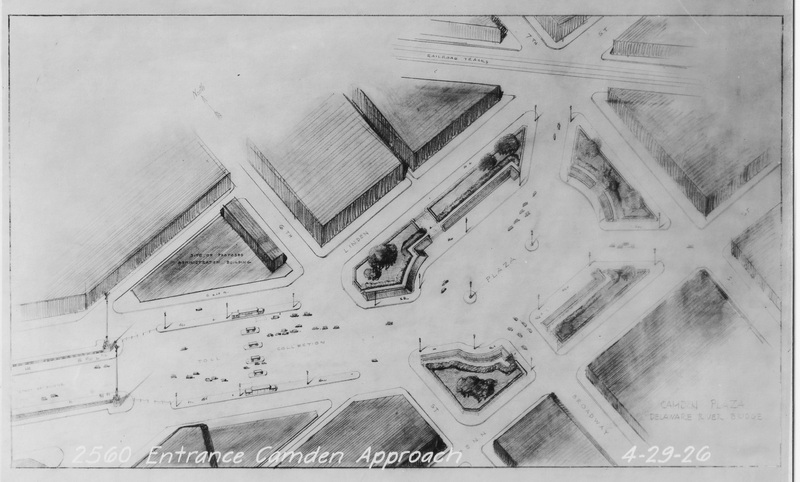
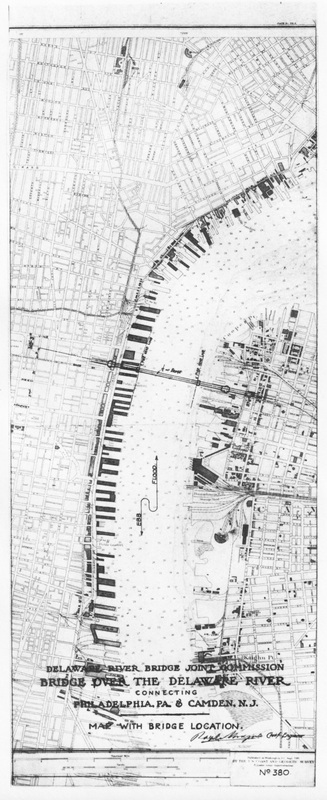
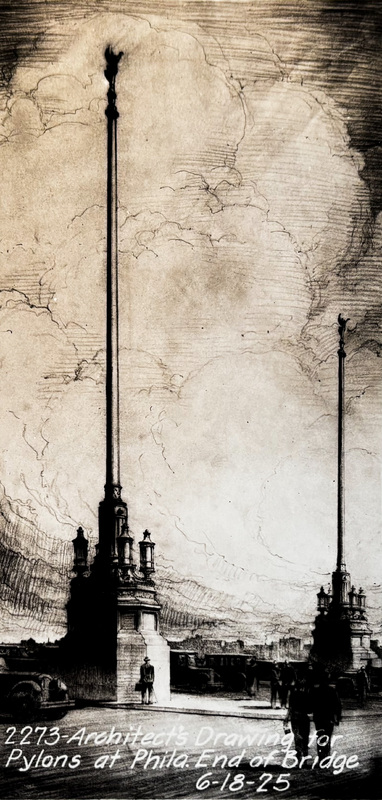
In the early twentieth century Camden was expanding rapidly as a center of industry and Philadelphia wanted to expand into the city. Philadelphia newspapers of the time wanted Camden to be their Brooklyn, imaging it as a place for both rich and poor Philadelphians to settle and to invest. For this purpose they needed a bridge, and the the New Jersey and Pennsylvania State Legislatures formed the Delaware River Joint Commission in 1919 to begin planning. They focused largely on benefiting Philadelphia businessmen. While the Philadelphia approach of the bridge was carfully determined to be close to the business district without upending the street system, its approach in Camden was haphazard and broad, with plans for a landing anywhere from State St. to Federal St.
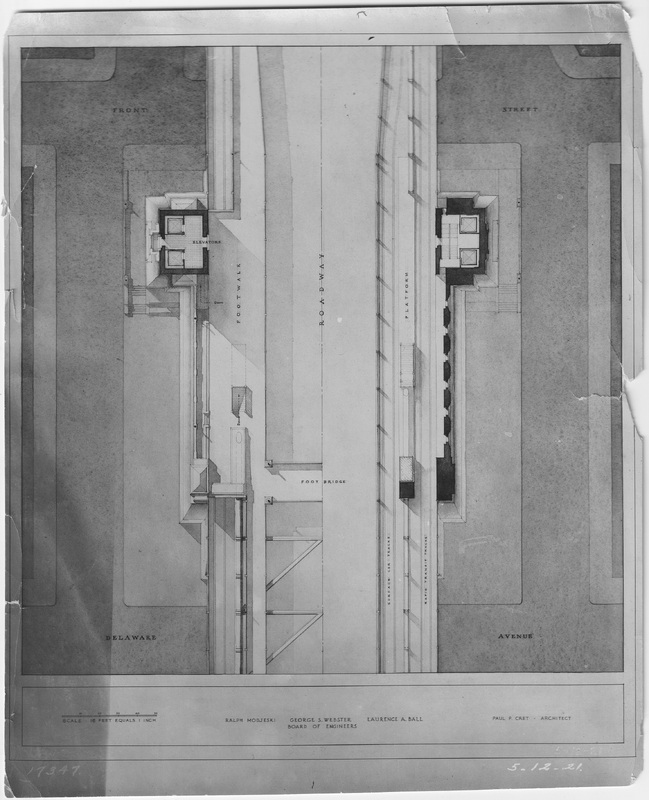
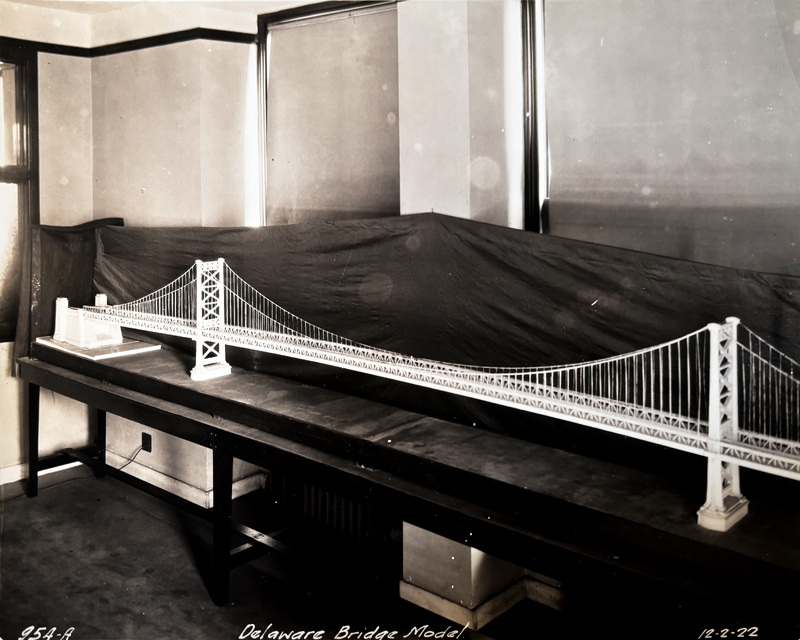
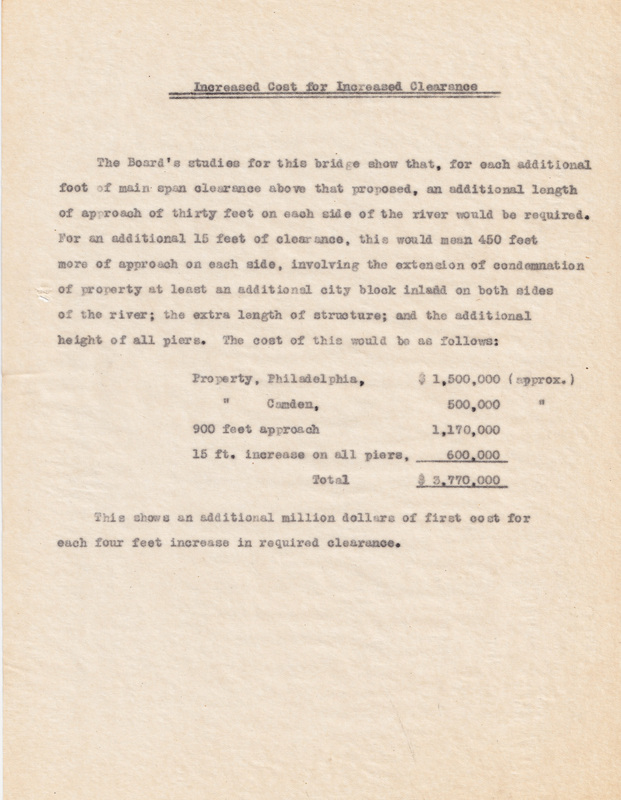
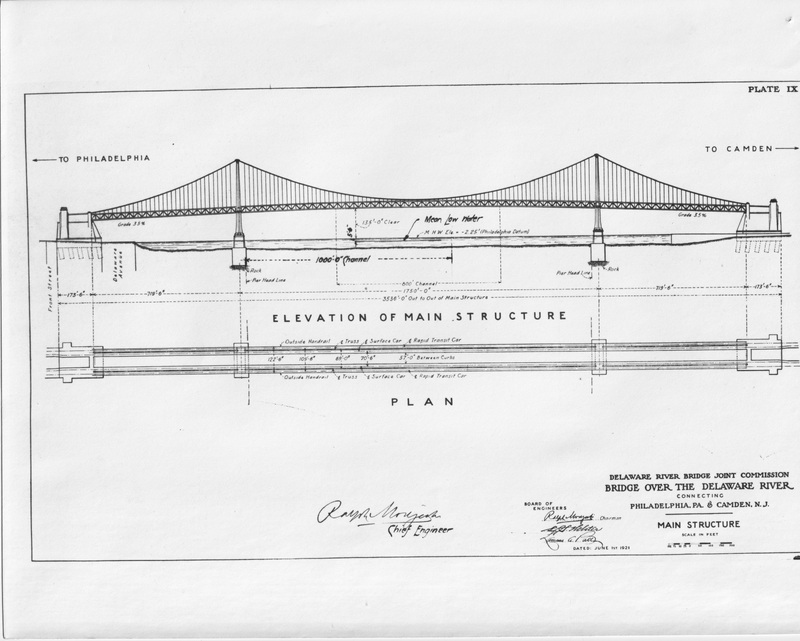
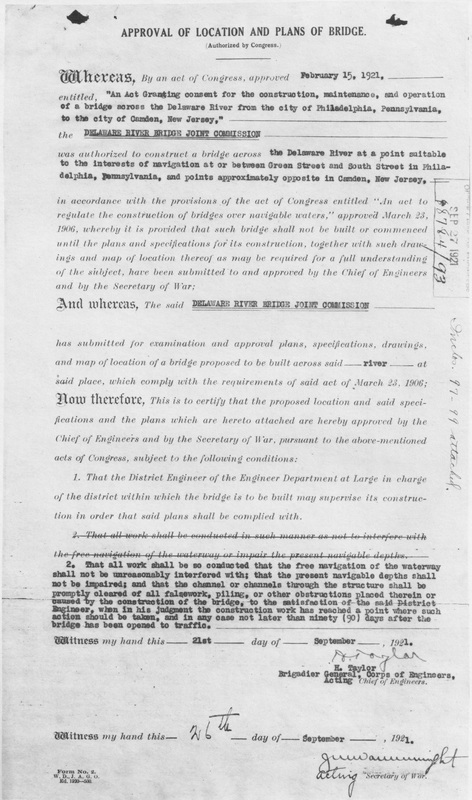
Unsurprisingly, the Commission based their bridge on the Brooklyn Bridge, copying its clearance of 135 feet. Memos between members of the committee and the US Navy show that despite some ships being taller than 135 feet, any minor expansion upward would require massive new costs and more expansive demolition. Under the leadership of an immigrant from Poland named Ralph Modjeski, the Board of Engineers designed what would be the longest suspension bridge in the world. In February of 1921, the US Congress approved the construction of the bridge. For Modjeski, who had first seen Philadelphia during the World's Fair in 1876, the obvious goal was to complete the bridge by the 1926 Sesquicenntenial.
Demolition
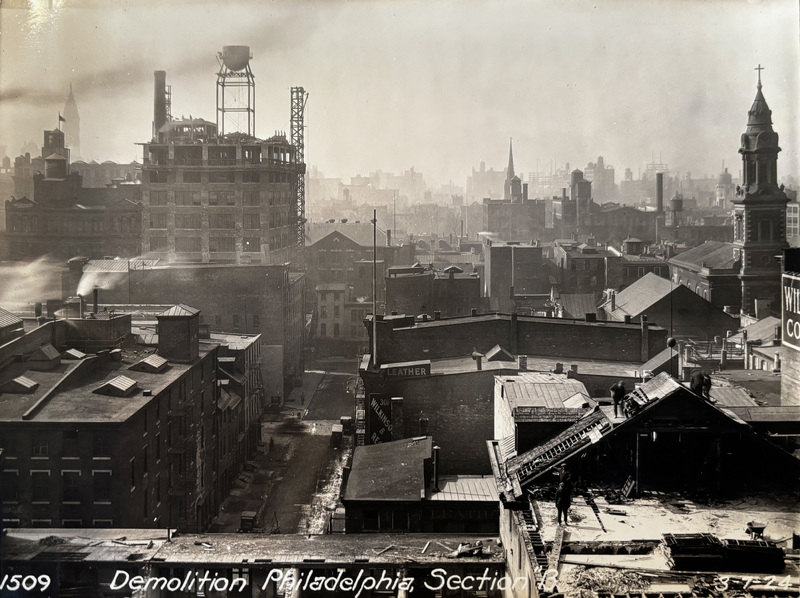
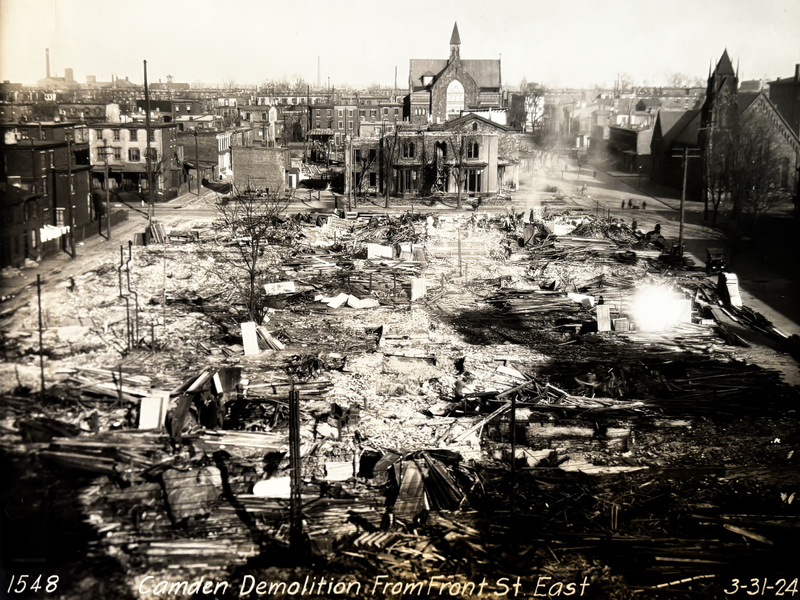
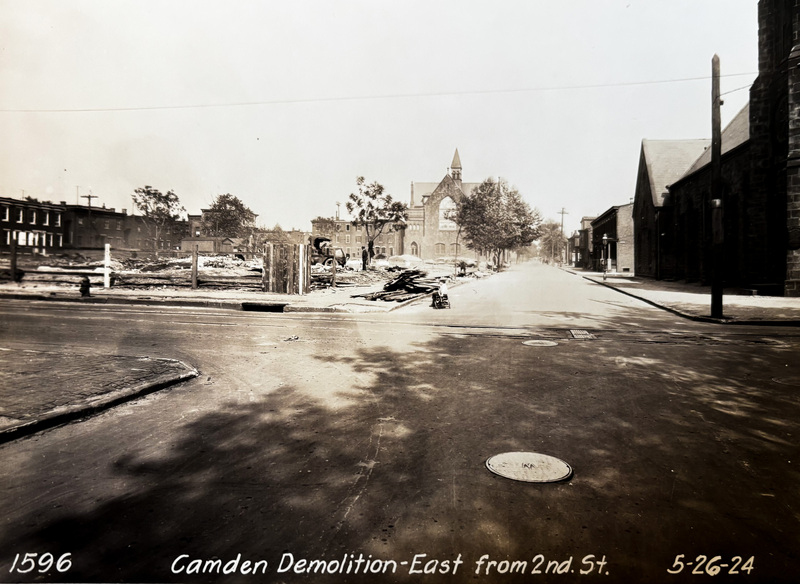
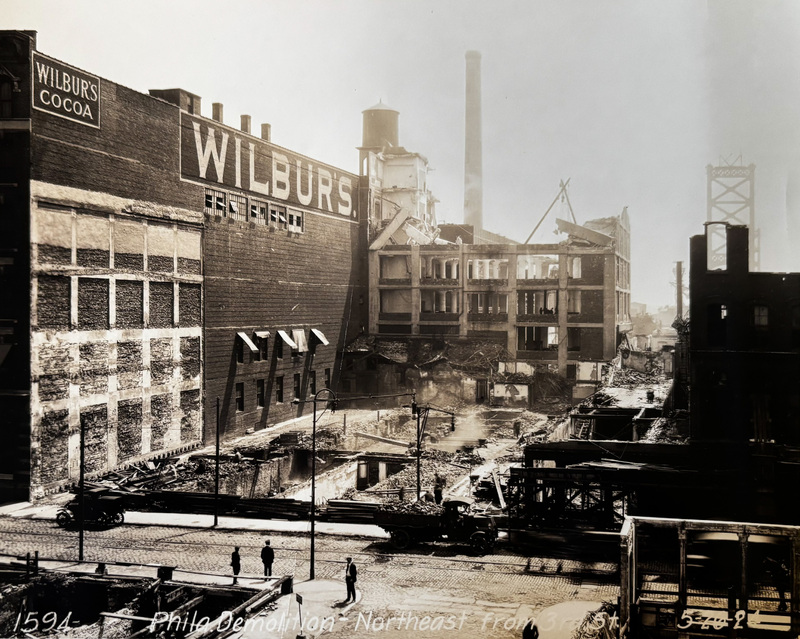
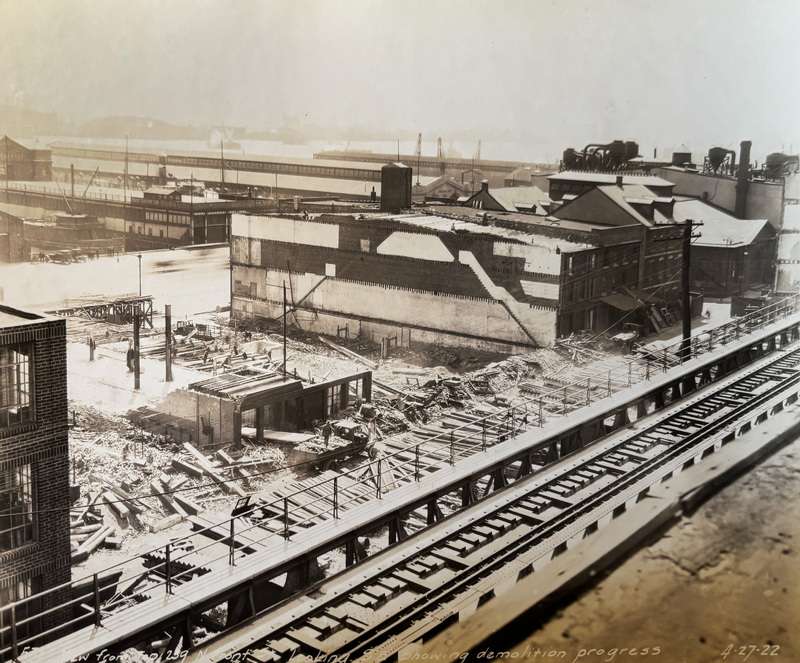
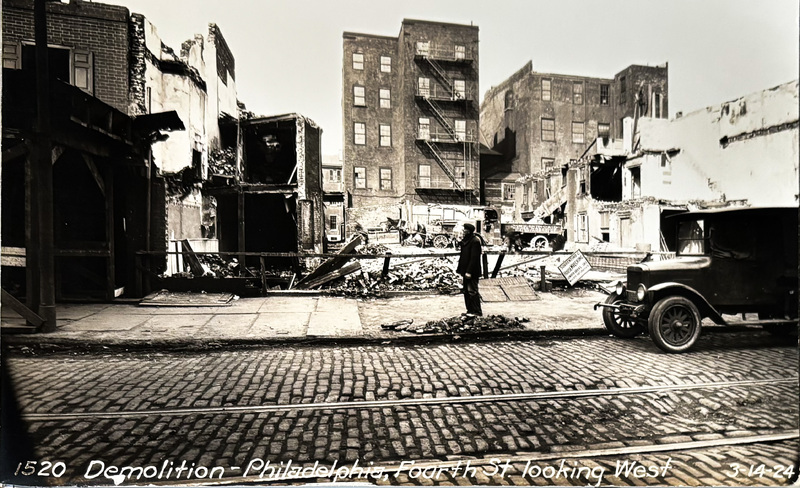
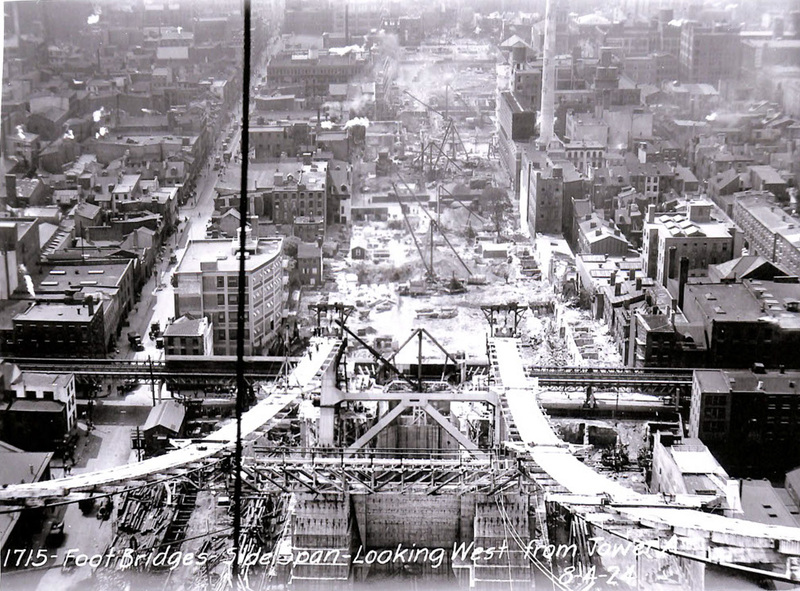
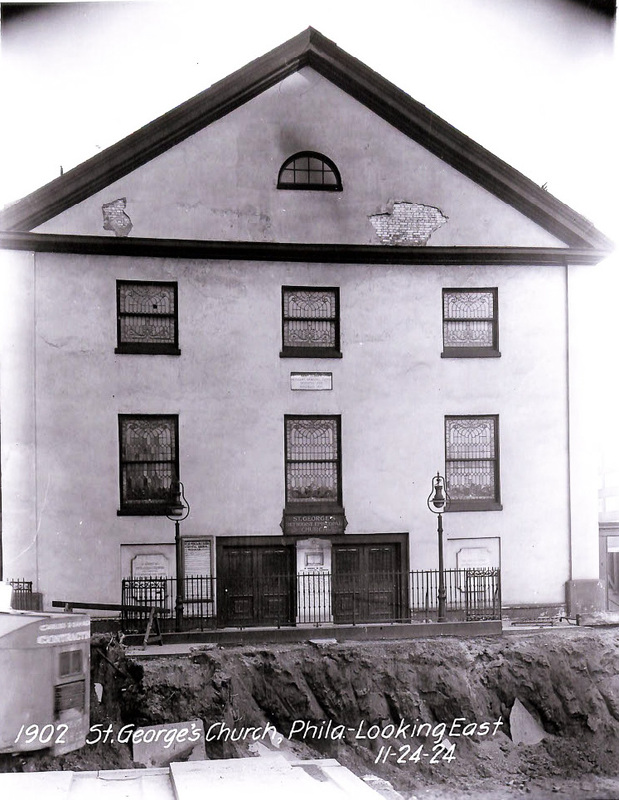
Both Philadelphia and Camden saw large demolition projects to accomodate the bridge's garguantuan footprint. The following selection of photos detail the process of demolition and the shaping of Camden and Philadelphia. Note which structures were preserved and the massive expanse of the demolition project. Newspapers in Camden and Philadelphia assured their readers that "the properties to be condemned are the least expensive of the various routes proposed." (Sciver, 1921) In Camden, serious demolition occurred between Vine and Penn Streets and from the waterfront up to 7th Street. Philadelphia saw demolition between Race and Vine Streets and from the waterfront to 6th Street.
Gathering Materials
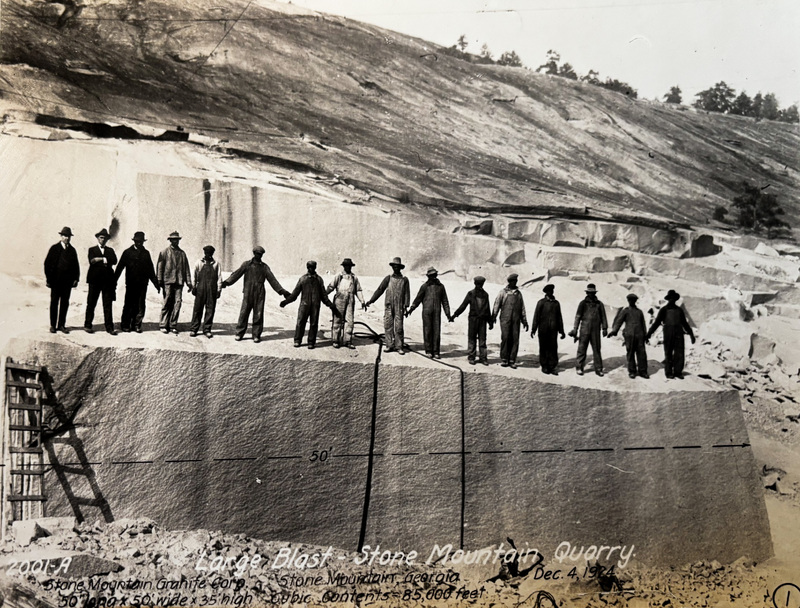
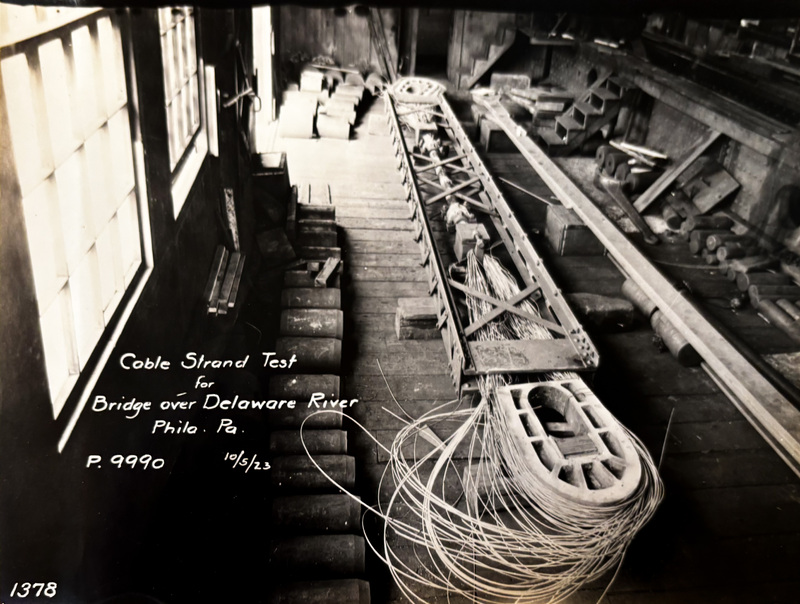
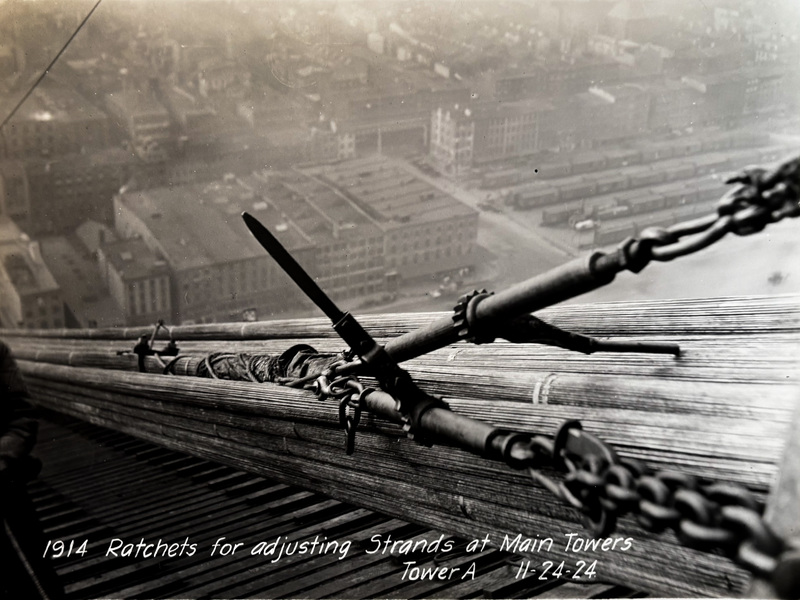
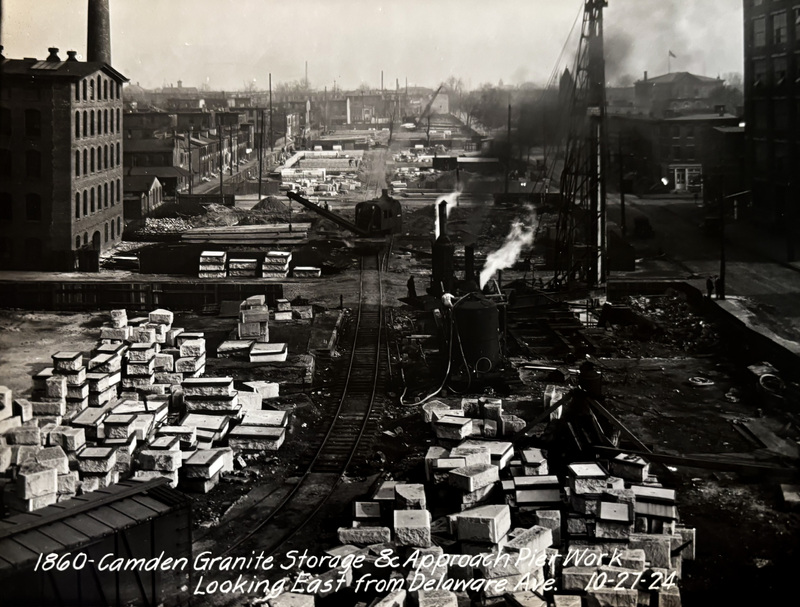
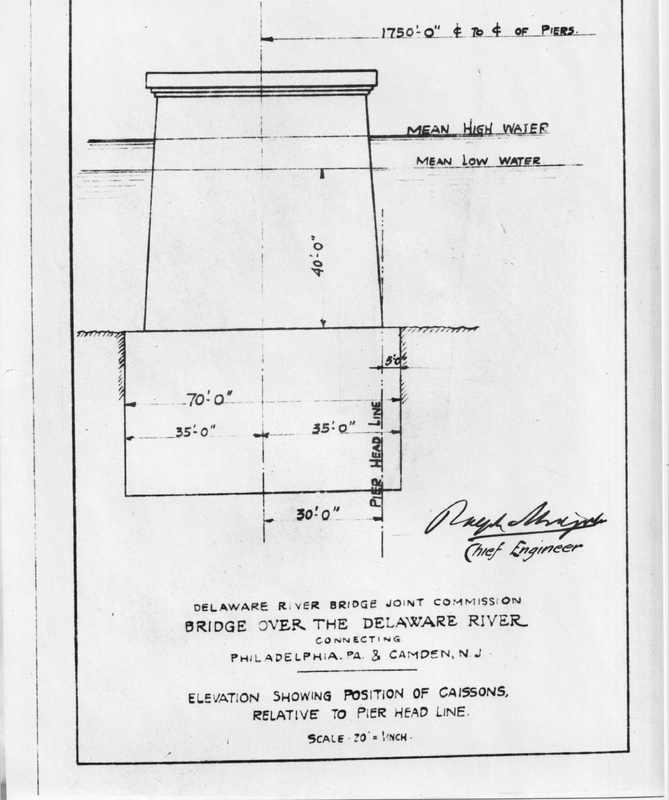
The Delaware River Bridge did not begin in Philadelphia or Camden. It began in the steel mills of Bethlehem, Pennsylvania and the granite quarries of Stone Mountain, Georgia. Raw steel was provided by Bethlehem Steel and the cable was provided by American Cable. The Stone Mountain Granite Company provided 85,000 cubic feet of stone, with some of the rock they quarried measuring 50' wide x 50' long x 35' tall. By the end of construction, the bridge would use 50,000 tons of steel and 320,000 cubic yards of masonry!