Building
Connecting the Cities
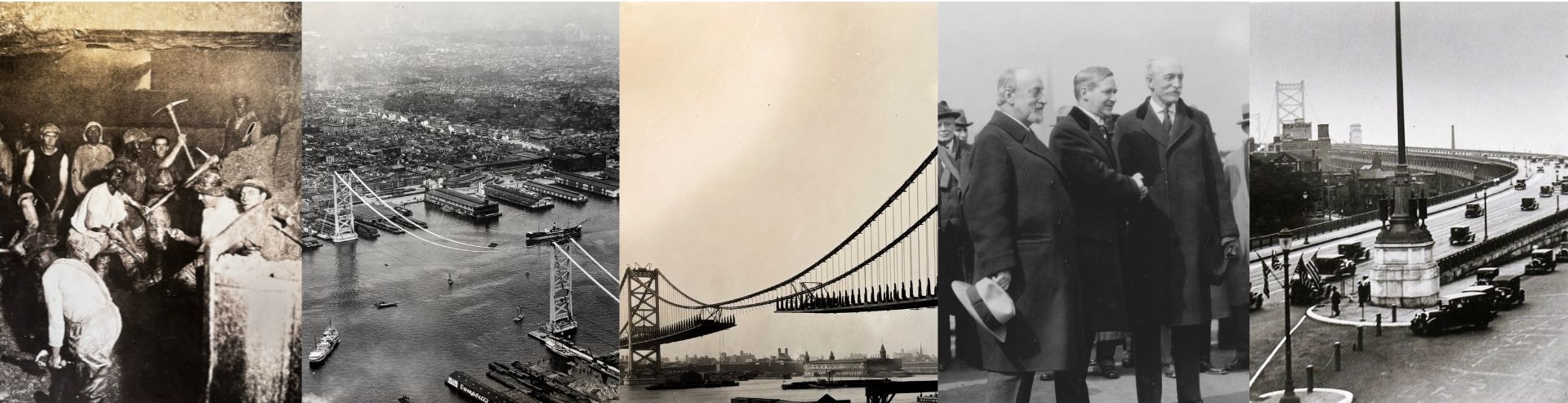
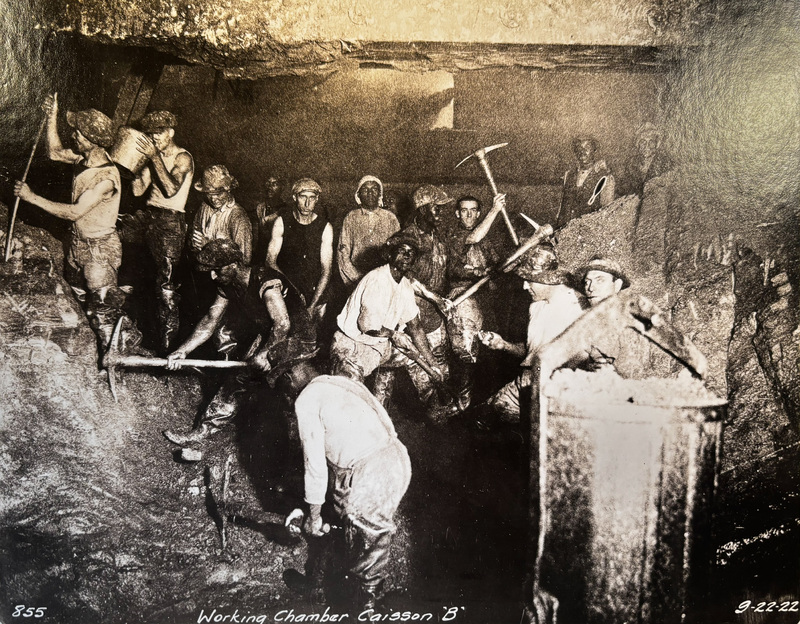
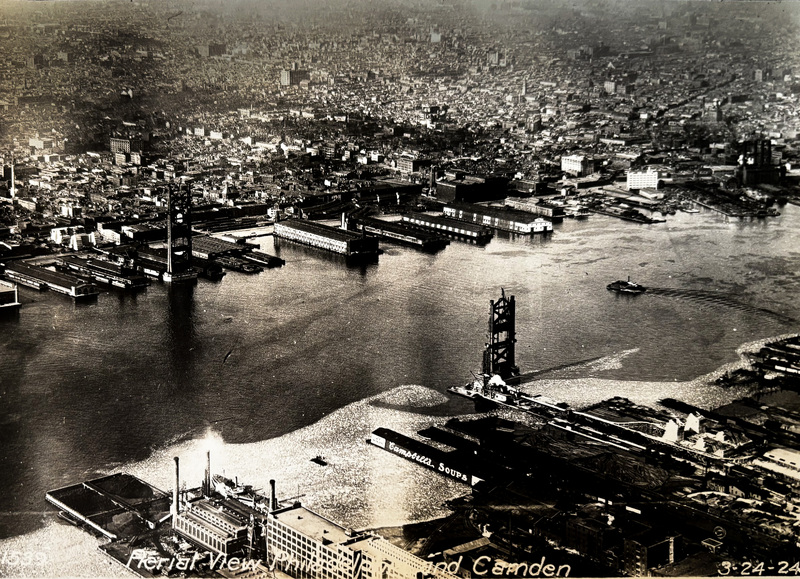
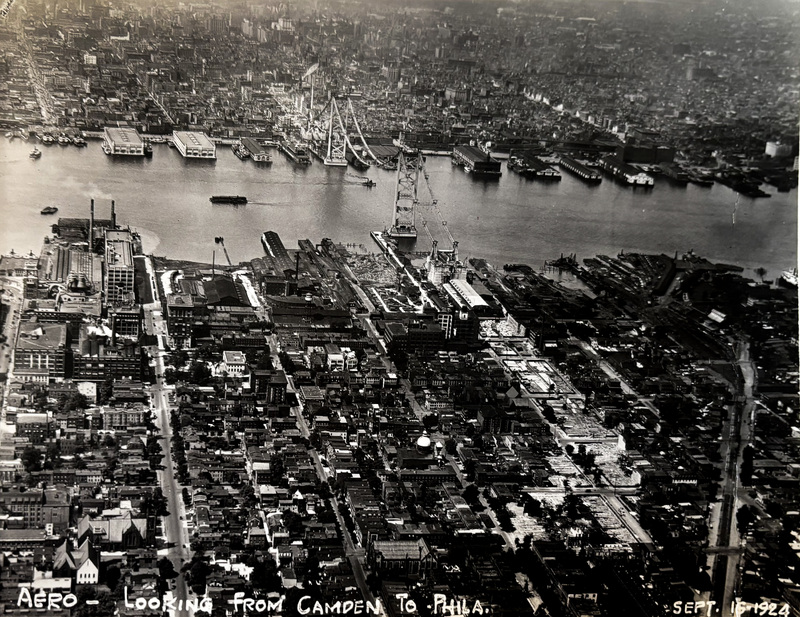
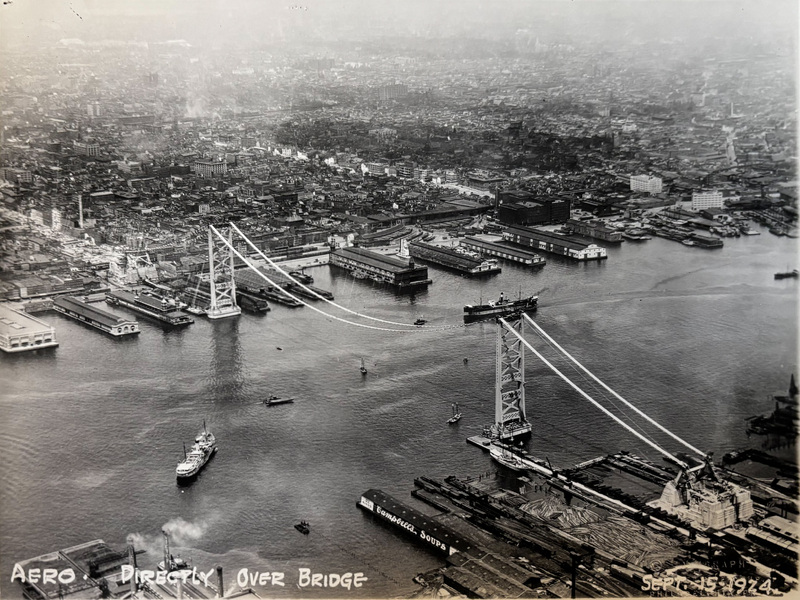
With materials collected and demolition underway, construction began in force on the 6th of January 1922. The pneumatic caissons came first, which created a water-tight construction environment and were constructed by laborers from Camden. In rapid succession, the anchorages, towers, and cables were fixed, so that by 1924, inspectors could cross the bridge. This came despite two short strikes, one of which succeeded in securing higher wages for laborers.
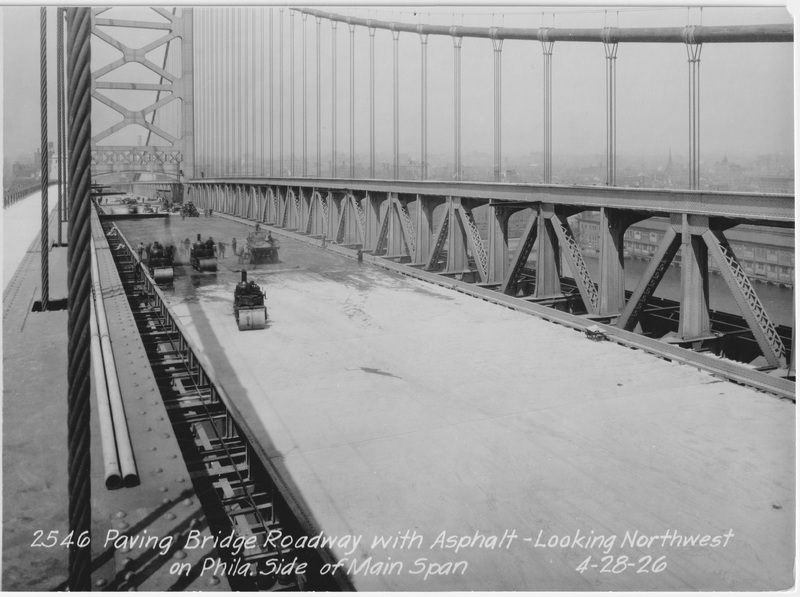
In June of 1926, the rudimentary footpaths were paved, and President Calvin Coolidge was able to dedicate a bridge built with American materials by American companies for the American Sesquicentennial on July 1st.
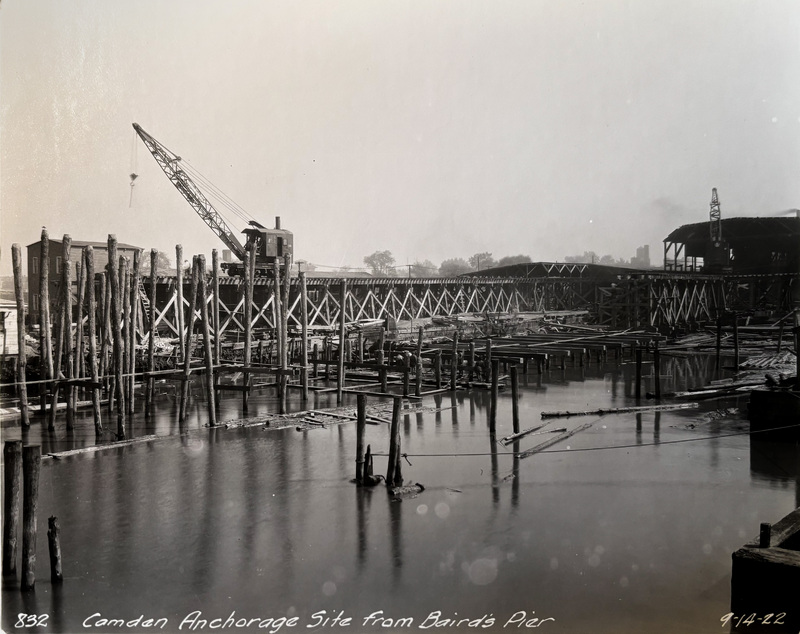
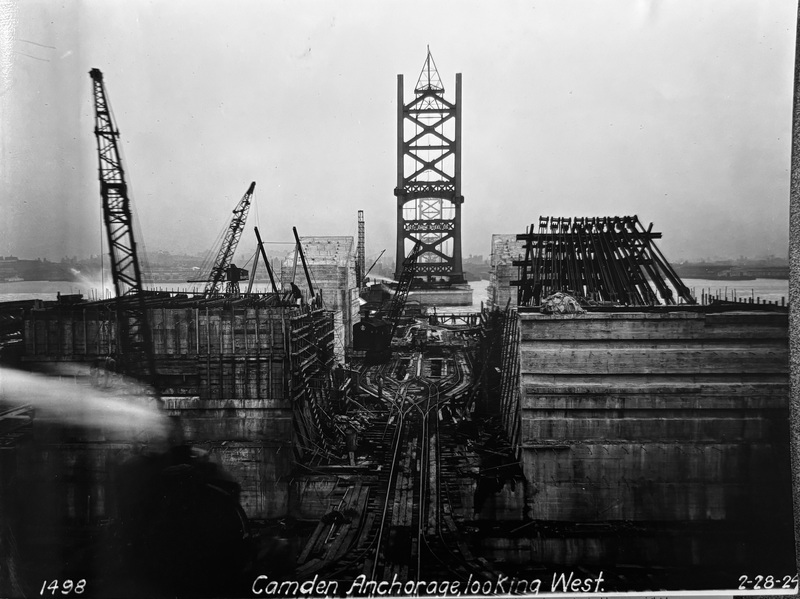
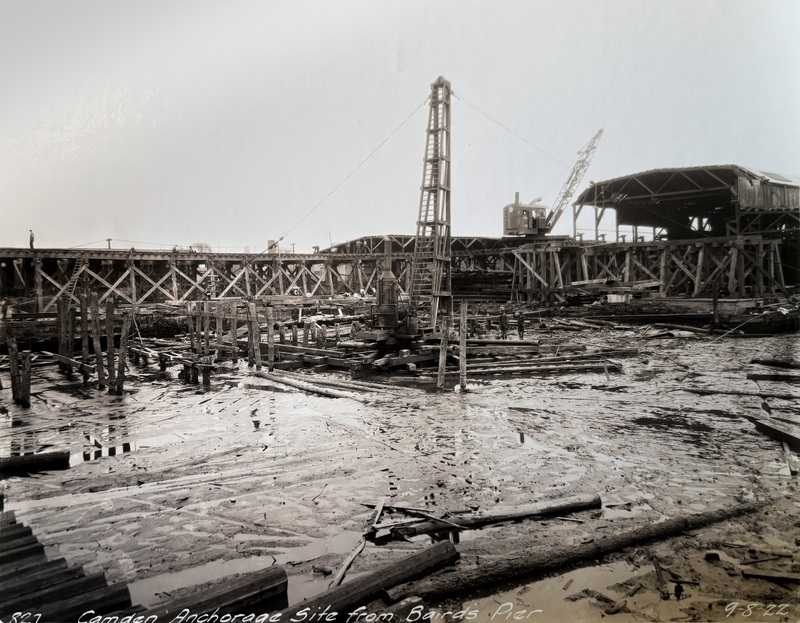
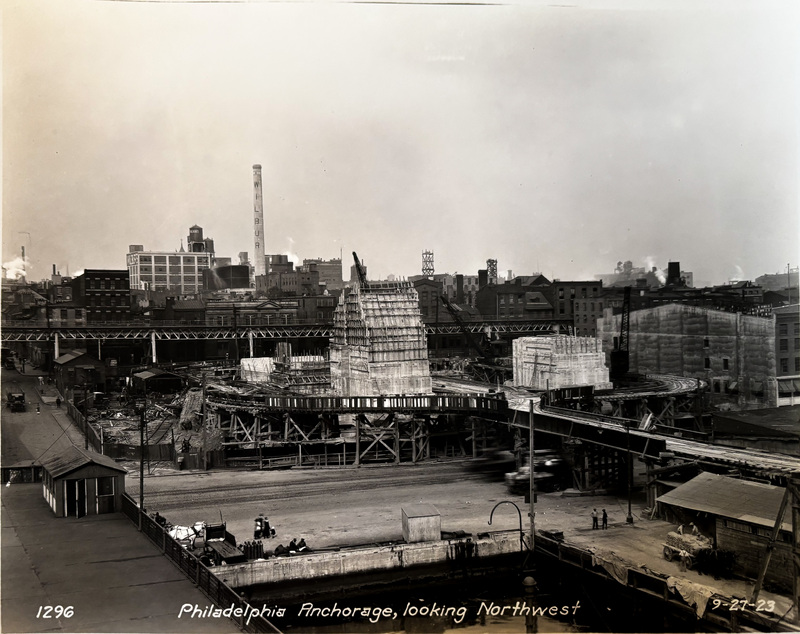
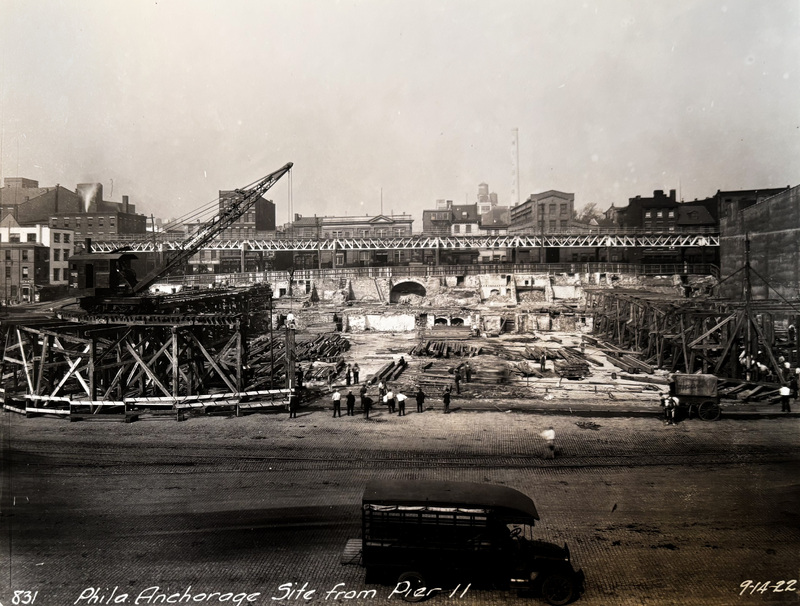
Setting the Anchorage Points
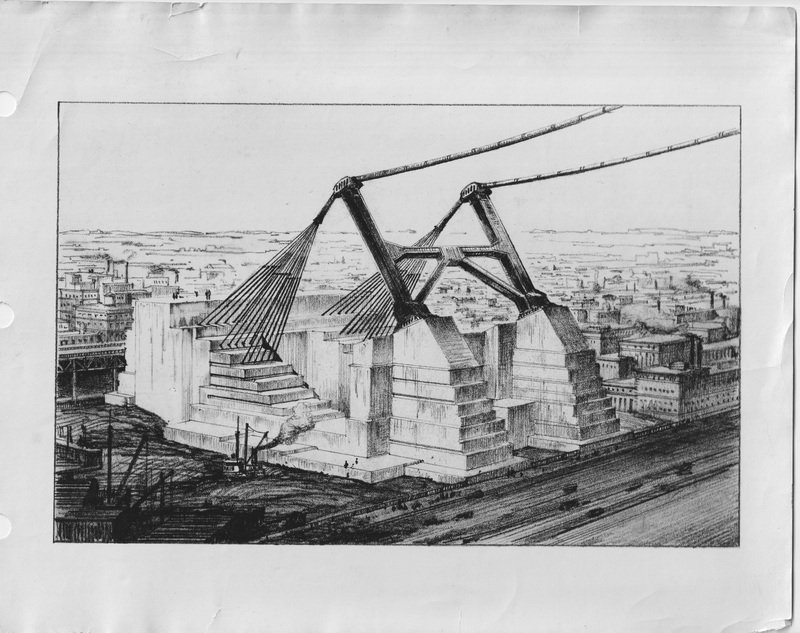
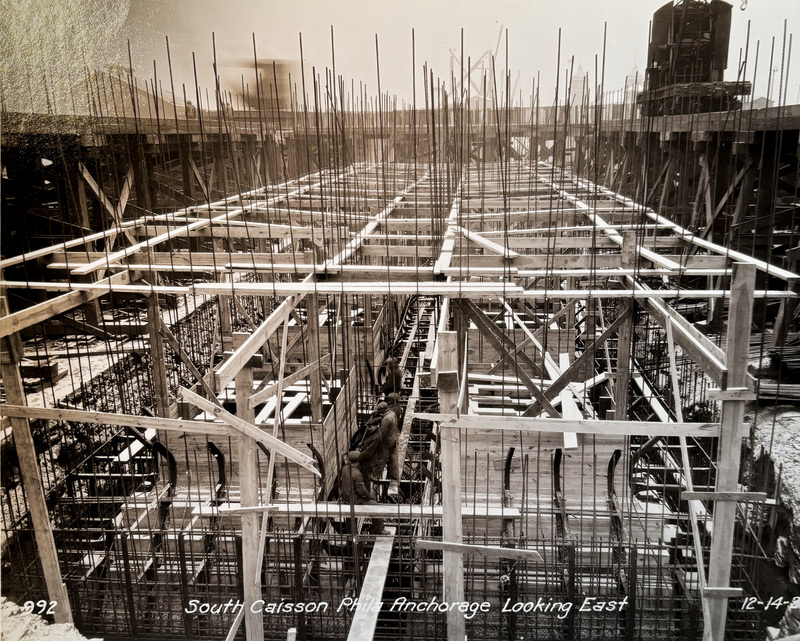
One of the key struggles during the bridge's construction was creating anchorage points on either side that can accomodate the massive structure. An anchorage is a steel or stone structure on either side of a suspension bridge that secures the cables, transferring the tensile loads from the bridge deck to the ground. Naturally, with a bridge this size the anchorage points needed to accomodate a significant weight.
First Crossings
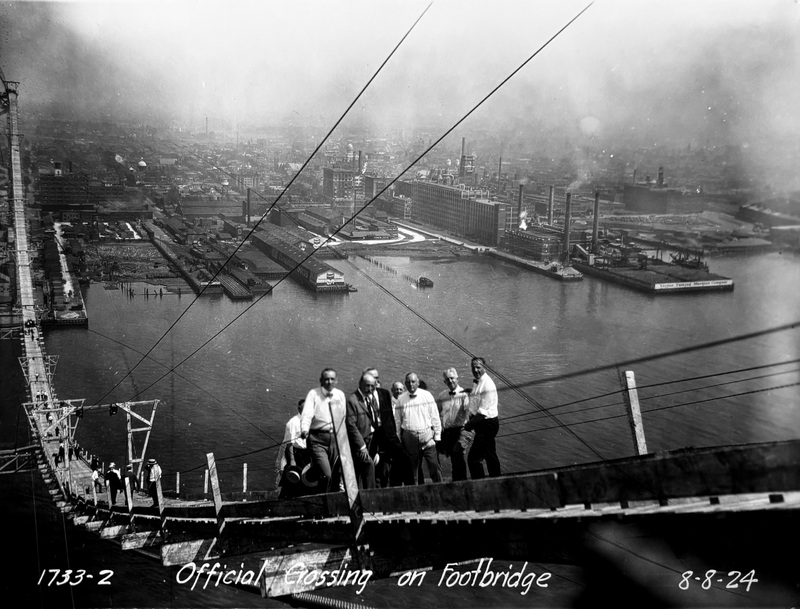
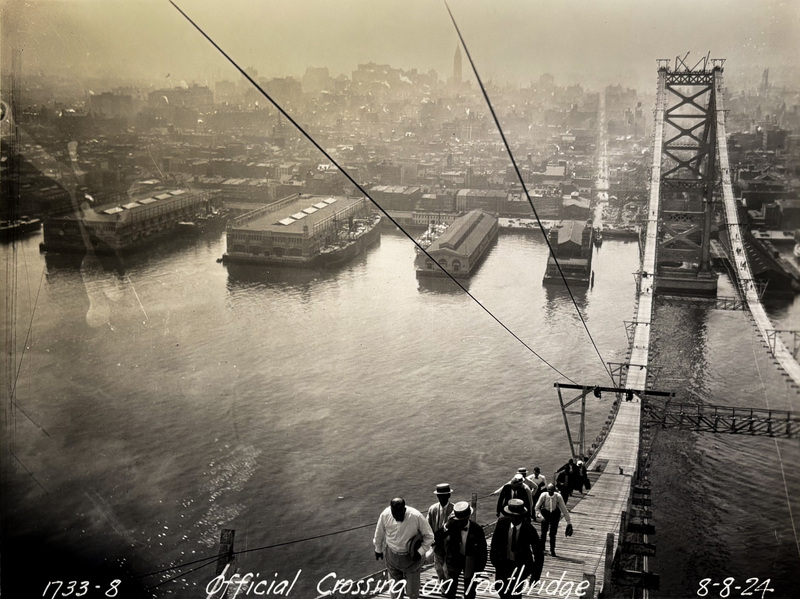
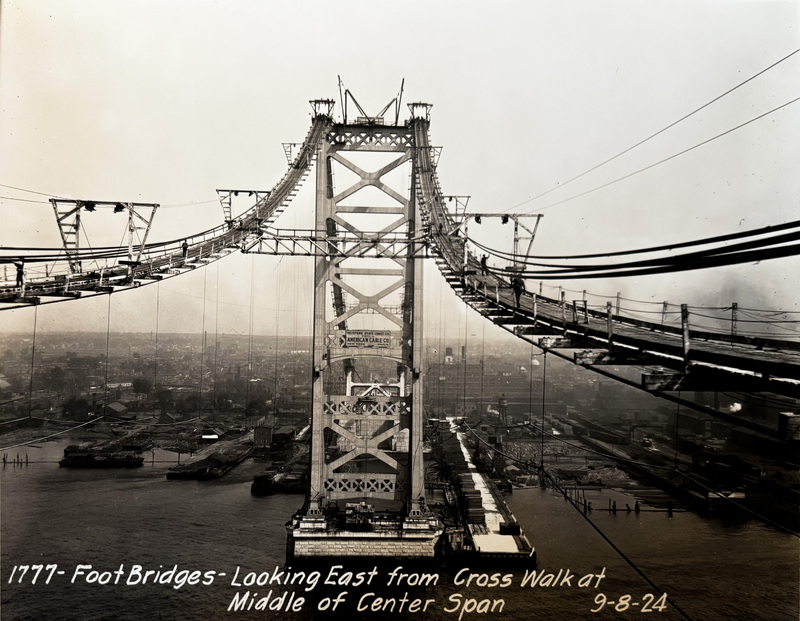
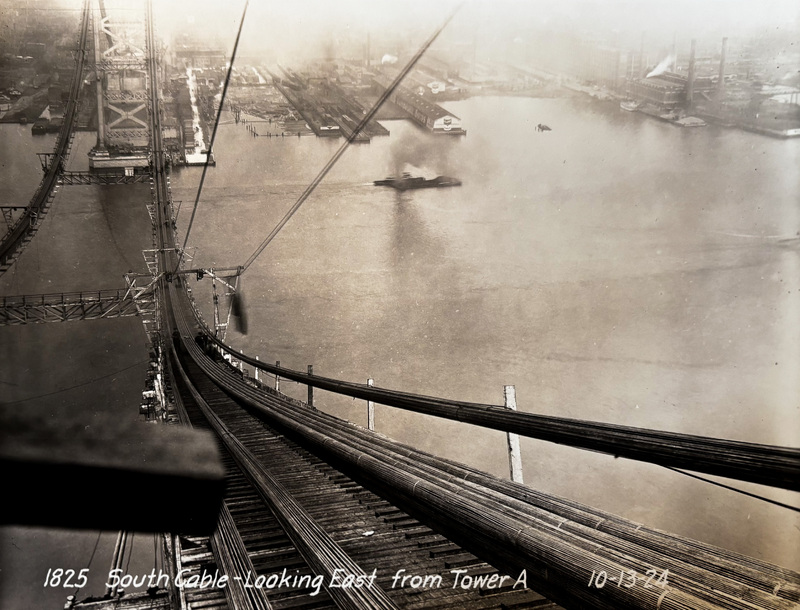
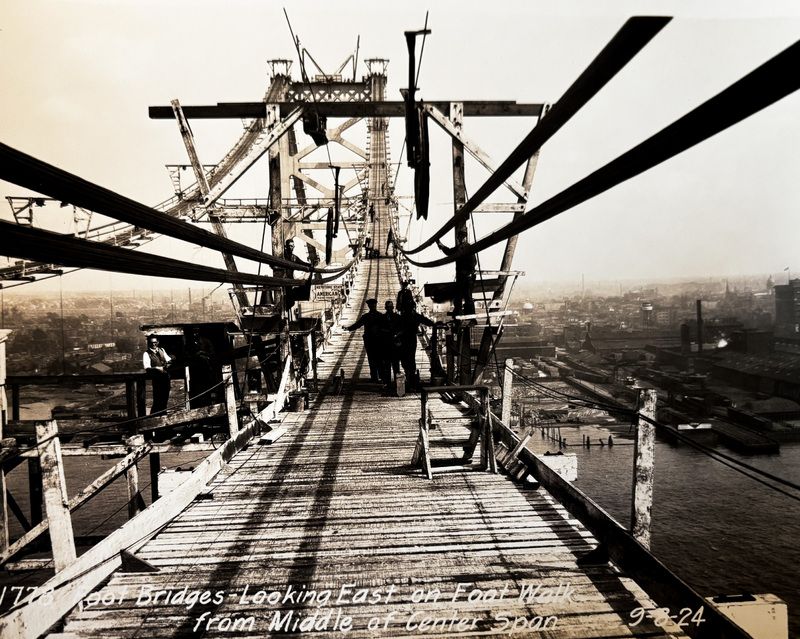
Another pivotal step in the building process was being able to easily move back and forth between either side. In order to make this connection, a rudimentary footbridge was constructed using the cables to guide the path. As the photos illustrate, the footpath was extremely steep and made of wood (definitely not OSHA approved!). The first crossing of the footbridge by the bridges engineers was a momentus occasion, marked by a celebratory photoshoot.
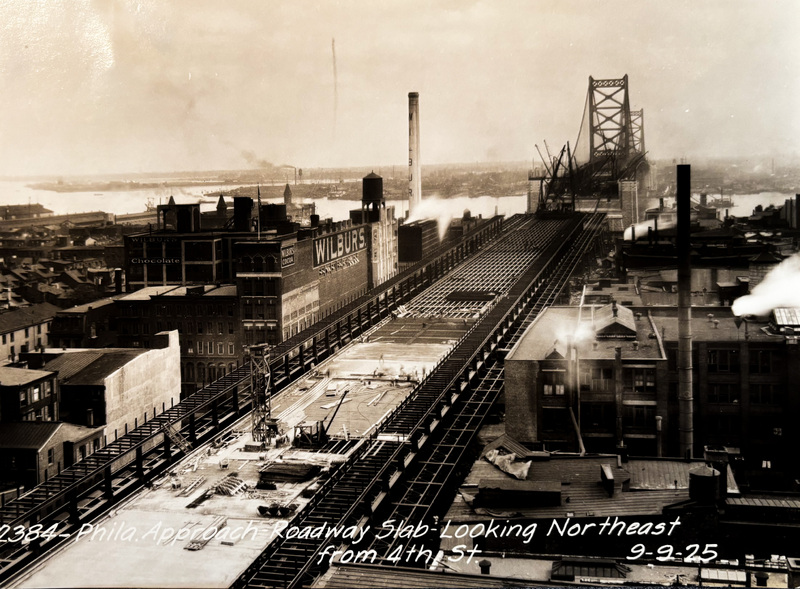
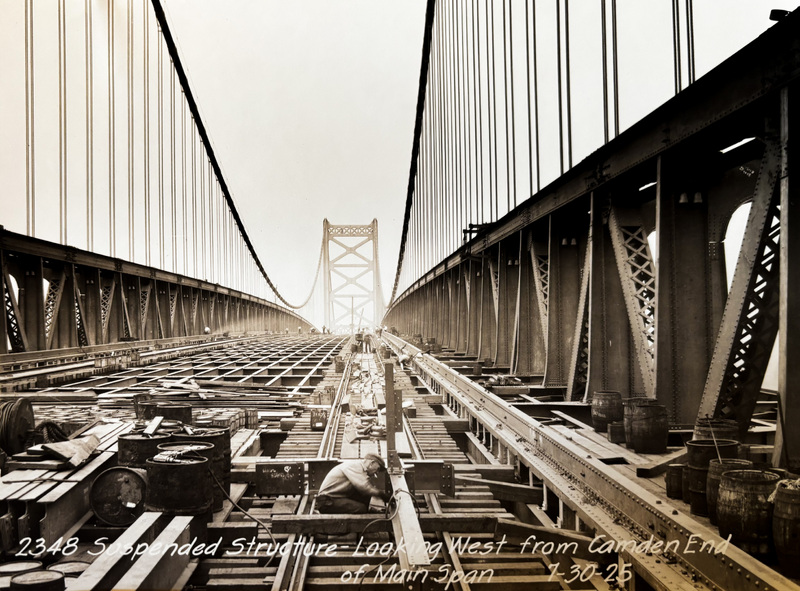
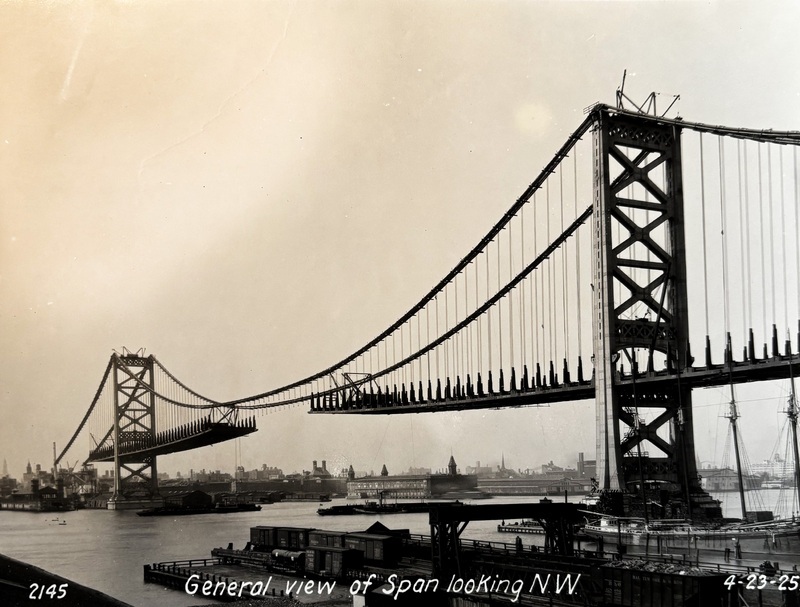
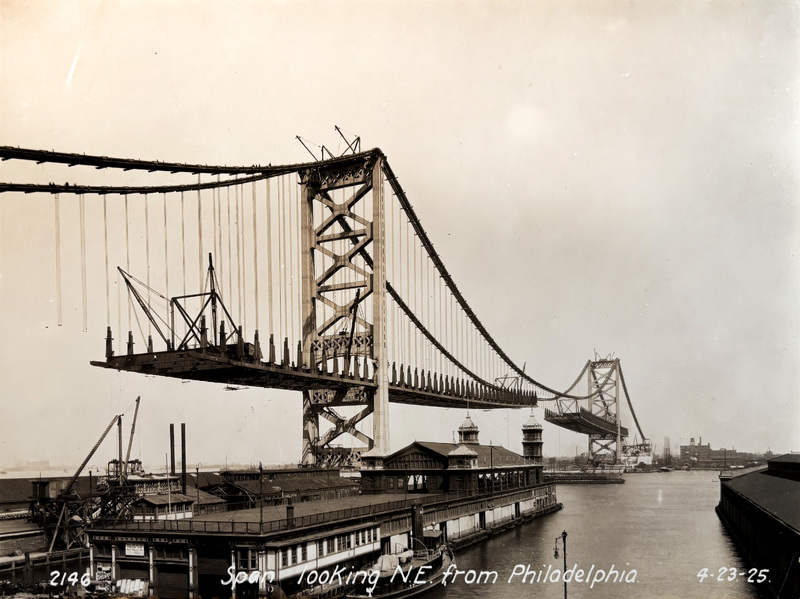
Progress Report
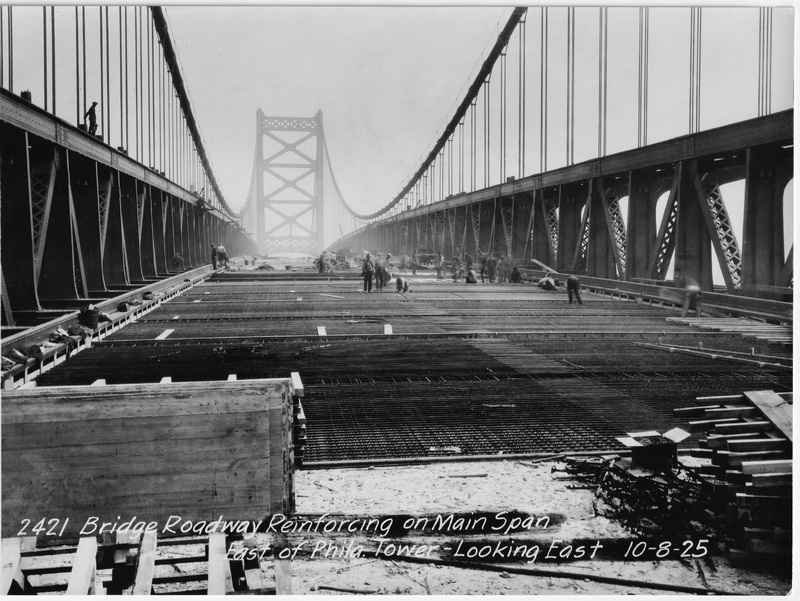
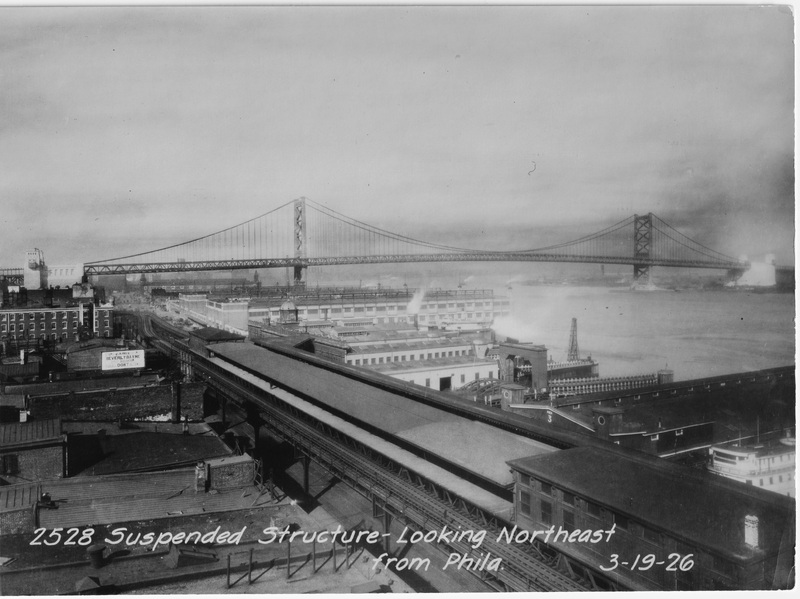
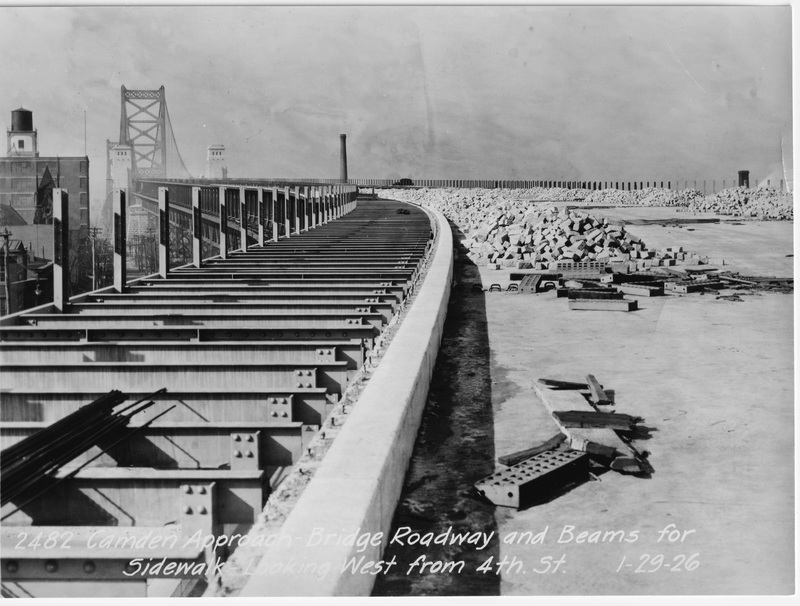
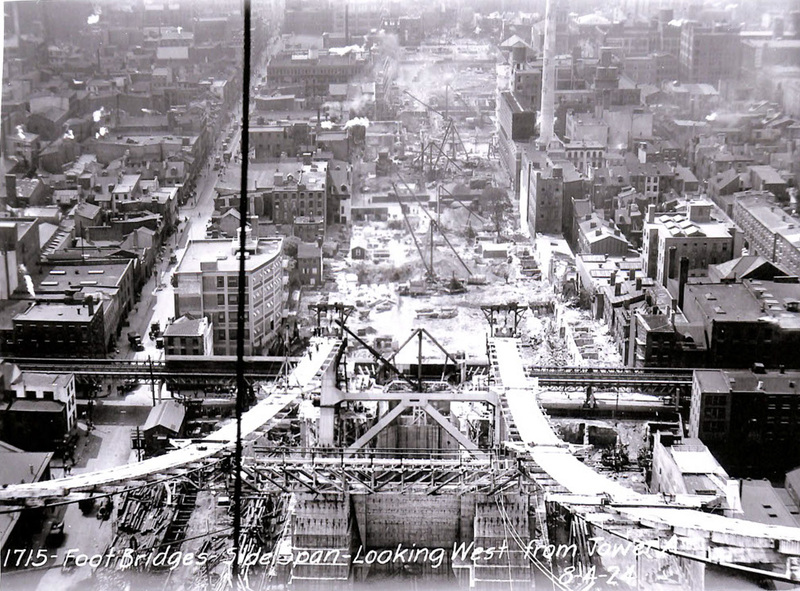
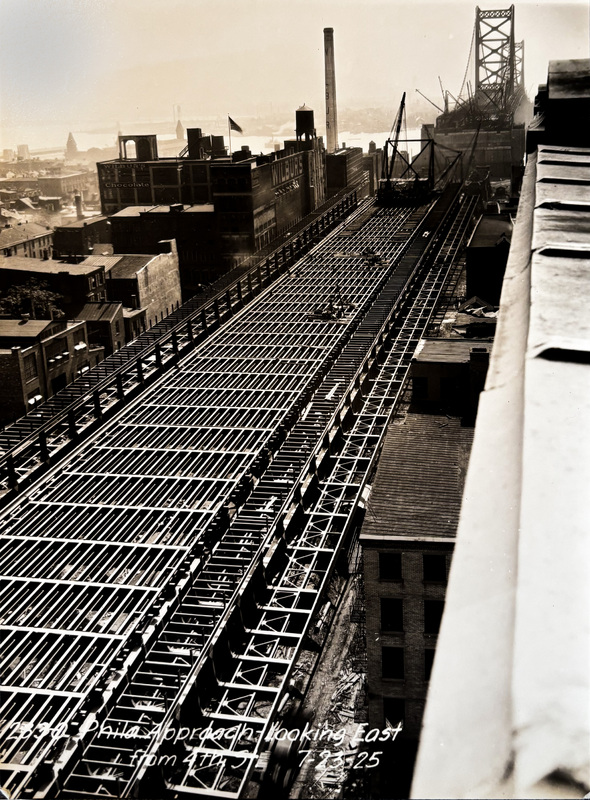
The six year process of constructing the Delaware River Bridge saw a vast transformation and a number of photos document the progress and approaches as they develop. Scroll through to see how the bridge slowly grew from a few cables to a massive highway safe for car travel.